
The DVSA issues over 20,000 fixed penalty notices for tachograph offences every year. For a UK fleet operator, each one of these notices represents a direct threat to your Operator Licence and your profit margins. Learning how to manage driver tachograph infringements isn't just a box-ticking exercise; it's a vital part of protecting your business from the risk of suspension or revocation. You likely feel the pressure of time-consuming manual data collection and the difficulty of distinguishing between a driver's accidental error and a deliberate breach.
We understand that you need practical solutions, not just theoretical advice. This guide provides the clear steps required to identify, investigate, and remedy infringements to ensure total DVSA compliance. You'll learn how to build a robust audit trail and reduce infringement rates through more efficient data management. We'll look at how moving away from manual vehicle visits toward remote downloads and live monitoring creates a more reliable, transparent operation that keeps your fleet on the road.
Key Takeaways
- Understand the severe risks to your Operator Licence and how the DVSA identifies systemic failures within your fleet.
- Learn how to manage driver tachograph infringements using a structured four-step framework that turns raw data into a defensible audit trail.
- Identify the most common triggers for break and rest period violations to address tiredness factors before they result in roadside penalties.
- Discover the benefits of shifting from reactive historical analysis to proactive prevention using live driver hours and real-time visibility.
- Eliminate manual data gaps and streamline your compliance reporting with remote tachograph downloads and integrated analysis tools.
Understanding the Regulatory Stakes of Tachograph Infringements
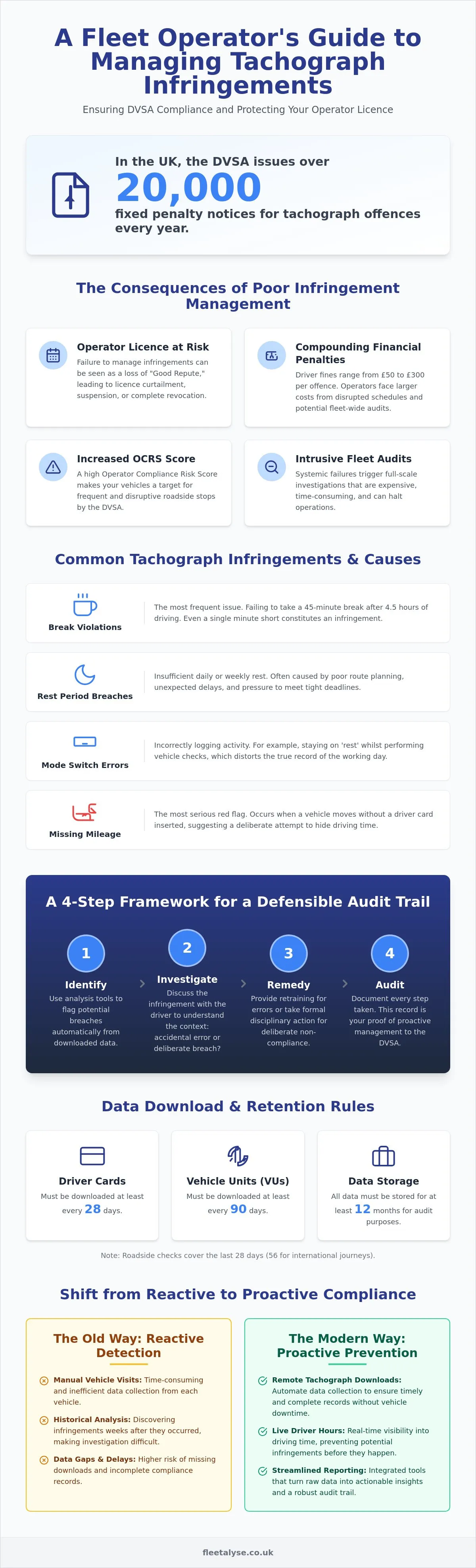
Tachograph infringements occur when a driver fails to adhere to EU drivers' hours regulations or GB domestic rules. These aren't just minor clerical errors. They are legal breaches that signal a potential breakdown in your fleet's safety culture. To understand What is a Tachograph? and its role, you must view it as the primary tool used by the Driver and Vehicle Standards Agency (DVSA) to enforce road safety. The DVSA monitors compliance nationwide, issuing over 20,000 fixed penalty notices annually. Learning how to manage driver tachograph infringements is the only way to safeguard your business against these systemic risks.
For a fleet operator, the stakes extend far beyond a single fine. Every infringement recorded is a mark against your Operator Licence. The Traffic Commissioner requires all licence holders to maintain "Good Repute." This isn't a vague suggestion; it's a legal pillar of your right to operate. If you cannot demonstrate how to manage driver tachograph infringements effectively, the Traffic Commissioner may view this as a failure of professional competence. This can lead to your licence being curtailed, suspended, or revoked entirely. Your business relies on that licence. Protecting it must be your priority.
The Consequences of Poor Infringement Management
Ignoring a pattern of driver breaches leads to a compounding set of risks. Financial penalties are the most immediate impact. Drivers face graduated fixed penalties ranging from £50 for minor timing errors to £300 for serious rest period violations. However, the operator faces the greater burden. A history of poor compliance increases your Operator Compliance Risk Score (OCRS). This makes your vehicles a magnet for roadside stops. Frequent stops disrupt your delivery schedules and often lead to full-scale fleet audits. These audits are intrusive, expensive, and time-consuming.
How Long Do Infringements Last on Your Record?
The DVSA operates on a 12-month rolling window for roadside history. During a stop, officers can check the last 28 days of records. For international journeys, this check extends to 56 days. Legally, you must download driver cards every 28 days and vehicle units every 90 days. You are required to store this data for at least 12 months for tax and audit purposes. Whilst the roadside focus is on the recent past, older infringements don't simply disappear. If you are called to a Public Inquiry, the Traffic Commissioner will examine your long-term history. They want to see if you have improved or if you are repeating the same mistakes.
Identifying Common Tachograph Infringements and Their Causes
Recognising the specific nature of a breach is the first step in learning how to manage driver tachograph infringements effectively. Most errors fall into a few predictable categories. Break violations are the most frequent. Drivers must take a 45-minute break after 4.5 hours of driving. This can be a single block or split into a 15-minute break followed by a 30-minute break. A single minute under this limit is a technical infringement that the DVSA will flag during an audit. Daily and weekly rest period breaches are equally common. These usually stem from poor route planning or unexpected delays, leading to driver tiredness and reduced reaction times.
Mode switch errors often occur during loading or unloading. A driver might remain on 'other work' whilst actually driving, or stay on 'rest' whilst performing vehicle checks. These errors distort the true record of the working day and make it impossible to track actual fatigue levels. Missing mileage is perhaps the most serious red flag for an operator. This occurs when a vehicle moves without a driver card inserted. It suggests a deliberate attempt to hide driving time, which triggers immediate DVSA scrutiny. It creates a gap in the data that is difficult to explain without a robust investigation.
Accidental vs. Deliberate Breaches
Context is everything when you're deciding how to manage driver tachograph infringements. An accidental breach might be caused by a genuine emergency or a total lack of safe parking. If a driver exceeds their time by a few minutes to reach a secure lay-by, it's often viewed as a safety-first decision. However, you must watch for patterns of corner-cutting to meet delivery slots. Tachograph falsification is a criminal offence. It can lead to a £5,000 fine or even two years' imprisonment. You must distinguish between a training issue and a conduct issue before the DVSA does it for you.
The Role of Digital Tachograph Analysis
Manual checks are no longer sufficient for modern UK fleets. Digital analysis software identifies hidden infringements that the human eye simply misses. It flags missing mileage and overlapping records instantly. Whilst the law requires card downloads every 28 days and vehicle units every 90 days, waiting for these deadlines is risky. This Road Haulage Association compliance guide highlights the importance of proactive monitoring to stay ahead of the DVSA. Proactive operators use automated tools to catch errors as they happen. This prevents minor mistakes from becoming systemic failures. If you're ready to automate your compliance, you can get started with our remote download solutions today.
The Four-Step Framework for Managing Driver Breaches
Managing infringements shouldn't be a reactive panic before a DVSA inspection. It requires a repeatable, transparent system that demonstrates your professional competence as an operator. When you understand how to manage driver tachograph infringements through a structured framework, you move from guesswork to a defensible audit trail. This process ensures that every error is caught, understood, and corrected before it becomes a systemic failure. The following four steps provide a clear path for any UK fleet manager.
- Step 1: Identify. Use automated tachograph analysis to flag breaches immediately. Waiting for manual vehicle visits creates data gaps that the DVSA will exploit during an audit.
- Step 2: Investigate. Speak with the driver as soon as an infringement is flagged. Context is vital. You need to know if the breach was a result of an emergency, a lack of safe parking, or a simple lapse in concentration.
- Step 3: Remedy. Apply a solution that matches the cause. This might involve additional training for a genuine mistake or a formal warning for a repeat offender.
- Step 4: Record. Document every part of the process. If you don't have a written record of the investigation and the remedy, the DVSA will assume no action was taken.
Conducting an Effective Driver Debrief
The driver debrief is the most important part of the investigation. You should approach these meetings with a firm but non-confrontational attitude. Use data printouts as a visual aid to show the driver exactly where the error occurred. Ask open questions like "What led to this 15-minute rest shortage?" instead of making immediate accusations. This encourages honesty and helps you identify if the problem lies with the driver's behaviour or your own route planning. Every debrief must be signed by both the manager and the driver to confirm the discussion took place.
Remedial Action: Education vs. Discipline
Deciding how to manage driver tachograph infringements often comes down to choosing between education and discipline. For honest mistakes or new drivers, Toolbox Talks or CPC refresher training are effective tools. These sessions focus on skill gaps and clarify the rules. However, repeat offenders require a firmer hand. Implement formal verbal or written warnings to signal that compliance is non-negotiable. Your company transport policy must clearly state a zero-tolerance approach to deliberate falsification. This protects your "Good Repute" by showing the Traffic Commissioner that you take your legal responsibilities seriously.

Shifting from Reactive Detection to Proactive Prevention
Traditional compliance management often relies on historical data. You only learn about a breach once the driver returns to the depot and the card is manually downloaded. By that point, you're investigating a mistake that could be 28 days old. This delay is the biggest hurdle when learning how to manage driver tachograph infringements effectively. The damage to your Operator Compliance Risk Score (OCRS) is already done. Shifting to a proactive model allows you to intervene in real time, preventing the breach before it even occurs.
Integrating Live Driver Hours with GPS Fleet Tracking provides a single, accurate view of your entire operation. You no longer need to cross-reference multiple spreadsheets or paper logs to see if a vehicle is being moved without a card. This integration ensures that vehicle movement always matches driver activity, eliminating the "missing mileage" red flags that attract DVSA scrutiny. Automated remote downloads further reduce the administrative burden on your transport office. They ensure your records are always current and complete without requiring a single manual vehicle visit.
The Power of Remote Tachograph Downloads
Manually downloading driver cards and vehicle units is a significant logistical burden. It frequently leads to data gaps, especially when vehicles are away from the base for extended periods. Remote Tachograph Download technology removes this friction entirely. It ensures 100% data continuity amongst a dispersed fleet by pulling data wirelessly on a set schedule. Fleetalyse automates this process for UK operators, meaning you never have to "chase" a driver for their card again. The software handles the collection, leaving you free to focus on analysis and driver support.
Using Live Data to Prevent Breaches Before They Occur
Prevention is always more efficient than a post-event debrief. Live data gives you the power to set automated alerts for drivers as they approach their 4.5-hour driving limit. You gain real-time visibility of daily rest requirements, which is vital for planning next-day routes accurately. This level of insight reduces "stress-driving" by giving drivers clear, data-backed guidance on their remaining time. They can plan their stops with confidence, knowing the transport office has an accurate view of their legal limits. If you're ready to move from reactive chasing to proactive control, explore our live monitoring and remote download solutions today.
Building a Future-Proof Compliance Strategy with Fleetalyse
A unified platform is the only way to achieve true operational efficiency. When your GPS tracking, live driver hours, and tachograph analysis are disconnected, you create silos of information. This fragmentation leads to missed errors and administrative fatigue. Fleetalyse bridges these gaps. We provide a transparent view of your fleet's compliance status, offering clear reporting that managers and owners can trust. As a UK-based specialist, we understand the specific regional challenges and domestic transport regulations that HGV operators face daily. We don't just provide data; we provide the clarity needed to master how to manage driver tachograph infringements.
Start by auditing your current infringement management process. Are you still relying on manual vehicle visits? Are your records incomplete or delayed? Identifying these weaknesses is the first step toward a future-proof strategy. A robust system doesn't just protect your licence. It builds a more professional, reliable operation that can withstand the highest levels of DVSA scrutiny. Moving away from fragmented systems ensures that your audit trail is always complete and ready for inspection.
Integrating Tachograph Analysis for Seamless Reporting
Efficiency improves when data moves automatically. Our platform enables automatic data transfer to your favourite tachograph analysis provider. This eliminates the risk of human error in data entry and ensures your filing is always up to date. By streamlining the reporting process, you demonstrate a high level of professional competence to the Traffic Commissioner. This proactive approach helps create a culture of compliance within your business. Drivers respect a system that is fair and accurate, which in turn helps you attract and retain the best talent in the industry.
Next Steps for Your Fleet
Take a moment to assess the current manual download burden on your transport office. If your staff spend hours chasing driver cards or visiting vehicles in the yard, you're losing valuable resources. We encourage you to trial remote monitoring to see the time-saving benefits for yourself. It's time to replace outdated manual processes with a localized, expert solution. Visit Fleetalyse for a consultation on remote tacho solutions and discover how to manage driver tachograph infringements with absolute confidence.
Secure Your Fleet's Future with Proactive Compliance
Protecting your Operator Licence depends on your ability to move beyond manual, historical data collection. By adopting a structured framework, you ensure that every breach is documented and addressed through targeted education or necessary discipline. This shift from reactive searching to proactive monitoring is the most effective way to maintain your "Good Repute" with the Traffic Commissioner. Mastering how to manage driver tachograph infringements turns a complex legal burden into a streamlined operational advantage for your business.
You don't have to manage these regulatory complexities alone. Fleetalyse provides the tools to automate your compliance. We offer real-time visibility of every driver hour and seamless integration with your analysis software. Our UK-based expert support ensures you stay ahead of regional HGV regulations without the stress of manual vehicle visits or data gaps. It's time to replace outdated manual processes with a localized, expert solution that values your time and resources.
Discover how Fleetalyse automates your tachograph compliance and start building a safer, more efficient fleet today.
Frequently Asked Questions
How often should I download tachograph data to stay compliant?
You must download driver card data at least every 28 days and vehicle unit data every 90 days. These are the maximum legal intervals. Many proactive operators choose to download data weekly or even daily to avoid data gaps. Using remote tachograph download technology automates this process, ensuring you never miss a deadline and your records remain current for any snap inspection.
What is the most common tachograph infringement in the UK?
Break violations are the most frequent offences recorded by the DVSA. Drivers often fail to take a full 45-minute break after 4.5 hours of driving. Even a one-minute shortage is considered a technical breach. These errors usually happen due to poor route planning or a lack of safe parking spaces, which is why real-time visibility of driver hours is so valuable.
Can a driver be fined for an infringement that happened weeks ago?
Yes, DVSA officers can issue graduated fixed penalties for any infringements found within the last 28 days of a driver's records during a roadside stop. If the driver is on an international journey, this look-back period extends to 56 days. Furthermore, the Traffic Commissioner can examine your records for the last 12 months during a Public Inquiry to identify patterns of non-compliance.
What should be included in a driver infringement debrief record?
A debrief record must include the date, the driver's name, and the specific details of the infringement. It should also contain the driver's explanation for the breach and a clear record of the remedial action taken, such as training or a formal warning. Both the manager and the driver must sign the document to confirm the discussion and create a defensible audit trail.
Are transport managers personally liable for driver infringements?
Transport managers can be held personally liable and may face a Public Inquiry if they fail to maintain a compliant operation. If you cannot demonstrate how to manage driver tachograph infringements effectively, the Traffic Commissioner can revoke your professional competence and good repute. Negligence or incentivising drivers to breach their hours can also lead to individual prosecution and heavy fines.
Does remote tachograph downloading replace the need for analysis?
No, remote downloading is the method of collecting the data, whilst analysis is the process of identifying breaches. You still need specialized analysis software to interpret the raw files and flag infringements. Fleetalyse integrates with your favourite analysis provider to ensure that once the data is pulled remotely, it moves straight into your reporting system without any manual intervention or data entry errors.
How does live driver hours tracking help with DVSA compliance?
Live tracking provides real-time visibility of remaining driving time, allowing you to intervene before a breach occurs. It sends alerts as drivers approach their 4.5-hour limit or daily driving cap. This proactive approach is far more effective for maintaining a clean Operator Compliance Risk Score than reacting to historical data that is already several weeks old and beyond correction.
What happens if a driver refuses to sign an infringement report?
If a driver refuses to sign, you should note the refusal on the form and have a witness sign to confirm the debrief took place. You must still investigate the reason for the refusal. It often signals an underlying conduct issue or a dispute over the facts, both of which should be handled through your internal disciplinary procedure to protect your company's legal position.
Frequently asked questions
How Long Do Infringements Last on Your Record?
The DVSA operates on a 12-month rolling window for roadside history. During a stop, officers can check the last 28 days of records. For international journeys, this check extends to 56 days. Legally, you must download driver cards every 28 days and vehicle units every 90 days. You are required to store this data for at least 12 months for tax and audit purposes. Whilst the roadside focus is on the recent past, older infringements don't simply disappear. If you are called to a Public Inquiry, the Traffic Commissioner will examine your long-term history. They want to see if you have improved or if you are repeating the same mistakes. Recognising the specific nature of a breach is the first step in learning how to manage driver tachograph infringements effectively. Most errors fall into a few predictable categories. Break violations are the most frequent. Drivers must take a 45-minute break after 4.5 hours of driving. This can be a single block or split into a 15-minute break followed by a 30-minute break. A single minute under this limit is a technical infringement that the DVSA will flag during an audit. Daily and weekly rest period breaches are equally common. These usually stem from poor route planning or unexpected delays, leading to driver tiredness and reduced reaction times. Mode switch errors often occur during loading or unloading. A driver might remain on 'other work' whilst actually driving, or stay on 'rest' whilst performing vehicle checks. These errors distort the true record of the working day and make it impossible to track actual fatigue levels. Missing mileage is perhaps the most serious red flag for an operator. This occurs when a vehicle moves without a driver card inserted. It suggests a deliberate attempt to hide driving time, which triggers immediate DVSA scrutiny. It creates a gap in the data that is difficult to explain without a robust investigation.
How often should I download tachograph data to stay compliant?
You must download driver card data at least every 28 days and vehicle unit data every 90 days. These are the maximum legal intervals. Many proactive operators choose to download data weekly or even daily to avoid data gaps. Using remote tachograph download technology automates this process, ensuring you never miss a deadline and your records remain current for any snap inspection.
What is the most common tachograph infringement in the UK?
Break violations are the most frequent offences recorded by the DVSA. Drivers often fail to take a full 45-minute break after 4.5 hours of driving. Even a one-minute shortage is considered a technical breach. These errors usually happen due to poor route planning or a lack of safe parking spaces, which is why real-time visibility of driver hours is so valuable.
Can a driver be fined for an infringement that happened weeks ago?
Yes, DVSA officers can issue graduated fixed penalties for any infringements found within the last 28 days of a driver's records during a roadside stop. If the driver is on an international journey, this look-back period extends to 56 days. Furthermore, the Traffic Commissioner can examine your records for the last 12 months during a Public Inquiry to identify patterns of non-compliance.
What should be included in a driver infringement debrief record?
A debrief record must include the date, the driver's name, and the specific details of the infringement. It should also contain the driver's explanation for the breach and a clear record of the remedial action taken, such as training or a formal warning. Both the manager and the driver must sign the document to confirm the discussion and create a defensible audit trail.
Are transport managers personally liable for driver infringements?
Transport managers can be held personally liable and may face a Public Inquiry if they fail to maintain a compliant operation. If you cannot demonstrate how to manage driver tachograph infringements effectively, the Traffic Commissioner can revoke your professional competence and good repute. Negligence or incentivising drivers to breach their hours can also lead to individual prosecution and heavy fines.
Does remote tachograph downloading replace the need for analysis?
No, remote downloading is the method of collecting the data, whilst analysis is the process of identifying breaches. You still need specialized analysis software to interpret the raw files and flag infringements. Fleetalyse integrates with your favourite analysis provider to ensure that once the data is pulled remotely, it moves straight into your reporting system without any manual intervention or data entry errors.
How does live driver hours tracking help with DVSA compliance?
Live tracking provides real-time visibility of remaining driving time, allowing you to intervene before a breach occurs. It sends alerts as drivers approach their 4.5-hour limit or daily driving cap. This proactive approach is far more effective for maintaining a clean Operator Compliance Risk Score than reacting to historical data that is already several weeks old and beyond correction.
What happens if a driver refuses to sign an infringement report?
If a driver refuses to sign, you should note the refusal on the form and have a witness sign to confirm the debrief took place. You must still investigate the reason for the refusal. It often signals an underlying conduct issue or a dispute over the facts, both of which should be handled through your internal disciplinary procedure to protect your company's legal position.