
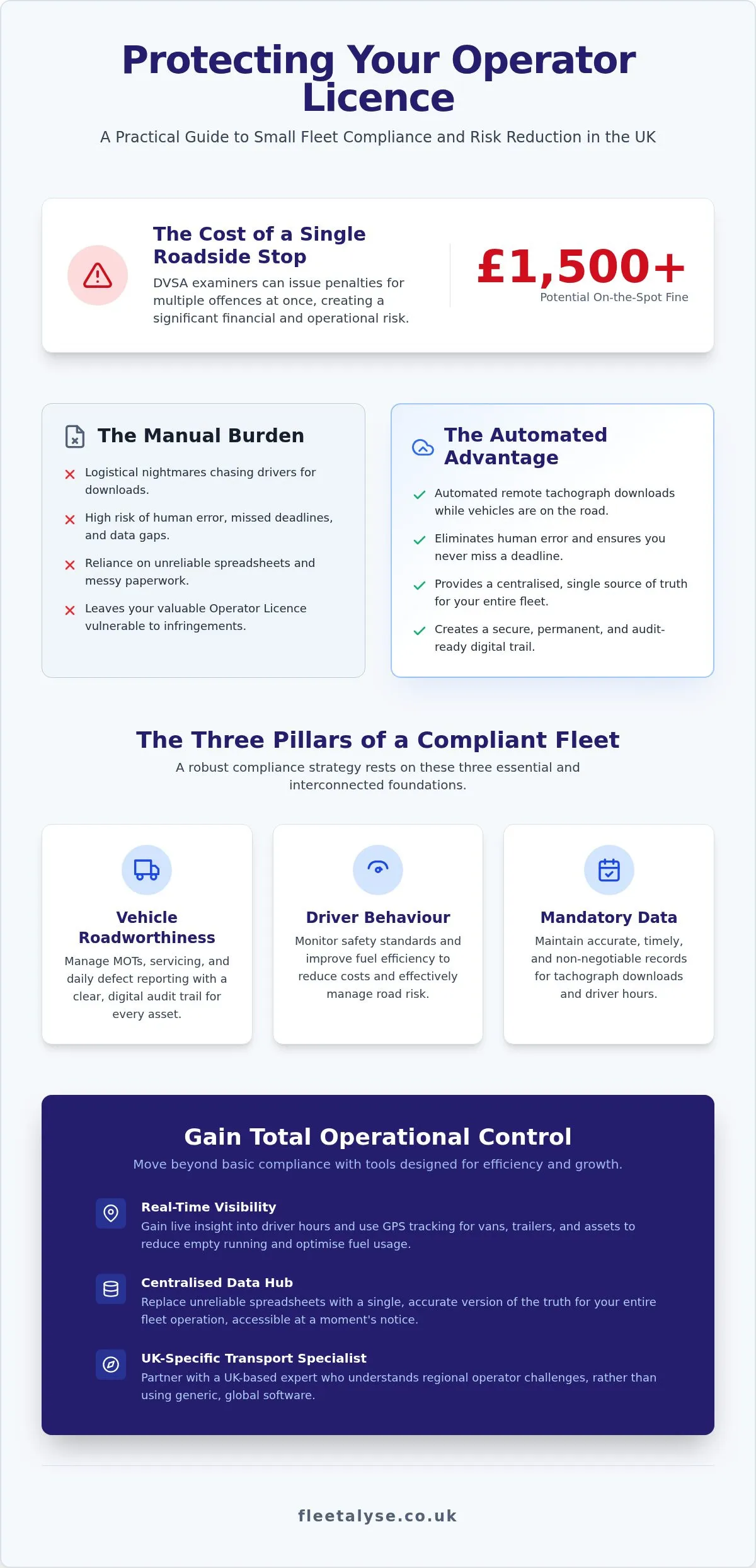
A DVSA examiner can issue penalties for up to five separate offences during a single roadside check, which means an on-the-spot fine of £1,500 or more. For a small operator, this isn't just a financial burden; it's a direct risk to your hard-earned Operator Licence. You likely find that manual tachograph downloading is a logistical nightmare that drains your team's energy and increases the chance of errors. Managing small fleet compliance uk shouldn't feel like a constant battle against paperwork and the fear of the next DVSA audit.
We believe compliance should be a quiet, reliable background process. This guide provides the practical steps to protect your business and eliminate manual administrative friction. You'll learn how to implement automated systems that offer real-time visibility of driver hours and create a secure, digital trail for any inspection. We'll break down the 2026 requirements, including the Smart Tachograph 2 mandate for vans and updated financial standing rates, to ensure your fleet stays moving safely and legally.
Key Takeaways
- Protect your Operator Licence by moving from manual checks to an audit-ready digital system that meets strict DVSA standards.
- Master small fleet compliance uk by automating remote tachograph downloads to eliminate administrative friction and reduce the risk of costly roadside fines.
- Gain real-time visibility across your vans, trailers, and assets to reduce empty running and optimise fuel usage through specialised GPS tracking.
- Replace unreliable spreadsheets with a centralised data hub that provides a single, accurate version of the truth for your entire fleet operation.
- Discover why partnering with a UK-specific transport specialist offers better protection for regional operators than using generic, global software providers.
What is Fleet Management for Small Business in the UK?
Fleet management is the systematic organisation of commercial vehicles to ensure safety, efficiency, and strict legal compliance. For many, it starts with a simple GPS tracker. However, a robust fleet management system goes much deeper. It's the difference between a profitable operation and one facing a public inquiry. It isn't just about moving goods; it's about managing a complex legal framework.
Small UK operators face a distinct hurdle. The DVSA applies the same scrutiny to a three-vehicle haulier as it does to a multinational logistics giant. You have fewer resources but identical legal obligations. Effective small fleet compliance uk isn't about expensive bells and whistles; it's about protecting your Operator Licence through disciplined data management. It requires a shift from reactive fire-fighting to proactive, data-led oversight. You need to know your risks before the DVSA finds them for you.
Small Business vs. Enterprise Requirements
Enterprise software often fails the regional operator. It's built for thousands of assets and comes with overwhelming complexity and feature bloat that small teams don't need. You need pragmatic tools. A specialist partner understands that your priority is solving immediate compliance headaches, not navigating a labyrinth of sub-menus. We focus on transparent pricing and UK-based support. Scalability matters, but it shouldn't come at the cost of daily usability. You need a system that works as hard as your drivers do.
The Core Components of a Compliant Fleet
A compliant operation rests on three pillars. Each one is essential for maintaining your standing with the Traffic Commissioner. Neglecting one puts the others at risk.
- Vehicle roadworthiness: This includes managing MOTs, regular servicing, and ensuring daily defect reporting is actually happening. It's about a clear audit trail for every asset.
- Driver behaviour: Monitoring safety standards and fuel efficiency amongst your team helps reduce costs. More importantly, it demonstrates you're managing road risk effectively.
- Mandatory data: This is the non-negotiable part of small fleet compliance uk. You must have accurate, timely records for tachograph downloads and driver hours.
Location tracking tells you where a van is. Compliance tells you if that van should be on the road at all. By centralising this information, you move away from messy spreadsheets and towards a secure, digital future. This transition doesn't just save time; it provides the peace of mind that your business is protected.
The Compliance Priority: Protecting Your Operator Licence
Your Operator Licence is the foundation of your business. Without it, your vehicles stay in the yard and your contracts disappear. The official Operator Licensing guide outlines the strict undertakings you sign up for when you first apply. A single serious infringement or a consistent pattern of minor errors can trigger a Public Inquiry. For a small haulier, this isn't just an administrative hurdle; it's a direct threat to your livelihood. Staying "audit-ready" means having every record organised, accurate, and accessible at a moment's notice.
The DVSA doesn't accept "being too busy" as an excuse for missing download deadlines. Manual systems are prone to human error, which is the root cause of most infringements. If you're still relying on drivers to remember to download their cards, you're leaving small fleet compliance uk to chance. A roadside stop that reveals missing data or hours' breaches can lead to immediate vehicle prohibitions and heavy fines. Automation removes this risk by taking the responsibility out of human hands and putting it into a reliable digital system.
Remote Tachograph Downloads Explained
Manual card downloads are a drain on your time and fuel. Chasing drivers to return to the yard just to plug in a card is inefficient and often leads to missed windows. Remote technology captures this data automatically whilst the vehicle is on the road, anywhere in the UK. Remote tachograph download is an automated compliance safeguard that ensures you never miss a deadline. This shift removes the friction of physical data collection and ensures your office records are always current without interrupting your daily schedule.
Monitoring Live Driver Hours
Real-time visibility is the ultimate preventative tool for a transport manager. Instead of finding out about a driving limit breach days after it happened, you can see live hours as they accumulate. This allows you to manage rest periods and breaks effectively, even when delivery schedules change amongst traffic or delays. It builds a robust audit trail through seamless tachograph analysis integration. You don't have to guess if a driver has enough time left for a final drop; you have the facts on your screen. You can automate your tachograph monitoring to secure your licence and focus on your core operations.
Operational Visibility: Tracking Vans, Trailers, and Assets
Small businesses often juggle a mix of HGVs, vans, and trailers. Each requires a specific approach to tracking. It's not just about knowing where a vehicle is; it's about how it's being used. Telematics play a vital role in reducing "empty running," where vehicles return empty after a delivery. This directly impacts your bottom line by optimising fuel usage. Effective Driving for work safety protocols rely on this data. Road incidents involving work drivers account for 25% of all traffic accidents in the UK; using telematics to monitor these risks is a practical way to protect your team and your reputation.
Security is another major factor. Assets parked in remote locations or third-party yards are vulnerable. Real-time visibility allows you to monitor these assets 24/7. Beyond security, this data improves your customer service. Providing accurate, live ETAs based on actual traffic conditions builds trust and reduces the time your office spends answering customer queries. This level of oversight is a core part of small fleet compliance uk, showing the DVSA that you have total control over your entire operation.
HGV and Trailer Tracking Solutions
Detached trailers present a unique challenge. Unlike a prime mover, they don't have a constant power source. You need rugged hardware with long battery life that can survive harsh British weather and long periods of inactivity. Tracking trailers allows you to locate underused assets amongst your fleet. Many operators find they have "lost" trailers sitting in customer yards, leading to unnecessary expenditure on short-term hire. By linking trailers to specific prime movers, you create a complete picture of your logistics chain. This helps you maximise asset utilisation and avoid the cost of hiring extra trailers when you already have capacity.
Van Tracking for Delivery and Service Fleets
For van fleets, the focus shifts to driver behaviour. Monitoring speed, harsh braking, and idling helps reduce wear and tear on your vehicles. It also provides the data needed to negotiate lower insurance premiums, which is vital given the 35% increase in commercial premiums between 2023 and 2026. Installation should be simple and non-invasive to keep your vans on the road. Live GPS data acts as your best defence against customer disputes. If a client claims a delivery never arrived, you have the digital proof of exactly when your van arrived. This data-led approach is essential for maintaining small fleet compliance uk across all vehicle types.
Reducing Admin Overhead Whilst Scaling Your Fleet
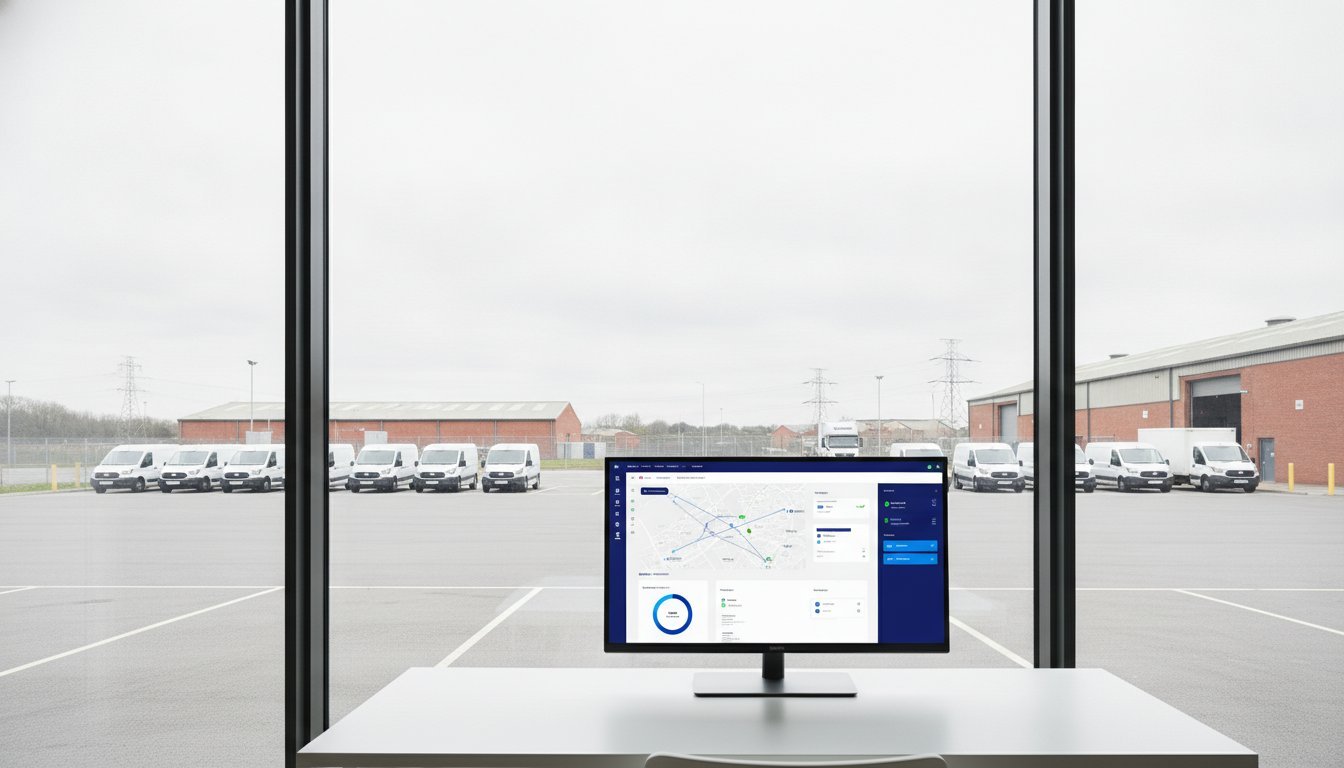
Growth brings complexity. Most small operators start with paper logbooks and basic spreadsheets. These tools work initially, but they quickly become a liability as you add more vehicles. Manual data entry is slow. It's prone to errors that the DVSA will flag during an audit. Centralising your information into a single digital hub saves hours of manager time every week. You no longer have to cross-reference multiple documents to find a single download date. Having one version of the truth is essential for small fleet compliance uk.
Automating your reporting is a strategic move. It prepares your business for future growth by building a digital foundation now. From April 2026, HM Revenue & Customs is phasing out legacy forms in favour of mandatory payroll reporting for benefits like company cars. Digital systems make this transition seamless. You can automate fuel tax calculations and compliance reviews, ensuring you stay ahead of regulatory changes. This proactive approach ensures your administrative capacity grows at the same rate as your fleet.
A Step-by-Step Transition to Digital Management
Moving to a digital system doesn't have to happen overnight. A modular approach allows you to scale at your own pace without disrupting daily operations.
- Step 1: Identify bottlenecks. Pinpoint your biggest admin drains. This is usually manual tachograph downloads or paper-based defect reporting.
- Step 2: Implement modular hardware. Choose devices that solve the immediate compliance gap. Focus on HGV and trailer-specific hardware that integrates with your existing assets.
- Step 3: Integrate and automate. Link your hardware with tachograph analysis software. This automates the entire reporting cycle and removes the need for manual data handling.
The Role of Integrated Data
Integrated data provides a complete operational picture. By linking GPS location with live driver hours, you can verify work records instantly. This removes the need for constant phone calls to drivers whilst they are behind the wheel, which improves safety and reduces stress. It also allows you to make informed decisions on vehicle replacement and fleet expansion. You can see exactly which assets are underperforming or costing more in maintenance. You can streamline your fleet admin today by switching to an automated compliance system. This isn't just about saving time; it's about building a scalable, professional operation that is ready for any inspection.
Choosing a Pragmatic Partner: The Fleetalyse Approach
Fleetalyse acts as a pragmatic expert partner for regional operators. We are not a distant, global software provider. Instead, we are a localised specialist that understands the specific challenges of UK infrastructure and regulations. Our focus remains exclusively on the needs of domestic transport businesses. This specialised market position allows us to offer deeper industry insight than generic competitors. We understand that for a small haulier, compliance is a matter of business survival. Choosing a partner that prioritises HGV and trailer-specific hardware ensures your assets are managed with the precision the DVSA expects.
Our commitment to transparency is a core part of our identity. We provide clear financial and contractual details upfront. This manifestation of honesty is crucial in a sector where hidden complexities are common pain points. You get reliable, UK-sourced hardware backed by local expertise. We support your daily operations by removing the technical hurdles that often come with digital transitions. By focusing on small fleet compliance uk, we ensure you have the tools to protect your Operator Licence without the burden of enterprise-level complexity.
Straightforward Compliance and Tracking
We simplify the remote tachograph process for busy small business managers. You don't need a degree in data science to keep your fleet legal. Our technology automates the collection of live driver hours and tachograph files. This empowers small teams with the same real-time visibility used by major logistics firms. We prioritise functional utility over flashy, unnecessary features. This focus ensures every tool we provide delivers a clear return on investment. By reducing "admin friction," we free up your time to focus on growth and service delivery. Our systems are built for the rigours of real-world application, not just theoretical data collection.
Ready to Organise Your Fleet?
Getting started with a compliance solution shouldn't be a hurdle. We offer packages tailored to your specific vehicle count and asset types. Our team understands the daily struggles of the operator. We reflect this empathy in our industry-leading support and reliable hardware. We act as an active catalyst for your operational improvement. You can streamline your UK fleet compliance with Fleetalyse to build a secure, audit-ready digital trail. Secure your business's future by moving away from manual risks and towards automated reliability today. This is the most practical step you can take to ensure small fleet compliance uk remains a strength of your business, not a weakness.
Securing the Future of Your Transport Operation
Mastering small fleet compliance uk is about moving from manual uncertainty to digital confidence. You've seen how automated remote tachograph downloads protect your Operator Licence by removing the risk of human error. Real-time visibility across your vans, trailers, and assets doesn't just satisfy the DVSA; it provides the operational clarity needed to reduce empty running and control rising insurance costs. By centralising your data, you create a secure, audit-ready trail that makes inspections a routine event rather than a source of anxiety.
We are specialists in UK transport compliance and remote tachograph technology. Our approach prioritises transparent, benefit-first pricing over enterprise-level complexity. We focus on the practical needs of regional operators, ensuring your team spends less time on paperwork and more time on the road. It's time to build a secure, digital foundation for your business. Streamline your UK fleet compliance with Fleetalyse today. Let's get your fleet moving with total peace of mind and the professional oversight your business deserves.
Frequently Asked Questions
Does a small business need fleet management software for just 5 vehicles?
Yes, because the legal obligations for a five-vehicle fleet are identical to those of a national carrier. Small fleet compliance uk relies on accurate record-keeping that is difficult to maintain manually even with a few assets. Using software prevents the administrative friction of chasing drivers for cards and ensures you don't miss download deadlines. It provides a digital foundation that makes your operation audit-ready from day one.
How often must I download tachograph data for DVSA compliance in 2026?
You must download driver card data at least every 28 days and vehicle unit data at least every 90 days. These are the maximum legal intervals, but many operators choose to download more frequently to spot infringements early. Remote systems can automate this process daily or weekly. This ensures you never exceed the limit and always have a complete, current record for any potential DVSA roadside check or office audit.
Can remote tachograph downloads work whilst the vehicle is in Europe?
Yes, remote downloads function seamlessly whilst your vehicles are operating across Europe. The hardware uses international roaming SIM cards to transmit data back to your UK office in real time. This is particularly important for the Smart Tachograph 2 mandate affecting vans used for international hire or reward. You can maintain total visibility of your driver hours and compliance status regardless of where the vehicle is located on the continent.
What is the difference between van tracking and HGV trailer tracking?
The primary difference lies in the power source and hardware durability. Van tracking units usually draw power from the vehicle's battery and focus on driver behaviour and routing. Trailer tracking requires specialised, rugged hardware with long-life internal batteries because trailers are often detached from a power source for long periods. These units are built to withstand harsh environments and provide location data even when the trailer is sitting in a remote third-party yard.
Will fleet tracking help me reduce my insurance premiums in the UK?
Yes, many UK insurers offer discounts or better terms for fleets that use active GPS tracking and driver behaviour monitoring. With commercial premiums rising by 35% between 2023 and 2026, proving you have a proactive safety culture is vital. Tracking data provides evidence of responsible driving and significantly improves the chances of vehicle recovery after theft. This reduced risk profile makes your business more attractive to underwriters during renewal.
How does live driver hours tracking prevent legal violations?
Live tracking provides real-time visibility of driving limits, rest periods, and breaks as they happen. Instead of discovering a breach days later during a manual analysis, you can see if a driver is approaching their limit whilst they are still on the road. This allows you to intervene and adjust schedules before an infringement occurs. It's a proactive way to manage small fleet compliance uk and protect your Operator Licence from avoidable points.
Is it difficult to install GPS trackers on older trailers or HGVs?
No, modern GPS hardware is designed for versatile installation across all vehicle ages and types. For older HGVs, units can be connected to the standard power supply or the tachograph head for data integration. Older trailers can be fitted with self-powered, long-life battery units that require no complex wiring. This means you can bring your entire fleet up to modern compliance standards without needing to invest in newer, more expensive assets.
What are the most common reasons for failing a DVSA operator licence audit?
The most frequent failures involve missing tachograph download windows and a lack of evidence that infringements are being acted upon. Auditors also look for incomplete vehicle maintenance records and inconsistent daily defect reporting. If you can't demonstrate a "closed-loop" system where problems are identified, recorded, and resolved, your licence is at risk. Digital systems prevent these failures by creating an unalterable, automated audit trail for every vehicle and driver in your fleet.
Frequently asked questions
Ready to Organise Your Fleet?
Getting started with a compliance solution shouldn't be a hurdle. We offer packages tailored to your specific vehicle count and asset types. Our team understands the daily struggles of the operator. We reflect this empathy in our industry-leading support and reliable hardware. We act as an active catalyst for your operational improvement. You can streamline your UK fleet compliance with Fleetalyse to build a secure, audit-ready digital trail. Secure your business's future by moving away from manual risks and towards automated reliability today. This is the most practical step you can take to ensure small fleet compliance uk remains a strength of your business, not a weakness. Mastering small fleet compliance uk is about moving from manual uncertainty to digital confidence. You've seen how automated remote tachograph downloads protect your Operator Licence by removing the risk of human error. Real-time visibility across your vans, trailers, and assets doesn't just satisfy the DVSA; it provides the operational clarity needed to reduce empty running and control rising insurance costs. By centralising your data, you create a secure, audit-ready trail that makes inspections a routine event rather than a source of anxiety. We are specialists in UK transport compliance and remote tachograph technology. Our approach prioritises transparent, benefit-first pricing over enterprise-level complexity. We focus on the practical needs of regional operators, ensuring your team spends less time on paperwork and more time on the road. It's time to build a secure, digital foundation for your business. Streamline your UK fleet compliance with Fleetalyse today. Let's get your fleet moving with total peace of mind and the professional oversight your business deserves.
Does a small business need fleet management software for just 5 vehicles?
Yes, because the legal obligations for a five-vehicle fleet are identical to those of a national carrier. Small fleet compliance uk relies on accurate record-keeping that is difficult to maintain manually even with a few assets. Using software prevents the administrative friction of chasing drivers for cards and ensures you don't miss download deadlines. It provides a digital foundation that makes your operation audit-ready from day one.
How often must I download tachograph data for DVSA compliance in 2026?
You must download driver card data at least every 28 days and vehicle unit data at least every 90 days. These are the maximum legal intervals, but many operators choose to download more frequently to spot infringements early. Remote systems can automate this process daily or weekly. This ensures you never exceed the limit and always have a complete, current record for any potential DVSA roadside check or office audit.
Can remote tachograph downloads work whilst the vehicle is in Europe?
Yes, remote downloads function seamlessly whilst your vehicles are operating across Europe. The hardware uses international roaming SIM cards to transmit data back to your UK office in real time. This is particularly important for the Smart Tachograph 2 mandate affecting vans used for international hire or reward. You can maintain total visibility of your driver hours and compliance status regardless of where the vehicle is located on the continent.
What is the difference between van tracking and HGV trailer tracking?
The primary difference lies in the power source and hardware durability. Van tracking units usually draw power from the vehicle's battery and focus on driver behaviour and routing. Trailer tracking requires specialised, rugged hardware with long-life internal batteries because trailers are often detached from a power source for long periods. These units are built to withstand harsh environments and provide location data even when the trailer is sitting in a remote third-party yard.
Will fleet tracking help me reduce my insurance premiums in the UK?
Yes, many UK insurers offer discounts or better terms for fleets that use active GPS tracking and driver behaviour monitoring. With commercial premiums rising by 35% between 2023 and 2026, proving you have a proactive safety culture is vital. Tracking data provides evidence of responsible driving and significantly improves the chances of vehicle recovery after theft. This reduced risk profile makes your business more attractive to underwriters during renewal.
How does live driver hours tracking prevent legal violations?
Live tracking provides real-time visibility of driving limits, rest periods, and breaks as they happen. Instead of discovering a breach days later during a manual analysis, you can see if a driver is approaching their limit whilst they are still on the road. This allows you to intervene and adjust schedules before an infringement occurs. It's a proactive way to manage small fleet compliance uk and protect your Operator Licence from avoidable points.
Is it difficult to install GPS trackers on older trailers or HGVs?
No, modern GPS hardware is designed for versatile installation across all vehicle ages and types. For older HGVs, units can be connected to the standard power supply or the tachograph head for data integration. Older trailers can be fitted with self-powered, long-life battery units that require no complex wiring. This means you can bring your entire fleet up to modern compliance standards without needing to invest in newer, more expensive assets.
What are the most common reasons for failing a DVSA operator licence audit?
The most frequent failures involve missing tachograph download windows and a lack of evidence that infringements are being acted upon. Auditors also look for incomplete vehicle maintenance records and inconsistent daily defect reporting. If you can't demonstrate a "closed-loop" system where problems are identified, recorded, and resolved, your licence is at risk. Digital systems prevent these failures by creating an unalterable, automated audit trail for every vehicle and driver in your fleet.