
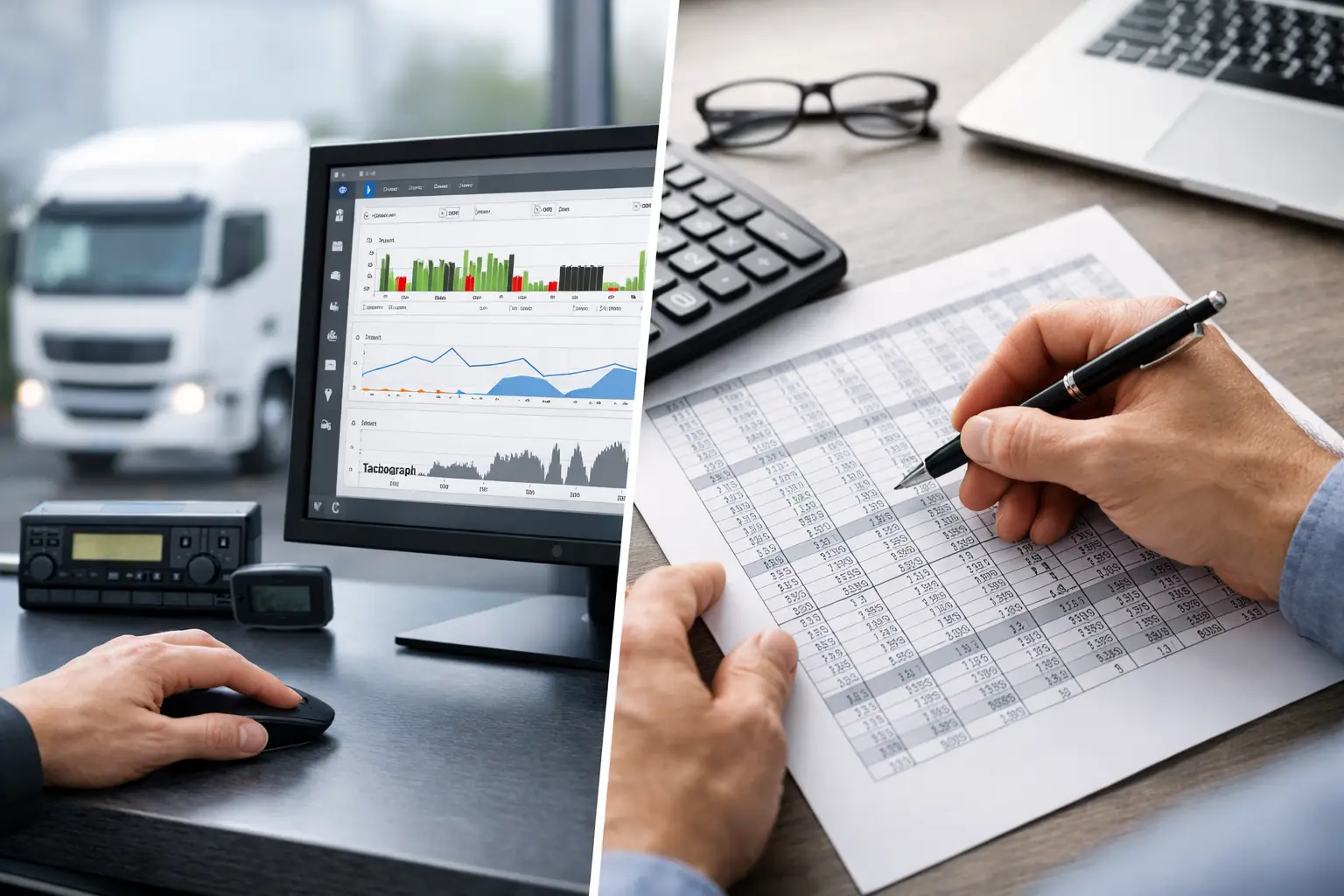
A driver hours spreadsheet can look under control right up to the point it is not. One missing manual download, an outdated driver record or a formula copied incorrectly can leave a transport manager chasing information when they should be dealing with an infringement. The practical question behind tachograph software vs spreadsheets is not whether a spreadsheet can hold the data. It can. The question is whether it gives an operator enough confidence, speed and evidence to manage compliance every day.
For a small operation with a handful of drivers and stable work patterns, spreadsheets may appear cheaper and familiar. But as vehicles, drivers, depots and planning pressures increase, manual processes tend to create more work than they remove. Purpose-built tachograph software is designed to collect, interpret and present the information needed to protect the operator licence while helping the team plan work properly.
Where spreadsheets still have a place
Spreadsheets are not inherently a poor management tool. They are flexible, widely understood and useful for one-off analysis. A transport office may use them to model a new contract, compare fuel figures, track a short-term project or create a simple weekly handover list.
They can also be workable for basic driver hours monitoring where the fleet is very small, the person maintaining the file has time to do it properly and tachograph data is downloaded and reviewed consistently. The challenge is that these conditions rarely hold for long. A business that adds another vehicle, takes on agency drivers or begins operating from a second location can quickly find that its spreadsheet process depends on one knowledgeable person keeping every field current.
That creates a single point of failure. If that person is on holiday, leaves the business or simply has a busy week, checks can be delayed. The data may still exist somewhere, but it is not necessarily available in a form that supports a confident operational decision.
Tachograph software vs spreadsheets: the real differences
The difference is not just digital versus manual. It is a difference in how information moves through the business, who can act on it and how quickly issues become visible.
Data collection and completeness
A spreadsheet normally starts after someone has downloaded driver card and vehicle unit data, saved the files, reviewed them and entered key details manually. Every step takes time and introduces the chance of a missed file, incorrect date range or inconsistent naming convention.
Tachograph software can automate remote downloads from driver cards and vehicle units on a scheduled basis. Rather than relying on a vehicle returning to the depot or a manager remembering to connect a device, the platform builds a current compliance record in the background. This does not remove the need for management oversight, but it reduces the administrative effort needed to maintain that oversight.
For operators, the key benefit is completeness. You are less likely to discover that a driver card has not been downloaded only when an audit or investigation is already underway.
Driver hours monitoring
A spreadsheet is usually retrospective. It tells the team what happened after data has been downloaded, processed and entered. That may be sufficient for monthly reporting, but it is less useful when dispatch needs to know whether a driver can legally complete an additional collection this afternoon.
Live or near-live driver hours monitoring gives planners a clearer view of available driving time, breaks, daily rest and working time position. The value is practical: allocate work with fewer assumptions, avoid avoidable calls to drivers and reduce the risk of planning a job that cannot be completed legally.
There is still judgement involved. Traffic, loading delays, ferry crossings and unexpected changes can affect a driver's day. Software cannot make the transport decision for you. It does, however, give the planner a current starting point instead of a spreadsheet that may already be out of date.
Infringements and follow-up
Manual processes often identify infringements late, particularly when teams are focused on getting vehicles loaded and dispatched. A spreadsheet can log an issue, but it does not necessarily explain its severity, group repeat events by driver or show whether follow-up action has been completed.
Tachograph compliance software can flag potential infringements, organise them by driver and vehicle, and provide a clearer review process. That helps managers focus on recurring patterns rather than spending hours searching through rows of data. A repeated missed break, for example, may point to a planning problem, a route issue or a driver who needs further guidance.
The software should not be treated as a disciplinary shortcut. Context matters. The most useful compliance process records the event, investigates the reason, speaks with the driver and keeps evidence of the action taken. That is far more defensible than a spreadsheet entry with no supporting record.
Reporting and audit readiness
When the Traffic Commissioner, an auditor or a customer asks for evidence, speed and clarity matter. With spreadsheets, reports can depend on which version is current, whether formulae still work and whether underlying tachograph files have been stored correctly.
A dedicated system provides a more structured record of downloads, analysis and management action. It makes it easier to produce consistent reports by driver, vehicle, date range or infringement type. This is especially useful for mixed fleets where some vehicles operate under tachograph rules while vans, trailers and other assets still need operational visibility.
A software platform will not make an operator compliant by itself. Poor policies, weak driver communication and ignored alerts will still create risk. What it does provide is a reliable framework for proving that compliance is actively managed rather than reviewed occasionally.
The hidden cost of manual administration
The apparent cost saving of spreadsheets can be misleading. The licence fee may be zero, but the work around the file is not. Someone has to download records, chase missing data, check expiry dates, update formulas, investigate issues, prepare reports and answer questions from drivers or planners.
Those tasks often fall to a transport manager who is already handling customer updates, vehicle availability, workshop bookings and daily dispatch. Compliance then becomes something completed after the operational day, which is precisely when it is most likely to be rushed.
There is also a cost to delayed information. If a planner does not know a driver's available time, they may allocate work conservatively and lose utilisation, or take an optimistic view and create a compliance problem. Neither outcome helps margin or service levels.
When software is the stronger choice
Tachograph software becomes particularly valuable when the operation has several drivers, regular long-distance work, changing schedules or more than one person involved in planning and compliance. It is also a sensible step when remote working makes paper files and depot-based downloads harder to manage.
The strongest case is usually not a single feature. It is the combination of remote tachograph downloads, driver hours visibility, infringement management and fleet tracking in one operational view. Instead of switching between a download tool, a spreadsheet and a tracking screen, the team can see compliance alongside the live position of vehicles and trailers.
For a transport manager, that means fewer manual checks before assigning work. For a business owner, it means less reliance on one administrator's personal spreadsheet. For drivers, it can mean more realistic planning and earlier conversations when a schedule is likely to create pressure.
Making the change without disrupting the depot
Moving away from spreadsheets does not need to mean abandoning every existing report on day one. Start by identifying the jobs that consume the most time or carry the greatest risk: overdue downloads, missing driver card data, daily hours checks and infringement follow-up are common examples.
Set clear ownership for alerts and review routines. Software is most effective when the team agrees who investigates infringements, how drivers are briefed and when management reports are reviewed. It should support a disciplined process, not sit unused because nobody is certain what happens after an alert appears.
Then keep spreadsheets for the jobs they do well, such as tailored commercial analysis, while allowing the compliance platform to become the source of truth for tachograph records and driver hours. That is a more realistic approach than trying to force every operational decision into one generic file.
Fleetalyse brings tachograph compliance, live fleet visibility and operational reporting together for UK operators who need less manual admin and greater control. The useful test is simple: if your team cannot quickly see what needs attention, why it matters and what action has been taken, the spreadsheet is no longer helping the operation run safely.