

Van GPS tracking explained for fleet operators

Van GPS tracking is defined as a system combining satellite positioning hardware, cellular data transmission, and fleet management software to deliver real-time vehicle location and operational data to fleet managers. For UK logistics operators and fleet managers, understanding how this technology works is the difference between reactive firefighting and proactive fleet control. This article covers the technical mechanics, key features, installation options, and compliance obligations you need to know, with van gps tracking explained in practical terms from hardware to data dashboard.
How van GPS tracking works: the technical breakdown
A van GPS tracking system consists of three integrated components: the installed tracker device recording location and speed, the cellular connection transmitting data to a remote server, and the fleet software displaying live and historical information. Each layer depends on the others. Remove one and the system either goes blind or produces data you cannot act on.
The positioning layer relies on multi-constellation GNSS, drawing signals from GPS (United States), GLONASS (Russia), Galileo (Europe), and BeiDou (China) simultaneously. This approach delivers positional accuracy below 2.0 metres, which matters enormously in urban environments where signal bounce off buildings degrades single-constellation performance. For a fleet operating across central London or Birmingham city centre, that precision separates a confirmed delivery address from a neighbouring street.
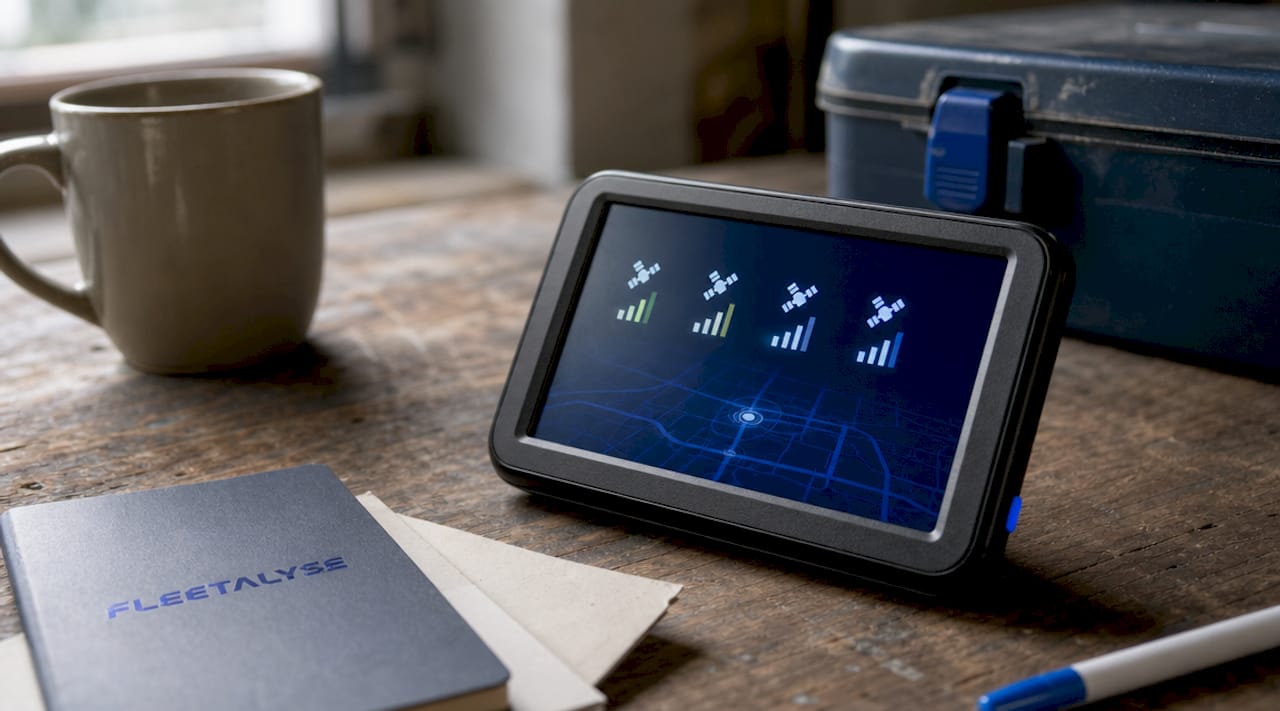
The data transmission layer uses LTE Cat 1 modems, which support up to 10 Mbps throughput for telematics data, with automatic 2G fallback for areas with patchy coverage. This fallback mechanism is not a compromise. It is a deliberate design choice that keeps position, speed, and diagnostic data flowing even in rural or underground car park environments where LTE signal drops.
Here is how data flows through the system, step by step:
- The GNSS receiver locks onto satellite signals and calculates the vehicle’s precise position, speed, and heading.
- Onboard sensors record additional inputs: ignition status, battery voltage, motion detection, and harsh event triggers.
- The cellular modem packages this data and transmits it to a cloud server at configurable intervals, typically every 10 to 60 seconds.
- If connectivity drops, the device buffers data internally and uploads it once signal is restored, preventing gaps in trip history.
- The fleet management software processes incoming data and presents it as live map positions, event alerts, and historical reports.
Pro Tip: Devices that buffer data during coverage gaps are non-negotiable for mixed urban and rural fleets. Always confirm buffer capacity and upload behaviour before committing to a hardware specification.
The hardware itself includes a GNSS receiver, cellular modem, motion sensor, backup battery, and either an OBD-II interface or a direct CAN bus connection. CAN bus connections provide richer real-time vehicle diagnostic data than OBD-II, including fuel consumption, engine load, and fault codes, making them the preferred choice for fleets where maintenance visibility is a priority.
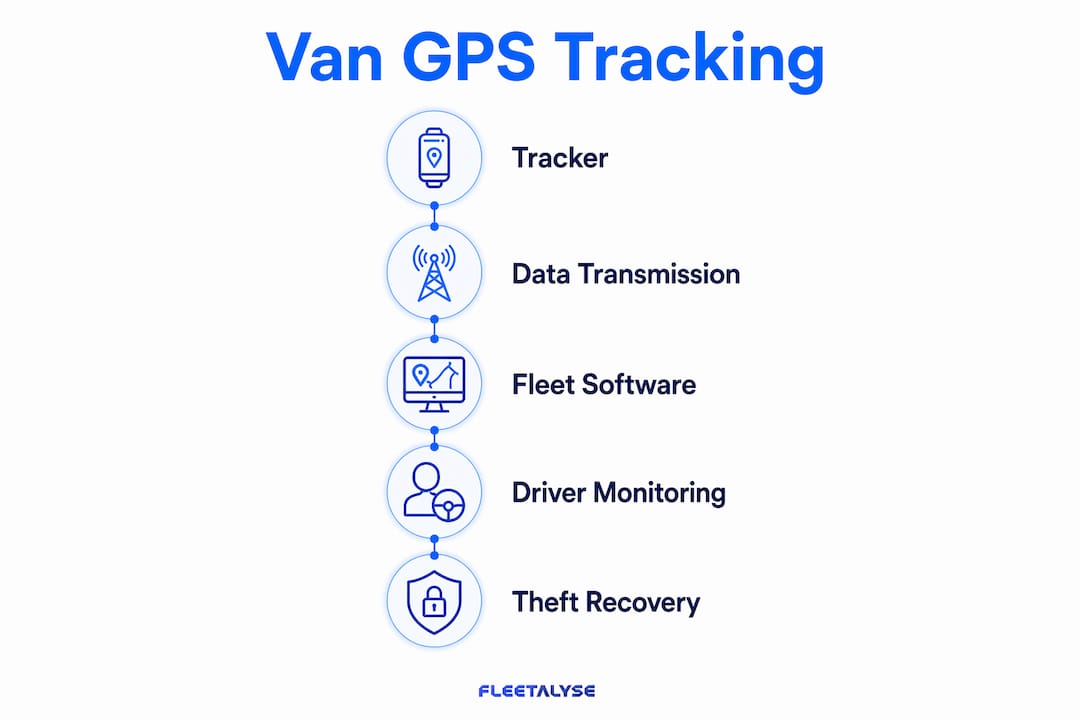
What features do van GPS tracking systems offer?
Think of GPS van tracking as an event and evidence system, not just a map of dots. The location data is the foundation, but the operational value comes from the telematics layer built on top of it.
Core features available across most van tracking platforms include:
- Real-time location tracking: Live map view showing each vehicle’s current position, speed, and direction, updated every few seconds.
- Trip history and route playback: Full reconstruction of every journey, including stops, idle periods, and route deviations, useful for customer disputes and driver coaching.
- Driver behaviour monitoring: Automatic detection of harsh braking, sharp cornering, rapid acceleration, and excessive idling, scored per driver or per vehicle.
- Geofencing alerts: Configurable virtual boundaries that trigger notifications when a vehicle enters or leaves a defined zone, such as a depot, customer site, or restricted area.
- Ignition and battery status: Instant alerts when a vehicle starts, stops, or shows abnormal battery readings, supporting both security and maintenance awareness.
- Fuel consumption data: Where CAN bus integration is active, fuel usage per trip or per driver is available, enabling direct comparison across the fleet.
The operational benefits of these features are concrete. Route playback allows you to investigate a disputed delivery time in under two minutes rather than calling the driver. Harsh braking data identifies the drivers generating the most tyre and brake wear, reducing maintenance costs. Geofencing catches unauthorised vehicle use outside working hours, which is one of the most common sources of unexplained fuel spend in commercial fleets.
Pro Tip: Driver behaviour scoring is most effective when shared transparently with drivers from day one. Fleets that present scores as a coaching tool rather than a surveillance mechanism see faster improvement in driving standards and less resistance to the technology.
Theft recovery is a further benefit that is often underestimated. A hardwired tracker with backup battery continues transmitting even after the vehicle’s main power is cut, giving police and fleet managers a live position feed during a theft event.
How do you install a van GPS tracker?
Installation method determines tamper resistance, data richness, and the effort required to deploy across a fleet. The three primary options each suit different operational contexts.
| Installation type | How it works | Best suited for | Key limitation |
|---|---|---|---|
| Hardwired | Wired directly to vehicle power and ignition circuits, often with CAN bus connection | Permanent fleet vehicles requiring full data access and tamper resistance | Requires professional installation or technical knowledge |
| OBD-II plug-in | Plugs into the vehicle’s OBD-II diagnostic port, no wiring needed | Small fleets or short-term deployments needing quick setup | Easily removed or obscured by drivers; limited diagnostic depth |
| Battery-powered | Self-contained unit with internal battery, magnetically or mechanically attached | Trailers, equipment, or shadow tracking alongside a primary device | Requires periodic recharging; no ignition or CAN bus data |
Hardwired trackers are the standard choice for permanent commercial fleets. They are tamper-resistant, draw uninterrupted power from the vehicle, and provide full access to vehicle data via CAN bus. The installation investment is recovered quickly through the richer data and reduced risk of device removal.
OBD-II plug-in devices have genuine value for small businesses or operators trialling tracking before committing to hardwired hardware. The vulnerability is real, though. A driver who knows the device is in the OBD port can remove it in seconds, and many fleet managers discover this only when reviewing trip history gaps.
Battery-powered units serve a specific purpose as shadow trackers on high-value vehicles or as the primary tracking solution for trailers and non-powered assets. Placed in a concealed location, they provide a secondary position source that persists even if the primary hardwired unit is tampered with.
What are the compliance and privacy obligations for van GPS tracking?
Van GPS tracking data is personal data under the UK GDPR and the Data Protection Act 2018. This is not a grey area. Location data tied to a named driver or a vehicle assigned to a specific individual meets the legal definition of personal data, and processing it without a documented lawful basis exposes your organisation to regulatory risk.
UK GDPR compliance for fleet telematics requires four specific steps:
- Lawful basis: Document whether you are relying on legitimate interests or contractual necessity. Legitimate interests is the most common basis for fleet tracking, but it requires a balancing test showing the business need outweighs driver privacy impact.
- Privacy notice: Drivers must receive a written notice before tracking begins, explaining what data is collected, how long it is retained, and who has access to it.
- Data minimisation: Collect only the data you genuinely need. If you do not use fuel consumption data operationally, do not activate that feature without a clear purpose.
- Retention policy: Define how long trip data, event records, and driver scores are stored. Many operators use 90 days as a working standard, but this should reflect your operational and legal requirements.
Tachograph obligations add a separate compliance layer for heavier vans. UK vans over 2,500kg used for international journeys must fit Smart Tachograph Version 2 from 1 July 2026, with requirements covering driver cards, mandatory data downloads, and driver training. GPS telematics data supports but does not replace tachograph obligations. Fleets must maintain mandated tachograph download intervals and manage driver hours evidence separately from their tracking platform.
For operators running mixed fleets of vans and HGVs, the practical approach is to integrate GPS tracking and tachograph data within a single platform. This removes the administrative burden of cross-referencing two separate data sources when responding to a DVSA inspection or investigating a driver hours query.
Key takeaways
Van GPS tracking delivers operational value only when hardware specification, data integration, and compliance obligations are addressed together from the outset.
| Point | Details |
|---|---|
| Three-layer system | Every van tracker combines GNSS hardware, cellular transmission, and fleet software to function correctly. |
| CAN bus over OBD-II | CAN bus connections provide richer diagnostic data and are harder to tamper with than plug-in OBD-II devices. |
| GDPR is non-negotiable | Tracking data is personal data under UK GDPR; document lawful basis and issue driver privacy notices before deployment. |
| Tachograph rules still apply | Smart Tachograph Version 2 is mandatory for vans over 2,500kg on international routes from July 2026. |
| Hardwired for permanence | Permanent fleet vehicles benefit most from hardwired installation, which provides tamper resistance and full data access. |
Why most fleets underuse the data they already collect
I have worked with fleet operators who installed GPS tracking across their entire van fleet, then used it almost exclusively to answer one question: “Where is the van right now?” That is a legitimate use case, but it captures perhaps 10% of what the technology can actually do for you.
The real gains come from treating the tracking platform as an evidence and analysis system. Harsh braking frequency mapped against route type tells you whether a driver is struggling with a specific road or genuinely driving poorly across all conditions. Idle time data, when reviewed weekly rather than monthly, catches the habit of leaving engines running during long customer visits before it becomes a fuel budget problem. Geofence breach logs, cross-referenced with fuel card transactions, have helped operators identify unauthorised vehicle use that would otherwise have remained invisible.
My honest view is that the technology is rarely the limiting factor. The limiting factor is the process built around it. Fleets that schedule a monthly data review, share driver scores with their drivers, and act on maintenance alerts within 48 hours consistently outperform those that treat the platform as a passive monitoring tool. The data is only as useful as the decisions it informs.
On the compliance side, I would caution against treating UK GDPR obligations as a box-ticking exercise. Drivers who understand why tracking is in place, what data is collected, and how it is used are significantly less likely to interfere with devices or raise formal complaints. Transparency is not just a legal requirement. It is the foundation of a tracking programme that actually works.
— Vytautas
How Fleetalyse supports your van fleet tracking needs
Fleetalyse provides UK fleet operators with an integrated platform covering GPS vehicle tracking, driver behaviour monitoring, and tachograph compliance in a single dashboard. The hardware range includes plug-and-play telematics units and hardwired devices designed for commercial vans, with CAN bus connectivity for full diagnostic data access.
For operators managing mixed fleets, Fleetalyse combines van GPS data with remote tachograph downloads, removing the need to cross-reference separate systems during DVSA inspections. The platform is built around UK transport regulations, with UK-based support for installation queries and compliance questions. Explore the full van GPS tracker range or visit Fleetalyse to discuss your fleet’s specific requirements with the team.
FAQ
What is van GPS tracking?
Van GPS tracking is a system combining a GNSS tracker device, cellular data transmission, and fleet management software to provide real-time vehicle location, trip history, and driver behaviour data to fleet operators.
How accurate are van GPS trackers?
Modern trackers using multi-constellation GNSS achieve positional accuracy below 2.0 metres, with performance maintained in urban environments through simultaneous use of GPS, GLONASS, Galileo, and BeiDou signals.
Do I need to tell my drivers about GPS tracking?
Yes. Under UK GDPR and the Data Protection Act 2018, tracking data is personal data and drivers must receive a written privacy notice before tracking begins, covering what is collected, why, and how long it is retained.
What is the difference between OBD-II and hardwired trackers?
OBD-II plug-in trackers require no installation but can be removed easily by drivers and offer limited diagnostic depth. Hardwired trackers are tamper-resistant, draw continuous power, and support CAN bus connections for richer vehicle data.
Do van GPS trackers replace tachographs?
No. GPS telematics data supports compliance monitoring but does not replace tachograph obligations. Vans over 2,500kg used on international routes must fit Smart Tachograph Version 2 from 1 July 2026 and maintain mandated download intervals separately.