
Choosing the cheapest GPS unit on the market is often the most expensive mistake a transport manager can make. You're likely tired of vague quotes and the constant worry that hidden subscription fees will eat your margins. It's frustrating when you just want a clear answer on the cost of vehicle tracking for small business uk fleets without being trapped in a restrictive contract for hardware that doesn't deliver. We understand that for regional operators, every pound spent must justify its place on the balance sheet.
This guide provides a transparent breakdown of the actual investment required in 2026, from initial hardware and professional installation to monthly subscriptions. You'll learn how to avoid common contract traps whilst maximising your return through improved fuel efficiency and simplified DVSA compliance. We'll examine the price difference between basic GPS and advanced telematics, and explain why Thatcham-approved systems are vital for lowering your insurance premiums. By the end of this article, you'll have a clear roadmap to selecting a system that protects your assets, improves driver behaviour, and secures your bottom line.
Key Takeaways
- Break down the total cost of vehicle tracking for small business uk fleets by distinguishing between upfront hardware investment and monthly subscriptions.
- Compare basic GPS trackers against advanced telematics that integrate remote tachograph downloads for seamless DVSA compliance.
- Identify and avoid hidden fees such as de-installation charges and auto-renewal clauses that inflate the total cost of ownership.
- Calculate your potential return on investment by factoring in fuel savings from route optimisation and reductions in annual insurance premiums.
- Use live driver hours monitoring to prevent regulatory breaches and improve daily operational efficiency across your fleet.
Understanding the Cost Components of UK Vehicle Tracking
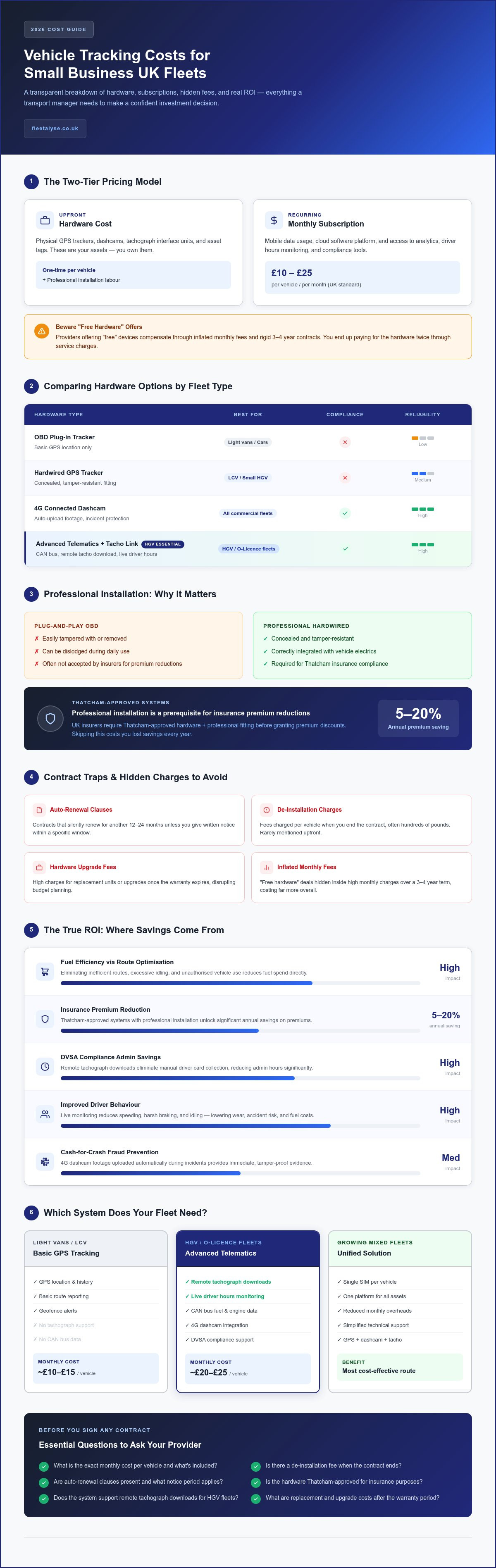
Calculating the cost of vehicle tracking for small business uk requires looking past the initial quote. The industry standard is a two-tier pricing model consisting of hardware and recurring subscriptions. Some providers attempt to lure operators with "free" hardware offers. Be cautious. These deals usually result in significantly higher monthly fees and rigid, long-term contracts. You essentially pay for the device through inflated service charges over three or four years.
Your vehicle type significantly influences the final bill. A light commercial vehicle (LCV) fleet might only require basic GPS location data. However, HGV operators must consider the demands of their Operator Licence. Compliance with DVSA regulations is non-negotiable. This means investing in hardware that supports remote tachograph downloads and live driver hours monitoring. Choosing a system that doesn't support these features is a false economy that leads to manual admin burdens and potential fines.
Initial Hardware vs. Ongoing Service Fees
Hardware costs involve the physical purchase of GPS trackers, dashcams, or asset tags. These are your assets. The ongoing service fee covers the mobile data used by the vehicle tracking system and the software platform used to view your fleet. A standard subscription in the UK typically ranges from £10 to £25 per vehicle each month, depending on the feature set. Always verify the cost of replacement units. At Fleetalyse, we focus on providing professional tools for UK transport compliance without hidden complexities. Some providers charge high fees for hardware upgrades or repairs once the initial warranty expires, which can disrupt your budget planning.
The Role of Professional Installation
Plug-and-play OBD trackers are popular for their simplicity, but they aren't ideal for professional fleets. They're easily tampered with and can be knocked out of place during daily operations. Hardwired installation is the superior choice for reliability and security. Professional fitting ensures the device is concealed and integrated correctly with the vehicle's electrical system.
Expect to pay professional labour rates for fleet-wide fitting. While this adds to the upfront cost, it's often a prerequisite for insurance compliance. Most UK insurers require Thatcham-approved hardware and professional installation before they'll consider premium reductions. These reductions can be substantial, often ranging from 5% to 20% of your annual premium. Skipping professional installation might save money today, but it could cost you thousands in lost insurance savings and unrecorded data.
Comparing Hardware Options: GPS, Dashcams, and Tacho Links
Your hardware choice dictates the final cost of vehicle tracking for small business uk operations. A simple GPS tracker is sufficient for basic van tracking. However, heavy commercial fleets require telematics that interface directly with the vehicle's CAN bus. This connection provides fuel data, engine diagnostics, and idling alerts that a basic tracker cannot reach. Investing in higher-spec hardware upfront often pays for itself by consolidating multiple functions into a single device.
Integrated systems are the most cost-effective route for growing fleets. Instead of paying for separate GPS, dashcam, and tachograph subscriptions, a unified solution uses a single SIM card and data plan. This reduces your monthly overheads and simplifies your technical support. For a clear view of how these tools fit your budget, you can view our transparent pricing options.
Commercial Dashcam Hardware Solutions
Dashcams are no longer optional for UK operators. Entry-level SD card cameras are cheap but unreliable. If a card fails or is tampered with, you lose vital evidence. Professional 4G connected dashcams upload footage automatically during an incident. This provides immediate proof for insurance claims, often preventing "cash for crash" scams. Hardware durability is also a factor. Consumer-grade cameras fail under the heat and vibration of commercial use. Industrial units are built for 24/7 operation in harsh environments, ensuring you don't face frequent replacement costs.
Tachograph and Compliance Hardware
HGV operators face unique hardware requirements to meet DVSA standards. Remote tachograph download tools eliminate the need for manual driver card and vehicle unit (VU) downloads. This hardware connects directly to the digital tachograph. It transmits data wirelessly to your analysis software, ensuring you never miss a deadline. Live driver hours monitoring is another critical feature. It allows office staff to see remaining drive time in real-time, preventing accidental infringements. At Fleetalyse, we specialise in these compliance-focused tools. Our hardware integrates seamlessly with existing analysis platforms, removing the friction from regulatory adherence and manual data collection.
Subscription Models and Data Fees: Avoiding Hidden Charges
Understanding the recurring cost of vehicle tracking for small business uk operators requires a look at the software behind the hardware. Standard UK subscriptions for professional-grade fleet tracking typically range between £10 and £25 per vehicle each month. Advanced telematics that include AI video or HGV-specific compliance tools often sit between £20 and £35+. These rates usually depend on the length of your commitment. A 36-month contract typically secures the lowest monthly fee, whilst shorter 12-month terms offer flexibility at a higher price point.
Contract traps are common in this sector. Many providers include auto-renewal clauses that extend your agreement by 12 months if you don't cancel within a specific 90-day window. Always check the small print for these terms. For fleets operating between the UK and the EU, data roaming is another vital consideration. Professional systems use multi-network SIM cards. These connect to the strongest available signal regardless of the provider, ensuring constant visibility without the risk of unexpected roaming surcharges.
A professional tachograph analysis subscription should automate your compliance. It must include:
- Automated remote downloads of vehicle and driver card data.
- Detailed driver infringement reporting.
- Working Time Directive (WTD) tracking.
- Secure cloud storage for DVSA-standard record keeping.
Data Usage and SIM Card Costs
Live tracking requires minimal data. However, 4G dashcams change the equation. Video files are large. A system that streams live video or auto-uploads incident clips will consume significantly more bandwidth. Look for fixed-rate contracts. These protect you from "bill shock" if a vehicle has a high-incident month. Professional systems use roaming SIMs that connect to the strongest available network. This ensures coverage in rural signal blackspots where single-network trackers often fail.
Software Access and Compliance Reporting
The software platform is where you extract value from your data. Basic location tracking is a cost; full telematics is an investment. High-quality suites provide automated DVSA-standard reports that are essential for audit preparation. Check if your provider charges per user. Some platforms allow unlimited office-based managers to access the system, whilst others charge for every additional login. Transparent providers, such as Fleetalyse, focus on providing all necessary compliance tools within a straightforward monthly fee, avoiding the complexity of tiered user licences.
The True ROI: How Tracking Reduces Small Business Overheads
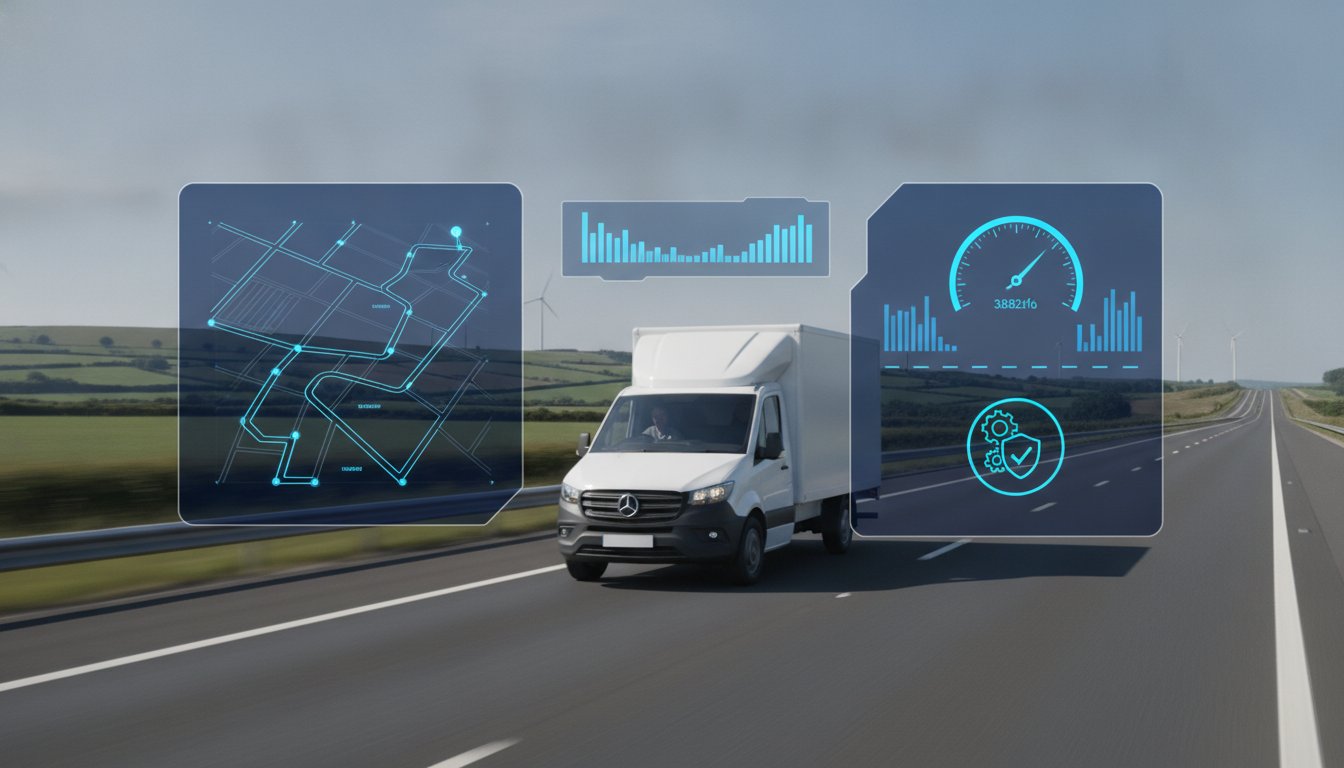
The cost of vehicle tracking for small business uk fleets is often recouped within three to nine months through direct operational savings. While the monthly subscription is a visible expense, the hidden costs of an unmonitored fleet are far higher. Fuel is the most immediate area for improvement. Route optimisation and idling alerts can cut fuel spending by 10% to 15% according to industry data. These tools identify drivers who leave engines running during deliveries or take inefficient routes. This allows for targeted training that pays immediate dividends on your bottom line.
Insurance premiums represent another major saving. Installing Thatcham-approved tracking and dashcam systems can reduce annual premiums by 5% to 20%. For a small business with a handful of vans, this reduction often covers the entire annual subscription cost. Beyond direct cash savings, tracking data protects your business from the £15,000 average cost associated with a single stolen light commercial vehicle in the UK. It turns a reactive security measure into a proactive financial strategy that secures your assets and your reputation.
Administrative and Compliance Savings
HGV operators see the most significant ROI through automated compliance. Manual tachograph downloads are a massive drain on resources. They require vehicles to return to the depot and staff to manually retrieve data. Remote tachograph downloads eliminate this entirely. This automation saves hours of administrative labour every month and ensures you never miss a DVSA deadline. Live driver hours monitoring also prevents accidental infringements. Avoiding a single DVSA fine or a public inquiry into your Operator Licence justifies the investment in professional-grade telematics. It streamlines the audit process, providing a digital trail that proves your commitment to road safety.
Operational Efficiency and Customer Service
Real-time visibility transforms your customer service. Providing accurate ETAs based on live traffic data improves client trust and reduces "where is my delivery" phone calls. This efficiency allows you to fit more jobs into a working day without increasing your fleet size. Tracking also prevents unauthorised vehicle use or moonlighting, ensuring your assets are only used for company business. By monitoring vehicle health data, you can move from reactive repairs to predictive maintenance. This extends the lifecycle of your vans and HGVs. It allows you to justify vehicle replacement cycles based on hard data rather than guesswork. To start protecting your margins today, select your fleet tracking plan here.
Fleetalyse: Transparent Costs for UK Transport Operators
Managing the cost of vehicle tracking for small business uk fleets shouldn't feel like a negotiation with a distant, global software provider. At Fleetalyse, we take a different approach. We're a UK-based partner that understands the specific pressures of regional infrastructure and DVSA regulations. We provide professional tools without marketing hyperbole. Our focus is on functional utility and operational clarity, ensuring you only pay for features that actually improve your bottom line.
Our remote tachograph download solution is a prime example of this pragmatic mindset. It wasn't designed for theoretical data collection; it was built for the rigours of real-world transport operations. By choosing a specialist that focuses on the domestic market, you gain access to a system that integrates seamlessly with your existing tachograph analysis software. This eliminates the need for manual data retrieval and reduces the risk of compliance failures that can lead to costly public inquiries.
Compliance-First Tracking Solutions
We offer a unified platform for GPS fleet tracking, trailer tracking, and live driver hours monitoring. This integration means you aren't managing multiple expensive subscriptions or dealing with incompatible hardware. Our hardware choices are grounded in durability. We select devices that withstand the daily demands of HGV and van fleets. Fairness is at the heart of our contractual terms. We believe in transparency, providing clear financial details upfront so you can plan your budget with confidence. We don't use hidden fees to subsidise "free" hardware.
Next Steps for Your Fleet
Choosing the right package depends on your specific fleet composition. Whether you operate a small fleet of vans or a complex HGV operation requiring asset tracking and remote tacho links, we have a solution that fits. The transition from manual downloads to an automated system is straightforward. It's designed to save you time and administrative headaches from day one. You can organise your fleet tracking and compliance today by selecting the plan that matches your requirements.
Secure Your Fleet's Financial Future
Managing the cost of vehicle tracking for small business uk operators is a matter of long-term strategy rather than just immediate expense. You now have a clear breakdown of the two-tier cost structure and how to avoid the pitfalls of "free" hardware that leads to expensive, restrictive contracts. By choosing a system that integrates remote tachograph downloads and live driver hours, you shift from reactive administration to proactive fleet management. This move protects your Operator Licence and ensures your business remains compliant with DVSA standards at all times.
The operational gains are tangible and immediate. Fuel savings from reduced idling and lower insurance premiums for tracked vehicles often cover the subscription cost within months. As UK-based compliance experts, we focus on providing no-nonsense professional hardware and automated data solutions that work for regional fleets. Don't let hidden fees or complex contracts hinder your operational growth. View our transparent pricing and checkout online to equip your vehicles with the tools they need. Taking control of your fleet data is a practical step toward a more efficient, profitable future.
Frequently Asked Questions
How much does vehicle tracking cost per month for a small business in the UK?
Monthly subscriptions typically range from £10 to £25 per vehicle for standard tracking. Advanced telematics with compliance tools can exceed £35. The final cost of vehicle tracking for small business uk fleets depends on the features required. Basic GPS location is the most affordable entry point. However, systems that include remote tachograph downloads and live driver hours monitoring provide higher value by reducing administrative labour and preventing expensive regulatory fines.
Is there a difference in cost between van tracking and HGV tracking?
Yes, HGV tracking is generally more expensive due to the requirement for tachograph integration. While van tracking focuses on location and driver behaviour, HGV systems must connect to the vehicle's CAN bus and digital tachograph. This hardware is more complex and requires specialised data plans to handle the automated remote downloading of driver cards and vehicle units. These features are essential for maintaining a valid UK Operator Licence.
Do I have to pay for professional installation for my fleet trackers?
Professional installation is highly recommended and often required by UK insurers for premium reductions. While plug-and-play units exist, they're prone to tampering and accidental disconnection. Professional fitting ensures the device is securely concealed and integrated with the vehicle's electrical system. Labour rates typically vary between £20 and £150 per vehicle. This upfront investment protects your equipment warranty and ensures the reliability of the data your business relies on.
Can vehicle tracking really lower my business insurance premiums?
Installing a Thatcham-approved tracking system can reduce annual insurance premiums by 5% to 20%. Insurers value the increased security and the ability to recover stolen assets quickly. Many providers also offer integrated dashcams. These provide vital video evidence that can expedite claims and protect your business from fraudulent "cash for crash" incidents. Over a year, these insurance savings often offset a significant portion of the monthly subscription fees.
What are the hidden costs I should look out for in a tracking contract?
Look out for auto-renewal clauses that extend contracts without your explicit consent. Some providers also charge de-installation fees of £50 to £75 per unit when you terminate a service. Other common hidden costs include additional charges for software updates, data roaming fees for EU travel, and per-user licence fees for office staff. At Fleetalyse, we prioritise transparency. We provide clear contractual terms and straightforward pricing to help you avoid these common industry pitfalls.
Is remote tachograph download worth the extra monthly cost?
For HGV operators, remote tachograph download is almost always worth the investment. It eliminates the need for vehicles to return to the depot for manual data retrieval. This saves several hours of administrative work per vehicle each month. More importantly, it ensures your data is always up to date for DVSA audits. Preventing a single compliance infringement can save your business thousands of pounds in fines and protect your reputation with the Traffic Commissioner.
How much data does a 4G dashcam use in a typical working month?
Data usage varies based on how often the camera uploads footage. A standard 4G dashcam used for incident recording and occasional live streaming might use between 500MB and 2GB of data per month. If you frequently stream live video or auto-upload all driving footage, this will increase significantly. To prevent "bill shock", it's best to choose a fixed-rate data plan that covers all your tracking and video requirements within a single monthly fee.
Are there any UK grants available for small business vehicle tracking?
There are currently no direct government grants specifically for vehicle tracking hardware. However, the cost of vehicle tracking for small business uk operators is a tax-deductible business expense. You can often claim capital allowances on the hardware purchase and deduct the monthly subscription fees from your taxable profits. It's advisable to consult with your accountant to understand how these investments can reduce your Corporation Tax liability whilst improving your fleet's operational efficiency.
Frequently asked questions
How much does vehicle tracking cost per month for a small business in the UK?
Monthly subscriptions typically range from £10 to £25 per vehicle for standard tracking. Advanced telematics with compliance tools can exceed £35. The final cost of vehicle tracking for small business uk fleets depends on the features required. Basic GPS location is the most affordable entry point. However, systems that include remote tachograph downloads and live driver hours monitoring provide higher value by reducing administrative labour and preventing expensive regulatory fines.
Is there a difference in cost between van tracking and HGV tracking?
Yes, HGV tracking is generally more expensive due to the requirement for tachograph integration. While van tracking focuses on location and driver behaviour, HGV systems must connect to the vehicle's CAN bus and digital tachograph. This hardware is more complex and requires specialised data plans to handle the automated remote downloading of driver cards and vehicle units. These features are essential for maintaining a valid UK Operator Licence.
Do I have to pay for professional installation for my fleet trackers?
Professional installation is highly recommended and often required by UK insurers for premium reductions. While plug-and-play units exist, they're prone to tampering and accidental disconnection. Professional fitting ensures the device is securely concealed and integrated with the vehicle's electrical system. Labour rates typically vary between £20 and £150 per vehicle. This upfront investment protects your equipment warranty and ensures the reliability of the data your business relies on.
Can vehicle tracking really lower my business insurance premiums?
Installing a Thatcham-approved tracking system can reduce annual insurance premiums by 5% to 20%. Insurers value the increased security and the ability to recover stolen assets quickly. Many providers also offer integrated dashcams. These provide vital video evidence that can expedite claims and protect your business from fraudulent "cash for crash" incidents. Over a year, these insurance savings often offset a significant portion of the monthly subscription fees.
What are the hidden costs I should look out for in a tracking contract?
Look out for auto-renewal clauses that extend contracts without your explicit consent. Some providers also charge de-installation fees of £50 to £75 per unit when you terminate a service. Other common hidden costs include additional charges for software updates, data roaming fees for EU travel, and per-user licence fees for office staff. At Fleetalyse, we prioritise transparency. We provide clear contractual terms and straightforward pricing to help you avoid these common industry pitfalls.
Is remote tachograph download worth the extra monthly cost?
For HGV operators, remote tachograph download is almost always worth the investment. It eliminates the need for vehicles to return to the depot for manual data retrieval. This saves several hours of administrative work per vehicle each month. More importantly, it ensures your data is always up to date for DVSA audits. Preventing a single compliance infringement can save your business thousands of pounds in fines and protect your reputation with the Traffic Commissioner.
How much data does a 4G dashcam use in a typical working month?
Data usage varies based on how often the camera uploads footage. A standard 4G dashcam used for incident recording and occasional live streaming might use between 500MB and 2GB of data per month. If you frequently stream live video or auto-upload all driving footage, this will increase significantly. To prevent "bill shock", it's best to choose a fixed-rate data plan that covers all your tracking and video requirements within a single monthly fee.
Are there any UK grants available for small business vehicle tracking?
There are currently no direct government grants specifically for vehicle tracking hardware. However, the cost of vehicle tracking for small business uk operators is a tax-deductible business expense. You can often claim capital allowances on the hardware purchase and deduct the monthly subscription fees from your taxable profits. It's advisable to consult with your accountant to understand how these investments can reduce your Corporation Tax liability whilst improving your fleet's operational efficiency.