
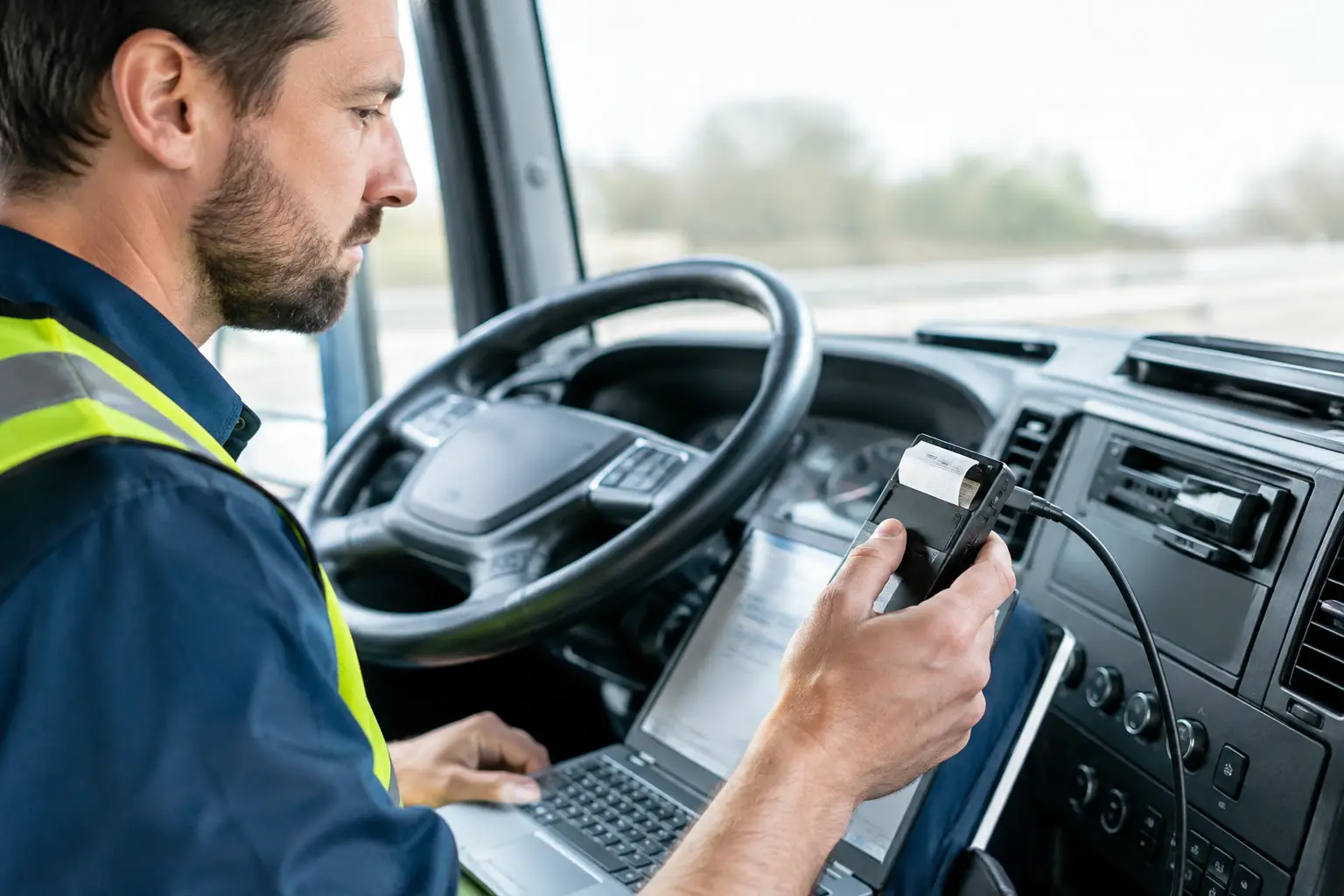
A driver finishes a long week, swaps vehicles, takes a holiday and returns to a different route. Without a reliable process, their tachograph records can be sitting on a driver card or vehicle unit while your compliance team is working from incomplete information. That is why how tachographs are downloaded is more than a technical question. For an operator, downloading data is how you turn recorded activity into evidence, oversight and action.
For UK fleets, tachograph downloads support one of the core responsibilities behind an operator licence: showing that drivers’ hours, working time and vehicle use are being properly managed. Done well, the process also removes a great deal of avoidable chasing, manual handling and spreadsheet work.
Why are tachographs downloaded in the first place?
A digital tachograph records activity including driving, other work, breaks, rest periods, speed events and distance. That information is held in two places: the driver card and the vehicle unit. Downloading creates a secure copy that the operator can retain, analyse and use to identify potential infringements.
The legal and operational purpose is straightforward. If a driver exceeds daily driving time, takes an insufficient break or has a missing activity period, the issue needs to be visible quickly enough to investigate and prevent a repeat. If the DVSA reviews the business, the operator needs complete, accessible records and evidence that they have acted on identified risks.
A tachograph is not simply a device that records driving. It is part of the evidence trail that demonstrates control of your transport operation. The data only becomes useful when it is downloaded, stored and reviewed.
The data operators need to collect
Driver cards and vehicle units tell different parts of the story. A driver card follows the driver between vehicles, recording their activity across the working day. The vehicle unit records activity associated with that particular lorry, including data from drivers who have used it.
Collecting both matters. A driver-card download may show an apparent gap, while the vehicle-unit record can help establish what happened in that vehicle. Equally, a vehicle download alone will not give a complete view of a driver who has worked across several vehicles.
As a minimum, operators are generally expected to download driver cards at least every 28 days and vehicle-unit data at least every 90 days. Many businesses choose shorter intervals. Weekly or more frequent downloads can make exceptions easier to resolve while details are fresh, especially where drivers work from several depots or spend extended periods away from base.
Data must also be retained securely for the required period, normally at least 12 months. Your own policy may require longer retention where records support employment, incident or customer investigations. The right schedule depends on the fleet, but missed downloads should never be left to chance.
Compliance is the main reason, but not the only one
Regular downloads help a transport manager see whether the operation is running within drivers’ hours rules rather than finding out after a roadside check, collision or audit. The value lies in the follow-up. An infringement report without a conversation, training or documented action does little to show active management.
A practical review process distinguishes between deliberate behaviour, an honest mistake, a technical fault and a planning problem. For example, repeated reduced daily rests may point to unrealistic delivery slots or poor overnight parking options, not simply a driver failing to follow instructions. Downloaded data gives managers a fact base for addressing the real cause.
It can also highlight patterns that deserve closer attention, such as frequent manual entries, card withdrawals while driving, missing mileage, unauthorised driving or regular instances of work being recorded incorrectly. Not every exception is a breach, and context matters. However, patterns should be reviewed before they become a licence risk.
Better planning starts with current driver-hours data
The most immediate operational benefit comes when downloaded tachograph data is available during the planning day, rather than weeks after the work has been completed. Dispatchers can make better decisions when they can see a driver’s available driving time, rest requirements and likely return window.
That does not mean tachograph data should be treated as a substitute for professional judgement. Unexpected delays, ferry crossings, loading times and a driver’s actual working pattern all affect the plan. But live or regularly refreshed driver-hours information gives planners a stronger starting point than estimates, phone calls and paper records.
For a mixed fleet, the gains can be substantial. A transport office can avoid allocating a late collection to someone who is close to their driving limit, while identifying another driver who can complete the work lawfully. That reduces last-minute changes, missed jobs and pressure on drivers to make an unachievable schedule work.
Remote downloads reduce the administrative burden
Traditional downloading relies on drivers bringing cards to the office and vehicles returning to a depot where a download device is available. That can work for a small, local fleet, but it becomes fragile as soon as vehicles are out for days at a time, drivers are based remotely or workloads increase.
Remote tachograph downloading collects driver-card and vehicle-unit files without waiting for a vehicle to return. The office can set download schedules, monitor whether files have arrived and concentrate on exceptions rather than routine file collection. Drivers still need to use their cards correctly, and the system must be configured properly, but the process is far less dependent on someone remembering to plug in a device.
This is where an integrated platform has an advantage over disconnected compliance tools. When tachograph information sits alongside GPS tracking, vehicle status and driver information, a manager can investigate an issue with operational context. A potential excess driving event can be considered against the route, stop locations and actual vehicle movement, rather than being reviewed as an isolated line in a report.
What good tachograph download management looks like
The strongest process is consistent, owned and easy to audit. It should set clear download intervals, identify who monitors successful transfers and define what happens when a file is overdue or an infringement is flagged. The aim is not to create more administration. It is to ensure that no part of the process depends on memory or a spreadsheet maintained by one person.
A sensible workflow usually includes automated reminders for missing downloads, secure storage of original files, regular analysis of driver and vehicle data, and a documented review process. Drivers should receive feedback promptly, particularly where coaching is required. Managers should also record the action taken, whether that is a discussion, further training, a route-planning change or confirmation that the event was correctly explained.
There are trade-offs. Daily downloads provide the fastest visibility but may be unnecessary for every operation. Less frequent downloads can reduce the volume of routine review, but they increase the risk that an issue remains undiscovered until it is harder to investigate. The right balance is based on journey patterns, fleet size, risk exposure and the resources available to act on the data.
Avoid treating downloads as a box-ticking exercise
A common weakness is to collect files solely because the rules require them, then leave them unreviewed until an audit approaches. That creates a false sense of security. The operator may have the data, but not the evidence of meaningful control.
Another mistake is focusing only on driver infringements. Tachograph data can reveal issues in planning, depot processes and vehicle allocation. If several drivers repeatedly exceed working limits on the same contract, the management question is whether the work has been designed realistically. Compliance improves when the business deals with the system behind the exception, not just the person who appears in the report.
Fleetalyse combines remote tachograph downloads and driver-hours monitoring with vehicle tracking in one operational view. For transport teams, that means less time collecting files and more time using current information to protect compliance and make practical dispatch decisions.
The most useful tachograph process is the one your team can run every week without chasing cards, guessing at available hours or scrambling for records when a question is asked. Make downloads routine, review the exceptions that matter and use what the data tells you to run a safer, more controlled operation.