
Avoid £120 PCNs and admin: UK clean air zones for fleets
Whether your vehicle gets charged depends entirely on its Euro emission standard and the zone class it enters, so check it now on the Gov before you drive into Bath, Birmingham, Bradford, Bristol, Portsmouth, Sheffield or Tyneside. London’s ULEZ runs separately, with its own checker on the TfL website. Seven English cities now operate charging zones, and getting caught out costs far more than checking ever will.
TL;DR:
- Checking vehicle compliance before travel helps avoid daily charges that can reach up to £100 for HGVs and £9 for cars, saving money and fines.
- Vehicles meeting the relevant Euro standards or registered as historic, military, disabled, or retrofitted are automatically exempt from charges in most zones.
- Fleet operators should perform batch compliance checks and implement automation to reduce administrative time and better manage multiple city zones simultaneously.
- Penalty charges for missing payment are around £120 to £180 and apply to each zone crossed, so timely payment and precise zone awareness are crucial.
- Using GPS tracking and automated reporting tools can dramatically streamline compliance management and prevent costly fines across multiple clean air zones.
Table of Contents
- What is a clean air zone, and how do the classes decide who pays?
- Where are the active zones, and what will a bad day actually cost?
- How do you check a vehicle and pay before or after travel?
- What exemptions and refunds are available?
- How should fleet operators manage clean air zone exposure?
- Why compliance automation changed how we think about CAZs
- How Fleetalyse takes the manual work out of zone compliance
- Sources
What is a clean air zone, and how do the classes decide who pays?
A Clean Air Zone (CAZ) is a defined area where local authorities charge higher-polluting vehicles a daily fee to enter, using number-plate recognition rather than physical barriers or tolls. It is distinct from London’s Ultra Low Emission Zone (ULEZ), which Transport for London runs under separate rules, and from Scotland’s Low Emission Zones, which follow their own national framework. Each English CAZ falls into one of four classes, and the class determines which vehicles get billed.
- Class A: buses, coaches, taxis, and private hire vehicles
- Class B: adds HGVs and other larger commercial vehicles
- Class C: adds vans and minibuses
- Class D: adds cars, and local authorities can choose to include motorcycles
Charges apply below set minimum Euro standards: Euro 4 for petrol cars and vans, Euro 6 for diesel cars and vans, Euro VI for HGVs, buses and coaches, and Euro 3 for motorcycles. Every camera reading gets cross-checked automatically against DVLA vehicle records, so there’s no manual review step slowing things down, and no way to argue your vehicle “probably” qualifies.
Where are the active zones, and what will a bad day actually cost?
Seven English cities run charging Clean Air Zones as of 2026: Bath, Birmingham, Bradford, Bristol, Portsmouth, Sheffield and Tyneside (Newcastle and Gateshead combined). Most operate Class C or D zones, meaning cars and vans are in scope alongside HGVs, taxis and buses. London’s ULEZ sits outside this network entirely, run by TfL rather than a local authority, with its own charge and its own checker.
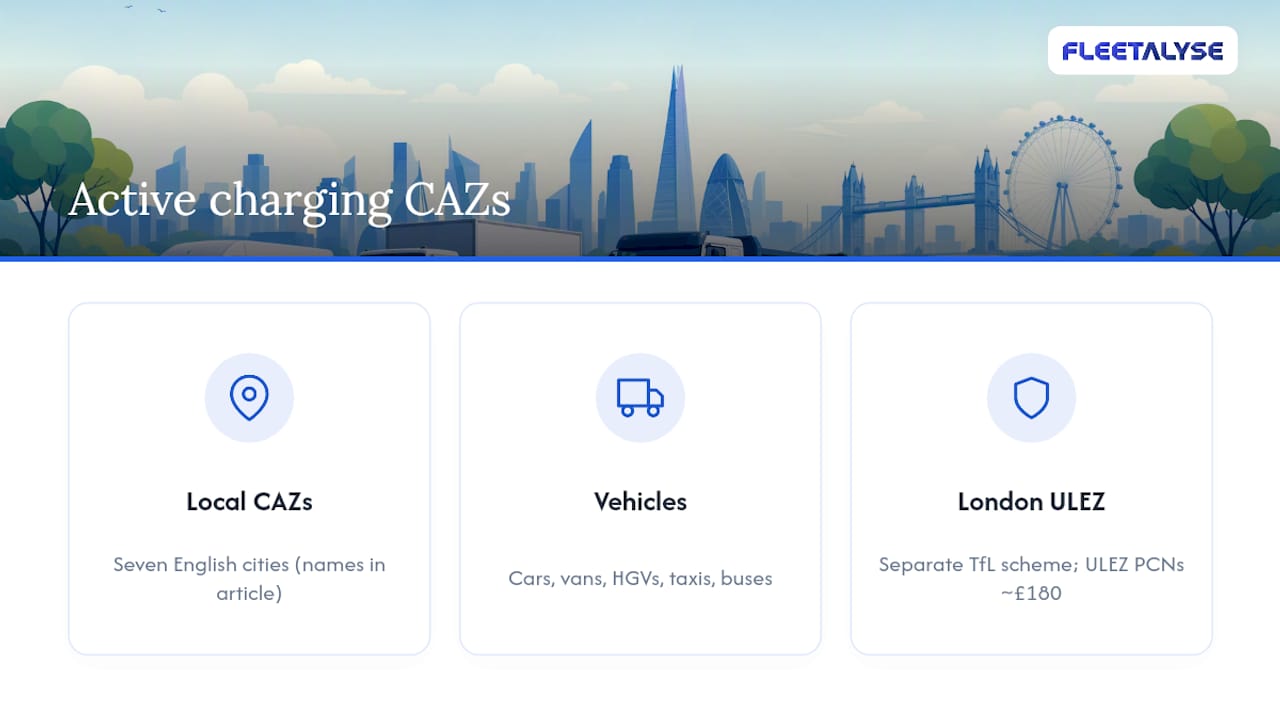
Daily rates vary by council, vehicle type and how badly the vehicle misses the emission threshold. Bristol’s zone, for example, lists car and van charges around £9 a day, with HGVs charged up to £100 a day. Other cities set their own schedules, so always check the specific council’s published rates before travelling.
Pro Tip: Check the exact rate on the relevant council’s own charge page before you travel. Zones with the same class letter don’t always charge the same amount, and rates change.
Miss the payment window and a Penalty Charge Notice typically lands around £120, reduced for prompt payment, while London’s ULEZ PCNs run higher, around £180 with an early-payment discount. Drive through more than one zone in a day, and each one bills you separately. A single delivery route crossing Birmingham and then Sheffield on the same day generates two separate charges, not one.
How do you check a vehicle and pay before or after travel?
- Go to the GOV.UK vehicle checker and enter the registration number.
- The tool tells you whether the vehicle meets the Euro standard for that specific city’s zone, and what the daily charge would be if not.
- For journeys into London, use the separate TfL ULEZ checker, since it runs on its own system with its own charge.
- If a charge applies, pay through the same GOV.UK service, either up to six days before travel or by midnight the sixth day after.
Fleet operators managing more than a handful of vehicles can set up a business account rather than checking registrations one at a time:
- Upload a CSV file listing every registration in the fleet
- Add multiple team members with their own login access
- View outstanding and historical charges across the whole fleet in one place
- Set up an approved payment method so charges get settled automatically
If the checker returns a result you believe is wrong, contact the DVLA directly to query the vehicle record, since an incorrect Euro standard or vehicle category on file is usually the cause.
What exemptions and refunds are available?
National exemptions apply automatically to certain vehicle categories, so you shouldn’t need to apply for these separately:
- Ultra-low emission vehicles that already meet the relevant Euro standard
- Historic vehicles registered as such with the DVLA
- Military vehicles
- Vehicles registered in the disabled tax class
- Vehicles retrofitted and accredited under CVRAS, the Clean Vehicle Retrofit Accreditation Scheme
Local authorities can add their own exemptions or short-term financial support on top of these, so it’s worth checking each council’s own exemptions page rather than assuming the national list is the full picture. If you paid a charge in error, most councils run a refund process through the same portal you paid on.
Pro Tip: If you’re weighing up a retrofit against a full replacement, check the Office for Zero Emission Vehicles grants and any local Clean Air Fund support before committing. Retrofit costs less upfront and can be enough to clear the Euro threshold entirely.
How should fleet operators manage clean air zone exposure?
Run every vehicle in your fleet through the GOV.UK checker in one batch rather than reacting zone by zone. That single audit tells you exactly which assets are non-compliant, in which cities, and it’s the fastest way to see your real exposure before it shows up as penalty charges.
From there, three levels of action make sense:
- Tactical: adjust routes and delivery scheduling to avoid non-compliant zones where a detour costs less than the charge; swap in a compliant vehicle for specific jobs
- Strategic: retrofit under CVRAS where it clears the Euro threshold cheaply, or plan staged replacement using grant support rather than a single expensive swap-out
- Operational: use a business account to centralise payment, and pair it with automated fleet reporting so charge data feeds directly into cost forecasting instead of sitting in a spreadsheet someone updates monthly
For hauliers specifically, understanding how CAZ compliance sits alongside wider operator licence duties helps avoid treating emissions charges as a standalone problem when they’re really one line item in a broader compliance picture.
Pro Tip: Small daily charges look trivial per vehicle but compound fast across a fleet of forty. Routing fixes and administrative automation usually deliver savings faster than waiting for a full fleet renewal cycle.
Why compliance automation changed how we think about CAZs
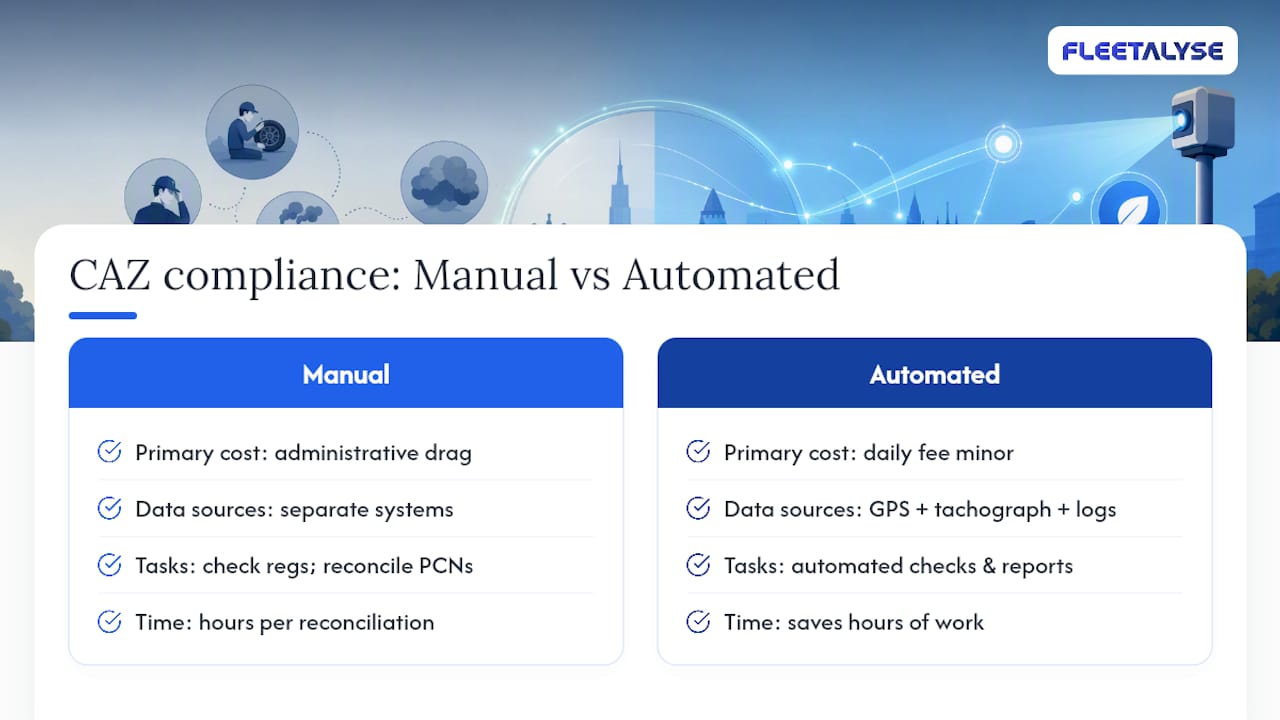
Watching operators absorb clean air zone rules over the past few years, the pattern is consistent: the charge itself rarely breaks a business, but the administrative drag does. Manually checking dozens of registrations against seven different council schedules, then reconciling PCNs against delivery logs, eats hours that nobody budgeted for.
That’s precisely the gap automated compliance reporting closes. Fleetalyse pulls GPS tracking data and remote tachograph downloads into one view, so zone entries, driver hours and vehicle status sit alongside each other rather than in separate systems you have to cross-reference by hand. The administrative burden was always the real cost of clean air zones, not the daily fee.
— Vytautas
How Fleetalyse takes the manual work out of zone compliance
Manually checking registrations, tracking PCN deadlines, and reconciling charges across seven cities is exactly the kind of repetitive admin that eats a fleet manager’s week. Fleetalyse gives you a different route: GPS vehicle tracking that flags zone entries as they happen, remote tachograph downloads that keep driver hours and compliance records in one place, and automated fleet reporting that turns scattered charge data into a forecast you can actually plan around.
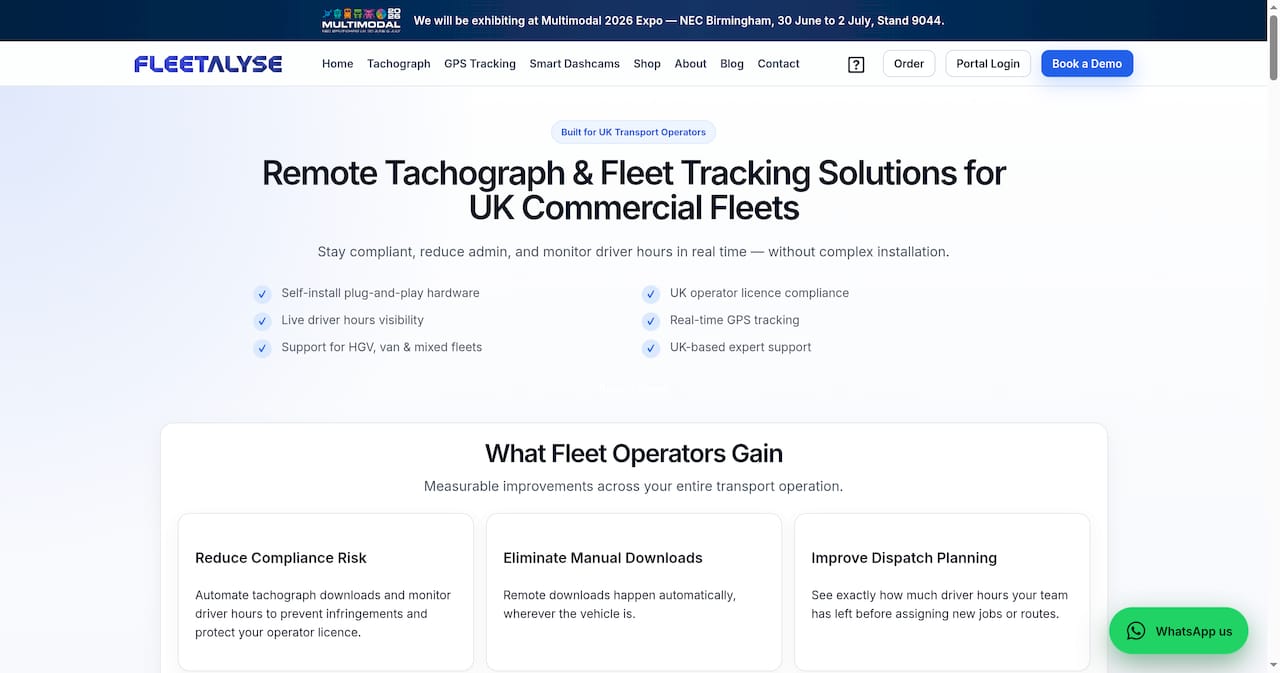
Instead of running the GOV.UK checker registration by registration each time a route changes, a live view of your fleet’s zone exposure means fewer manual lookups and audit-ready records whenever the DVSA comes asking. If you’re managing more than a handful of vehicles across clean air zones, take a look at Fleetalyse’s fleet analysis software and see how automated reporting fits your existing routes and vehicles.