
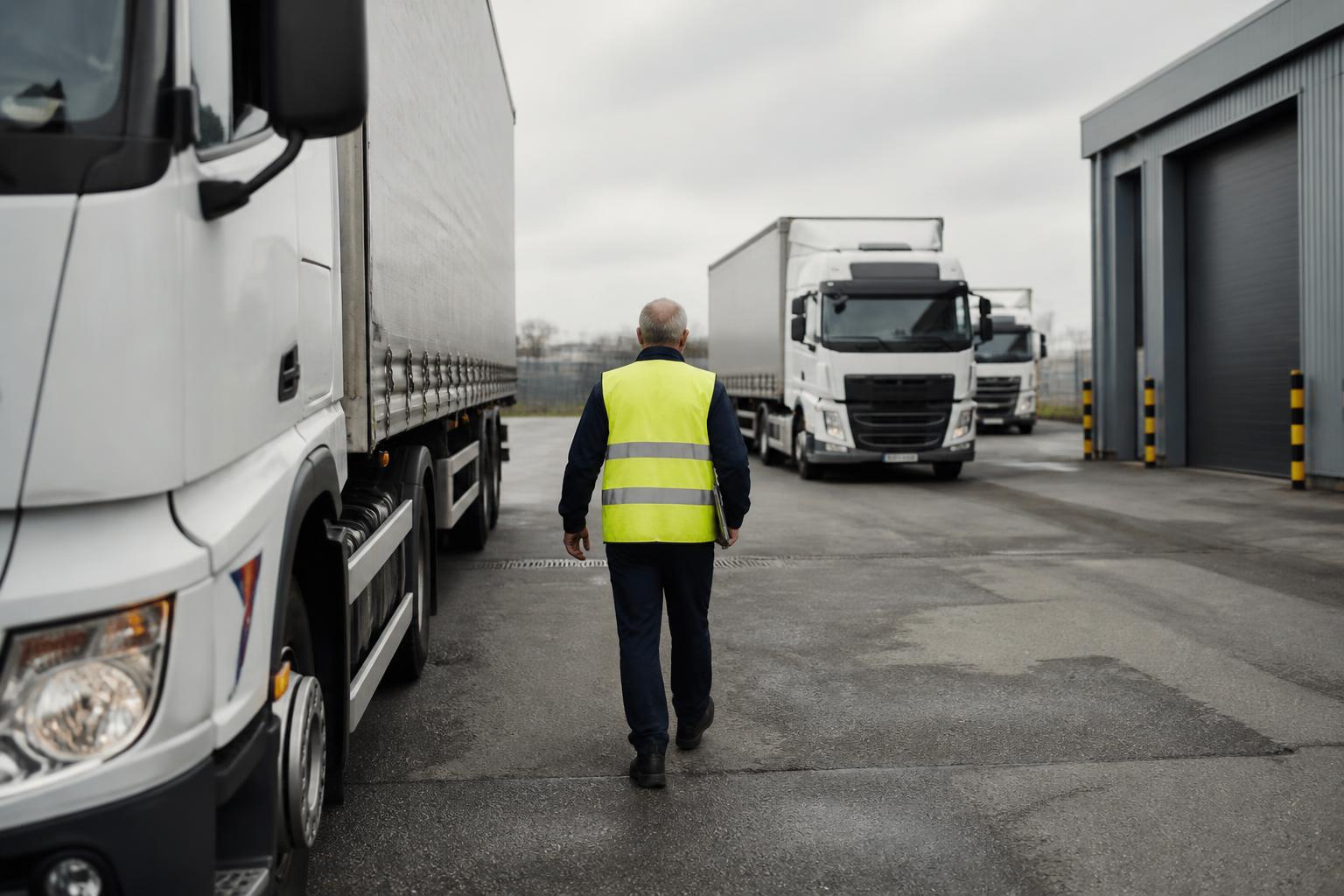
Blind spots in daily fleet operations usually come from one problem, not ten. The data exists, but it sits in separate places, arrives too late, or only gets looked at after something has already gone wrong. Proper fleet analysis closes those gaps by turning live vehicle, driver and compliance data into a working view of what needs attention now.
For UK operators, that matters well beyond knowing where a vehicle is. We need to know whether a driver card download has been missed, whether an HGV is regularly idling on the same route, whether a van is underused, whether a trailer has gone static somewhere unexpected, and whether recurring driving events point to a coaching issue. That is where analysis becomes operational, not just visual.
What fleet analysis means in a working UK fleet
In practice, fleet analysis means reviewing the patterns, exceptions and risks across vehicles, drivers and jobs, then acting on them before they become service failures, compliance issues or unnecessary cost.
That is different from simple tracking. A map view is useful, but it only answers one question, where is it now? Day to day, operators usually need answers to more practical questions:
- Which vehicles have not moved today?
- Which drivers are close to driver hours limits?
- Which units have missing Tachograph downloads?
- Which routes repeatedly create late arrivals or excessive idling?
- Which vehicles show the same fault behaviour every week?
- Which trailers are underused or left in the wrong place?
- Which driving events need review before the next shift?
A working fleet does not run on location alone. It runs on timing, utilisation, legal obligations, customer commitments and safe vehicle use. Good fleet analysis brings those together so the traffic office, compliance team and management are looking at the same picture.
For UK fleets, this is especially important where HGV operations are mixed with vans, trailers, plant or other mobile assets. The more systems you use separately, the more likely it is that someone ends up exporting reports into spreadsheets just to build a complete view. We see operators reduce that manual work when tracking, Tachograph, camera footage and reporting sit in one place through one platform for mixed fleet visibility and compliance workflows.
Which data matters most day to day
Not all fleet data is equally useful. The key is to focus on the sources that answer operational questions quickly and reliably.
GPS
GPS is still the foundation. It tells us where vehicles and assets are, whether they are moving, how long they have stopped, what route they took and when they arrived or left a site.
That supports basic but essential decisions such as:
- reallocating work when a vehicle is delayed
- checking whether a driver reached a delivery point on time
- identifying repeated congestion or route deviation
- spotting unauthorised use outside working hours
- finding static trailers and assets
When linked with geofences, GPS becomes more useful again. Arrival and departure events at depots, RDCs, customer sites and service locations help build a timeline without relying on manual updates.
Tachograph
A Tachograph adds the legal and behavioural context that GPS alone cannot provide. It shows driving, other work, availability, breaks and rest, alongside card and vehicle unit download status.
For HGV operators in Great Britain, this is central to managing driver hours and keeping compliance visibility up to date. The rules are not simply about where the vehicle went, but whether the records behind that movement are complete and lawful. In the UK, operators still work within the retained drivers' hours framework and domestic rules where relevant. Where a fleet runs internationally, EU rules may also apply depending on the journey and vehicle use, so visibility needs to be clear enough to separate those cases properly.
Remote downloads matter because missed card or vehicle unit files often do not become obvious until someone sits down to check them. By then, the gap is already there. With analysis built around Tachograph activity, we can see missing downloads and likely issues much earlier. Our guide to Tachograph analysis that cuts compliance guesswork goes into that in more detail.
Smart dashcams
Smart dashcams help answer a different set of questions. They show what happened around a harsh brake, collision risk event, disputed incident or unsafe manoeuvre. That is valuable for claims handling, coaching and protecting drivers from incorrect allegations.
Used properly, Smart dashcams are not just about storing footage. They support review by exception. Instead of manually checking hours of video, operators can focus on triggered events and the surrounding context, then decide whether the issue was driver behaviour, road conditions, another road user, or something operational such as unrealistic scheduling.
CAN data
CAN data gives a deeper view into vehicle behaviour and status. Depending on vehicle type and integration, it can provide information such as ignition status, fuel-related signals, mileage, engine parameters and warning indicators.
That helps answer questions like:
- is the reported mileage consistent with route activity?
- are vehicles idling excessively with the engine running?
- do repeated warning patterns suggest a maintenance issue?
- is utilisation being measured accurately across the fleet?
For fleets looking to move beyond simple location tracking, CAN data often makes the difference between assumptions and evidence.
How fleet analysis supports compliance and driver hours
Compliance problems rarely start as major failures. More often, they begin as small gaps in visibility. A missed download. A driver who is repeatedly close to a limit. A vehicle unit that has not reported as expected. A card that was not available when planned.
Fleet analysis helps us catch those early.
In a UK HGV operation, driver hours management depends on timely, complete records. If card downloads or vehicle unit downloads are missed, the office may not have a current view of infringements risk, rest patterns or outstanding issues. That creates pressure at audit time and can leave transport managers making decisions without the full picture.
A useful analysis setup should show:
- whether driver card downloads are up to date
- whether vehicle unit downloads are up to date
- which drivers or vehicles are approaching due dates
- whether any data has failed to arrive remotely
- which records need attention before they become a compliance gap
That is where exception-based reporting matters. A compliance team should not have to inspect every driver equally to find the few that need action. They need the system to surface the exceptions first.
The same applies to driver hours risk. We need to see patterns, not just isolated events. For example:
- repeated reduced daily rest
- frequent late-week pressure on available hours
- scheduling that causes avoidable break timing issues
- depot routines that delay downloads or card availability
Analysis does not replace legal review or transport management judgement, but it gives us a much clearer early warning system.
For operators running both HGV and van fleets, this becomes even more important. Vans may not fall under the same Tachograph regime, but they still create operational and duty-of-care risks around working time, routing and driver behaviour. A single view across both sides of the fleet helps stop compliance becoming siloed.
Using fleet analysis to improve safety and vehicle use
Safety review is far more effective when it is based on recurring patterns instead of isolated anecdotes. One harsh braking event may mean very little. Twenty similar events on the same route, in the same shift pattern, or involving the same loading profile, tells us something useful.
With fleet analysis, we can review driving events across HGV, van and mixed fleets by driver, vehicle, route, depot or period. That helps us separate one-off incidents from trends that need action.
Smart dashcams are especially useful here because they provide evidence, not guesswork. If a vehicle shows repeated alerts for close following, distraction or harsh manoeuvres, the footage gives the transport office something concrete to review. That can support driver exoneration just as often as coaching. For operators comparing hardware options, our page on connected camera systems for event review and driver protection shows how Smart dashcams fit into daily fleet workflows.
Vehicle use is the other half of the picture. Many fleets have units that feel busy because they are visible all day, but analysis shows they spend long periods idling, waiting, taking inefficient routes or standing unused between jobs.
Useful utilisation review includes:
- engine hours versus movement
- idle time by vehicle or depot
- first use and last use each day
- number of stops and stop duration
- route repetition and deviation
- asset dwell time for trailers and other tracked equipment
For trailers, the blind spot is often simple visibility. A trailer may be on site, but not where the office thinks it is, or it may have been static long enough to affect utilisation planning. For vans, the issue may be underuse in one branch while another branch is overloaded. For HGV fleets, recurring route and waiting-time patterns can expose scheduling problems that are otherwise blamed on drivers.
CAN data can strengthen this further by confirming whether engine running time, mileage and other vehicle signals match the operating story. That helps when investigating excessive fuel use, idling complaints or suspected misuse.
What useful fleet reporting looks like in practice
Useful reporting is not a monthly PDF that arrives after the decisions have already been made. It is a live or near-live set of reports, alerts and exception views that tell us what needs attention today.
In practice, good fleet reporting should let fleet managers and transport teams answer common questions quickly:
- which vehicles are active, stopped or offline?
- which drivers or vehicles need a Tachograph download?
- which driving events need review?
- which units have been idling beyond our threshold?
- which assets have not moved for a defined period?
- which vehicles are underused or overused this week?
The point is speed to action. If the answer requires exporting three files and reconciling them in spreadsheets, the process will break under normal workload.
A practical reporting setup usually includes:
Alerts
Alerts are for immediate exceptions. Examples include a missed remote download, a geofence arrival, unexpected out-of-hours movement, prolonged idling, or a camera event that needs review.
Dashboards
Dashboards give the operations team a current status view. They should show enough detail to prioritise work, without forcing the user into multiple systems just to understand what is happening.
Scheduled reports
Scheduled reports still matter, especially for weekly compliance checks, utilisation review, depot performance and management reporting. The difference is that they should come from the same operating data, not from a separate manual process.
Drill-down views
A high-level exception only helps if we can open it and see the detail behind it. For example, if a vehicle appears underused, we should be able to check movement history, stop time, route pattern and related driver activity without starting again in another tool.
This is what we mean by Fleet insight. Not more data, but better visibility of the data that changes decisions.
How to choose a fleet analysis setup that fits operations
The right setup depends on how your fleet actually works, not on which feature list looks longest.
Start with the operating questions you need answered every day. If your biggest risk is driver hours and missed downloads, Tachograph visibility needs to be central. If your biggest issue is claims and driver behaviour, Smart dashcams and event review may come first. If your problem is underused assets, trailer and equipment tracking may matter more than extra vehicle metrics.
Then assess the hardware and platform together.
Hardware choice
Some operators want a straightforward rollout with Fleetalyse-ready trackers that are already suited to the platform. Others need flexibility, especially where existing installers, preferred devices or mixed technical standards are involved. In those cases, unlocked Teltonika hardware can be a practical route.
You should also consider:
- whether you need HGV, van, trailer and asset tracking in one estate
- whether CAN data is required on all vehicles or only some
- whether camera hardware needs inward, outward or multi-channel coverage
- whether remote Tachograph capability is needed fleet-wide or by group
- how IoT SIMs will be managed for coverage and continuity
If you are reviewing device options, our range of tracking and fleet hardware for commercial rollouts is a sensible place to compare what fits your operation.
Platform fit
A single platform is usually best where the same people need to manage location, compliance, safety and reporting together. That avoids the usual breakpoints between systems.
Check whether the platform supports:
- mixed fleet workflows
- live GPS tracking and history
- Tachograph download status and analysis
- Smart dashcams event review
- reporting by vehicle, driver, depot and asset
- access for the right internal users without overcomplicating daily use
Access and administration matter too. Teams often need a straightforward Customer Portal for account management, billing and service changes, and a separate Tracker login for operational users who need the live platform. If online purchasing or renewals are involved, payment handling may sit through Stripe, while invoices and account records still need to reflect normal UK business requirements including VAT.
Rollout and support
Finally, think about rollout in operational terms. How many vehicles can come off the road for installation? Which depots need sequencing first? Do drivers and office staff need briefing on cameras, downloads and exception handling? Will you migrate from several systems at once, or phase it?
A good fleet analysis setup should reduce admin from the first weeks, not create another layer of it.
At Fleetalyse, we build around working transport operations. That means combining the data that operators already depend on, GPS, Tachograph, Smart dashcams and CAN data, into one usable platform for HGV, van, trailer, asset and mixed fleets. Whether you start with Fleetalyse-ready trackers, choose Teltonika devices, or need a customised rollout, the aim is the same, fewer blind spots, faster decisions and clearer compliance visibility across the day.
Fleetalyse is operated by Fleeta Limited T/A Fleetalyse.
What is fleet analysis?
Fleet analysis is the process of reviewing vehicle, driver and compliance data to improve decisions. It goes beyond live tracking by showing patterns, exceptions and risks across daily operations.
Is fleet analysis only useful for large fleets?
No. Smaller operators can benefit if they need clearer visibility of vehicles, driver hours, safety events or reporting. The value often comes from saving admin time and spotting issues earlier.
What data is usually included in fleet analysis?
Common inputs include GPS positions, journey history, Tachograph records, driver hours information, Smart dashcams footage or events, and vehicle data such as CAN data where available.
How does fleet analysis help with compliance?
It helps operators see missed actions, overdue downloads, driver hours risks and reporting gaps sooner. That makes it easier to manage compliance as part of normal workflow rather than after the fact.
Can fleet analysis help reduce separate systems?
Yes, if the platform combines tracking, Tachograph, camera visibility and reporting in one place. That can reduce switching between tools and cut down on manual spreadsheet work.