
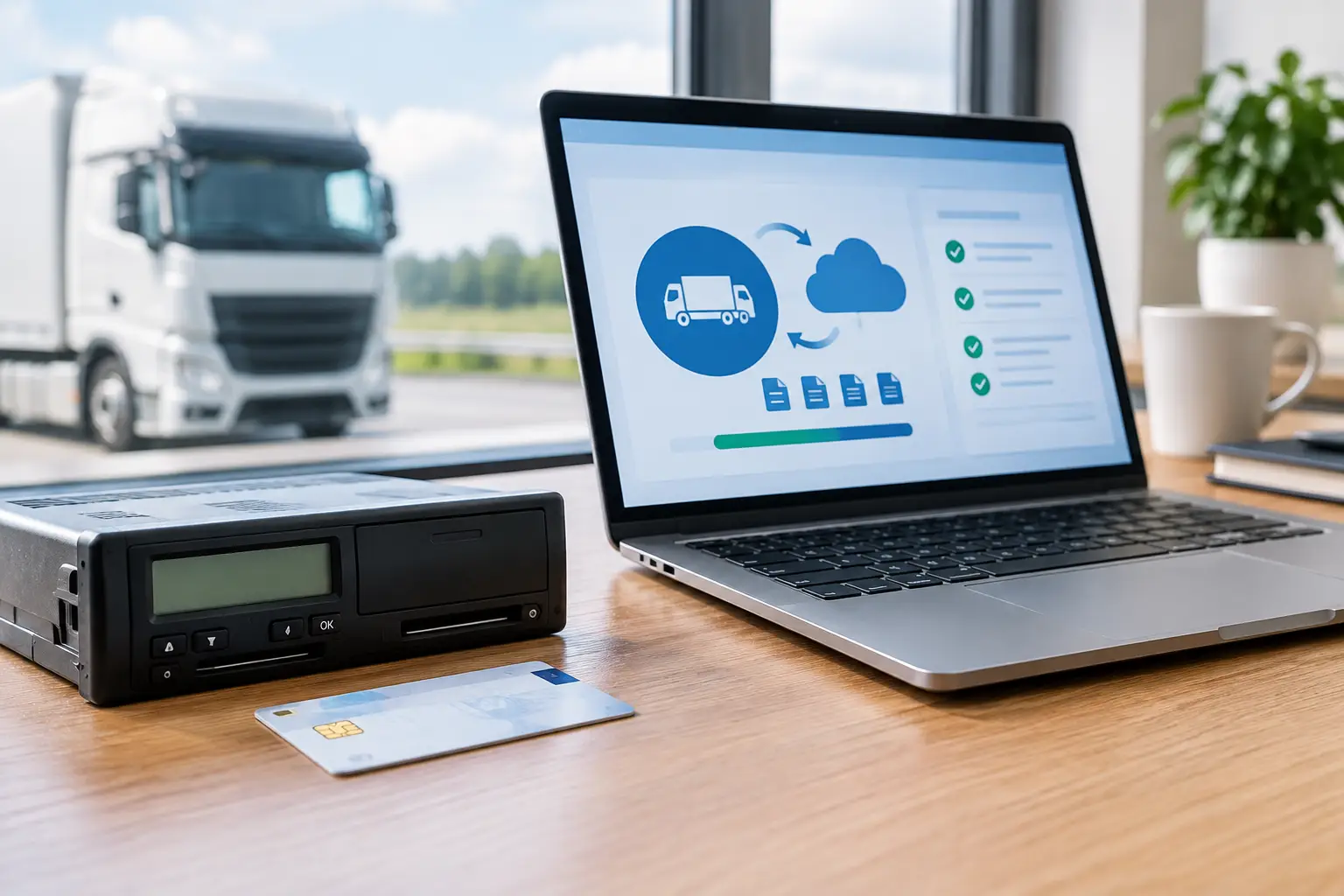
A missed driver card download rarely begins as a deliberate compliance failure. More often, the card is in the wrong depot, the vehicle is away overnight, the person who normally manages downloads is on holiday, or the reminder is buried in a spreadsheet. When you automate tacho downloads, those routine gaps stop depending on somebody remembering at the right moment.
For UK operators, that matters because tachograph compliance is not simply an administrative task. It is evidence that drivers’ hours, working time and vehicle records are being actively managed. A reliable remote process gives transport teams more time to deal with exceptions, plan work and support drivers, rather than chase files.
Why automate tacho downloads?
Digital tachograph data must be downloaded at legally required intervals. As a minimum, driver card data must be collected every 28 days and vehicle unit data every 90 days. Many operators choose more frequent downloads because it gives them earlier visibility of infringements, missing mileage and potential problems before they become a pattern.
Manual collection can work in a very small, stable operation. But it becomes fragile as soon as there are multiple depots, tramping drivers, agency cover, shared vehicles or vehicles working across the UK. A transport manager then has to know which card is due, where the vehicle is, whether the data has successfully transferred and where the file has been stored. That is a lot of moving parts for a process with fixed deadlines.
Automated downloads replace the chase with a schedule. Data is collected remotely from compatible vehicle units and driver cards, transferred into a central platform and retained in an organised record. The practical gain is not just less keyboard work. It is certainty that the team can see what is due, what has arrived and what needs action.
What remote tachograph automation should do
A useful system does more than retrieve files. It should help the person responsible for compliance control the whole process from one place.
First, it needs scheduled vehicle unit downloads. The platform should request and receive the vehicle’s mass memory data at a set frequency, without bringing the lorry back to base purely for a download. This is particularly valuable for long-distance operations, where a vehicle may not return to its home depot for weeks.
It should also collect driver card data remotely when a driver’s card is inserted in an enabled vehicle. A clear status view is essential here. Your team should be able to identify cards approaching their deadline, see successful downloads and act on cards that have not connected. Remote collection cannot download a card that is not inserted into a compatible vehicle, so a good process still needs a plan for drivers who are absent, moving between vehicles or leaving the business.
Finally, the data needs to be useful after collection. Raw files stored in a folder are not the same as compliance management. The right platform turns the information into driver hours visibility, infringement reporting and clear records that can be reviewed by management or produced when needed.
The operational benefits go beyond the download
The immediate benefit is reduced administration. Depot staff no longer need to arrange a card reader, locate each driver and manually name, save and file downloaded data. That removes repetitive work, but it also reduces the risk of files being stored in the wrong location or overlooked entirely.
The bigger benefit is earlier intervention. If you only review data at the end of a reporting period, an issue may have already repeated across several shifts. Live driver hours and tachograph information helps planners make informed decisions before allocating work. For example, a dispatcher can avoid assigning a driver to a late return when their available time is already tight.
This has commercial value as well as compliance value. Better information supports realistic job allocation, fewer last-minute changes and less pressure on drivers. It can also highlight operational issues such as excessive idling, unexplained mileage or vehicles that are being underused. When tachograph compliance and vehicle tracking sit in the same platform, the team has stronger context for what happened on the road.
How to automate tacho downloads without creating another system
The best approach is to start with the working process, not the software features. Establish who owns compliance, who responds to exceptions and how often management needs a clear picture of risk. Automation should make those responsibilities easier to carry out, not hide them behind a dashboard.
1. Confirm your vehicles and tachograph setup
Check the vehicle units in your fleet, the drivers who use them and the type of work they carry out. Compatibility matters, especially in mixed fleets with different vehicle ages, depots and operating patterns. You also need the appropriate company card and permissions to access vehicle data.
Consider the exceptions at this stage. A vehicle that spends long periods abroad, a relief driver who rarely uses the same lorry and a driver whose card is retained by the office will need an agreed process. Automation reduces routine handling, but it does not remove the need to manage real-world gaps.
2. Set download intervals that give you time to act
Meeting the 28-day and 90-day minimum intervals is the baseline, not necessarily the most effective operating standard. A fleet with frequent driver changes, high-mileage vehicles or tight delivery schedules may benefit from shorter intervals. More regular data gives compliance teams a clearer view, although it can create more alerts if nobody has agreed how they will be handled.
Set a sensible schedule, then assign ownership of missed or failed downloads. A notification is only useful if somebody knows whether to call the driver, arrange a manual card download or investigate a connectivity issue.
3. Combine compliance data with daily fleet visibility
Tachograph data is stronger when it is considered alongside location, journey history and driver behaviour. If a driver hours report suggests a problem, vehicle tracking can help establish whether an unexpected delay, a route change or depot waiting time contributed. If a vehicle has been inactive for several days, the team can check whether that is planned or whether an asset has been overlooked.
This is where a single platform earns its place. Running tracking, tachograph downloads and compliance reporting in separate systems creates extra reconciliation work and weakens the picture available to dispatch and transport management.
4. Review exceptions, not every line of data
Automation does not mean leaving compliance unattended. It means focusing people on the information that needs judgement. Review overdue card downloads, failed vehicle downloads, recurring infringements and drivers nearing their available working limits. Keep an auditable record of what was identified and what action was taken.
That distinction matters during an audit or an operator licence review. Being able to show stored files is useful. Being able to show that the business identified patterns, spoke to drivers and improved its controls is far more persuasive.
Common mistakes that weaken the process
The first mistake is treating remote downloads as a set-and-forget service. Connectivity can fail, cards can be removed and vehicle hardware can need attention. Someone should routinely check the download status and resolve exceptions before they become overdue.
The second is relying on compliance data without giving planners access to live driver hours. A manager may spot an infringement after the event, while a planner unknowingly creates the conditions for the next one. The teams do not need to become tachograph specialists, but they do need clear, current information for allocation decisions.
The third is retaining data without a reporting rhythm. Decide what is reviewed daily, weekly and monthly. A daily exception check may suit a busy multi-vehicle operation, while a monthly management review can track repeat issues, coaching outcomes and overall compliance performance.
Choosing a platform for UK fleet operations
Look for a provider that understands the link between tachograph compliance and the rest of the transport operation. The objective is not to buy another portal. It is to reduce manual work while improving visibility of drivers, vehicles and trailers.
Practical details count. Transparent monthly pricing, self-install hardware and a straightforward rollout can make adoption easier, particularly where vehicles cannot be taken off the road for lengthy installations. Check how the system presents due dates, failed downloads, driver hours and infringement information, and ask how quickly your team can act from the screen rather than export another spreadsheet.
Fleetalyse brings remote tachograph downloads together with live vehicle tracking, driver hours, dashcam and fleet reporting in one operational platform. That means the person managing compliance and the person planning tomorrow’s work can work from the same version of events.
The aim is not to remove human oversight from tachograph compliance. It is to remove the avoidable chasing, filing and uncertainty that prevents good people from focusing on the decisions that protect drivers, vehicles and your operator licence.