
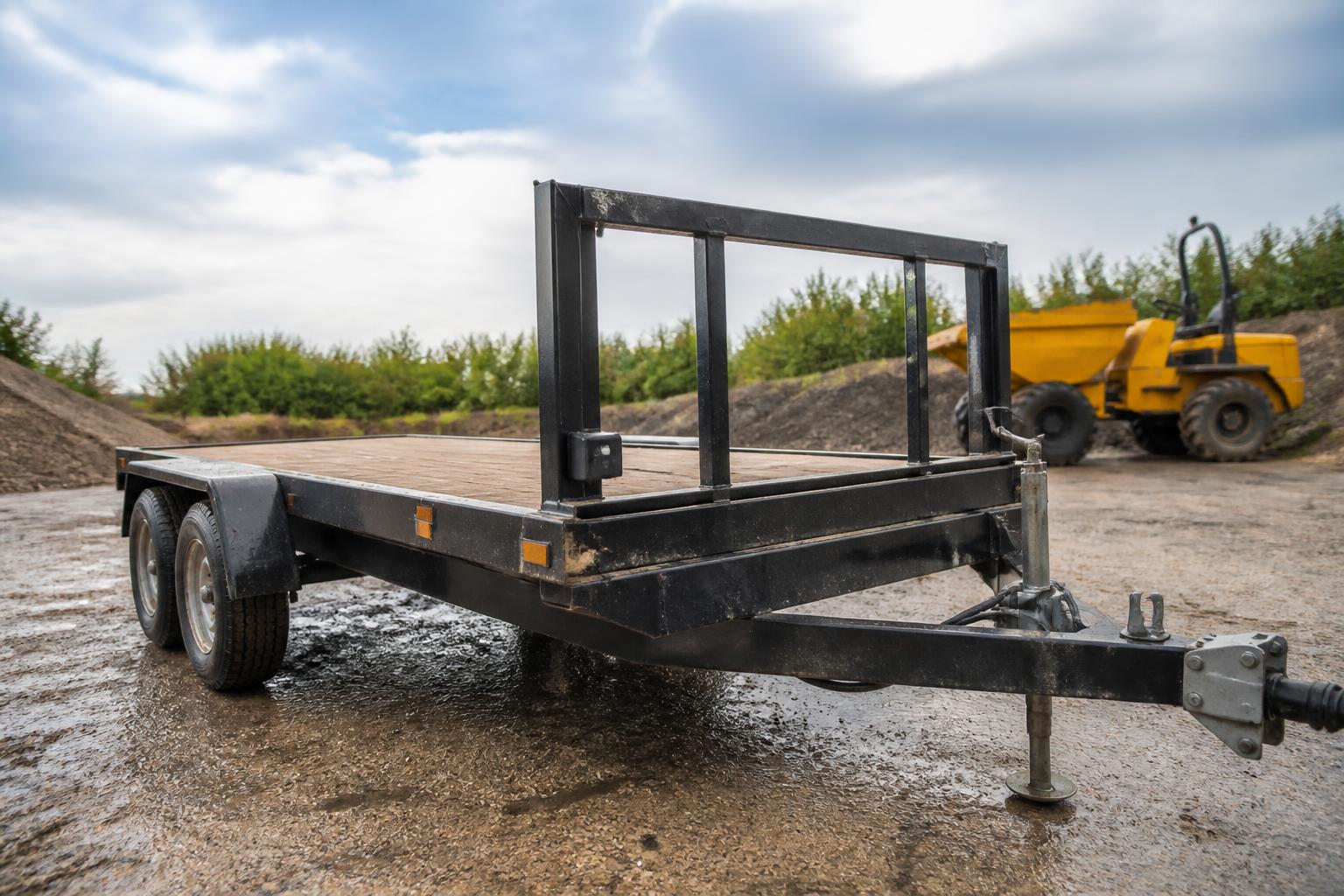
If you run trailers, plant or site equipment, the hardest part is often not buying the asset. It is knowing where it is, whether it is being used, and how long it has been sitting in the wrong place. That is where non powered asset tracking earns its place. It gives us a practical way to see trailers and other movable assets that do not have their own electrical system feeding a standard vehicle tracker.
In day to day fleet work, the aim is not to turn a trailer or generator into a full telematics vehicle. The aim is simpler and more useful. We want reliable location data, sensible reporting, and a clear operational view without creating another admin job. When asset tracking is set up properly inside Fleetalyse, we can see where equipment is, match it to vehicle movements, and stop wasting time chasing updates by phone.
What non powered asset tracking means in a working fleet
A non powered asset is any fleet item that moves around the operation but does not provide a permanent vehicle power supply for a tracker. In UK fleets that usually means trailers, containers, bowsers, generators, welfare units, compressors, lighting towers, small plant, skips and some specialist equipment. It can also include equipment that does have a battery, but not one we want to rely on for telematics because the asset sits idle for long periods.
That changes how tracking works. A standard hard wired GPS unit fitted to an HGV or van draws stable power from the vehicle and can report frequently. A battery powered asset tracker has to conserve energy. It usually sleeps most of the time, wakes on movement or at scheduled intervals, takes a position fix, and sends that data over the mobile network using IoT SIMs. The reporting pattern is designed around battery life, not around second by second journey playback.
For operators, that means setting realistic expectations from the start. With non powered asset tracking, we can normally expect to see:
- Current or last known location
- Movement alerts or evidence of movement
- Time and date of the latest position
- Basic journey history, depending on reporting frequency
- Geofence entry and exit alerts for depots, yards and customer sites
- Battery status and device health
What we should not expect from a battery tracker on a trailer is the same depth of data we would expect from a powered unit on a tractor unit. We are not usually collecting rich vehicle diagnostics, full CAN data, or dense breadcrumb trails every few seconds. If the asset only wakes every few hours when stationary, the map view will reflect that.
That is not a weakness if the deployment matches the job. For most trailer and plant operations, the real question is not “Where was it every ten seconds?” It is “Is it still on the customer’s site?”, “Has that generator moved out of the compound?”, “Which trailer is nearest for tomorrow’s load?”, or “Did that container leave the depot this week?” Good asset tracking answers those questions well.
Which assets are worth tracking first?
The best place to start is not every asset you own. It is the assets that create the most cost, disruption or uncertainty when they go missing or sit unused.
For many haulage fleets, trailers are first on the list. They are high value, they move between depots and customer sites, and they are often decoupled for long periods with limited visibility. A missing trailer can delay deliveries, disrupt planning and trigger unnecessary hire. If you have ever had traffic office staff ringing round to ask whether a trailer is still in a yard, that is a strong sign it should be tracked.
Containers are another sensible early candidate, especially where they circulate between sites, ports, storage yards and subcontract locations. The issue here is often utilisation as much as security. If we cannot quickly see which containers are active, empty, stored or overdue back, they become easy to duplicate in planning.
Plant and site equipment should be prioritised by theft risk and operational dependency. Generators, compressors, bowsers and welfare units are regularly moved, left on temporary sites and needed at short notice. A lost or stolen generator is expensive. A generator that is simply on the wrong site can still stop a job. Tracking helps with both.
For mixed fleets, we usually suggest a simple ranking exercise against three questions:
- If this asset disappears, how disruptive is it?
- If this asset sits unused, how much does that cost us?
- How hard is it to locate this asset today without ringing people?
Assets that score highly on all three should go first.
There is also a practical point about volume. If you have five expensive generators and two hundred low value stillages, the generators are the obvious first phase. Start where visibility changes decisions. Once the operation sees the benefit, it is much easier to expand.
We also look at replacement behaviour. If the business repeatedly hires extra trailers, replaces “missing” equipment that later turns up, or sends vehicles to collect assets from the wrong site, that is a sign the tracking project can pay for itself operationally. The issue is often not absolute loss. It is poor visibility creating avoidable movement and cost.
If you want a wider view of where trailer visibility fits into daily fleet work, our guide to trailer tracking in daily fleet work covers the operational blind spots that usually justify the first rollout.
What problems does it solve day to day?
The most immediate gain is time. Without tracking, locating a trailer or piece of plant often means checking a whiteboard, calling a driver, calling a site contact, and then calling someone else because the first answer was out of date. With tracking in place, the traffic office or fleet manager can look up the asset directly.
That matters most when the question is urgent. A customer needs a trailer collected. A workshop slot has opened. A site says a generator is not there. A unit is nearby and could recover equipment on the return leg, if we know where it is. Good location data cuts the delay between the question and the decision.
It also improves yard and site visibility. Large yards, third party compounds and multi site operations all create the same problem. Assets are technically on site, but nobody is certain where. Geofences help here. We can mark depots, customer sites and storage locations, then see whether an asset is inside or outside the expected area. That is often enough to stop a wasted trip.
Security and recovery are another clear use case. Asset tracking does not prevent every theft, but it does improve the response. If a trailer or plant item moves unexpectedly out of hours, an alert can prompt early action. If an asset is taken, the last reported position and movement history can support recovery efforts and provide useful information to the police and insurer. In the UK, that practical recovery value is often more relevant than broad theft statistics.
The financial benefit is usually less dramatic but more frequent. Fleets often over hire or over buy because they cannot trust their current asset position. If we can see that three trailers are idle at customer sites, or that a generator has not moved for weeks, we can make better use of what we already have. That reduces avoidable hire, duplicate equipment and unnecessary replacement.
Tracking also improves handovers between transport and engineering. When workshop teams know where assets are and how long they have been stationary, maintenance planning becomes easier. We can schedule inspections and retrievals around actual location rather than relying on someone remembering to report where a trailer was dropped.
For a broader look at how live visibility reduces operational blind spots, see our article on UK fleet tracking in daily operations.
What to look for in the hardware and setup
Battery life comes first, but it needs to be understood properly. A headline battery life figure is only meaningful if we know the reporting profile behind it. A tracker set to report once a day while stationary and more often on movement will last differently from one set to wake every hour regardless of use. In practice, we choose settings based on the asset’s movement pattern and the level of visibility the operation actually needs.
Wake up behaviour is just as important. For non powered assets, movement based wake up is often the difference between useful and frustrating. If a trailer leaves a site, we want the device to recognise movement and report without waiting for the next long scheduled interval. For assets that sit still for weeks, we still want periodic check ins so we can confirm location and battery state.
Reporting intervals should match the job. A trailer in regular linehaul use may justify more frequent updates while moving. A welfare unit sitting on a construction site may only need a daily heartbeat plus movement alerts. Over reporting drains battery and creates noise. Under reporting leaves us blind when something changes.
Installation options matter because not every asset gives us the same mounting choices. Some trackers are designed for discreet fixed installation on trailer chassis or inside equipment housings. Others suit bolt on or magnetic deployment for faster rollout. The right choice depends on whether the asset is permanent fleet stock, hired equipment, or something that moves between owners and sites. If self install is part of the plan, our article on self-install fleet tracking without losing control covers the practical points to get right.
Durability should be judged against actual UK operating conditions. Trailer and plant trackers need to cope with water, road spray, vibration, dirt and winter conditions. For site equipment, impact resistance and secure mounting are just as important as ingress protection. A device that looks fine on paper but fails after repeated washdown or rough site handling is false economy.
Mobile coverage also deserves attention. Asset trackers rely on GPS for position and mobile data to send it. Across the UK that generally works well, but there will always be blackspots, shielded yards, buildings and rural sites where updates are delayed. The right setup stores positions and transmits when signal returns, rather than simply losing the event.
For many operators, hardware flexibility matters too. Some fleets want a managed rollout with Fleetalyse-ready trackers. Others want unlocked Teltonika hardware because they have in house fitting capability or a wider telematics strategy. We support both approaches, which helps when the fleet includes HGV units, vans, trailers and unpowered assets under one operational model.
Finally, think about deployment in phases. Start with a defined asset class, agree the reporting profile, naming convention and geofences, then review what the data is actually changing. That is better than fitting everything at once and discovering half the alerts are not relevant.
How asset tracking fits into fleet workflows
Asset location on its own is useful. Asset location inside the rest of the fleet workflow is what makes it operationally valuable.
In Fleetalyse, the point is not to create a separate map that someone checks only when there is a problem. The point is to bring asset visibility into the same working view as vehicle tracking, reporting and daily control. If a trailer is shown alongside the tractor units serving that customer, planning becomes faster. If the transport team can see the nearest available asset and the nearest available vehicle in one place, collection and redeployment become easier.
This is where mixed fleet operations benefit most. A fleet manager may need to track HGV units, vans, trailers and site assets at the same time. Running those through separate systems usually means separate logins, duplicate admin and inconsistent naming. Fleetalyse gives us one operational view, with mapping built on OpenStreetMap, so the team can work from the same live picture.
The reporting side matters too. Once asset movements are recorded consistently, we can review dwell time, site duration and retrieval patterns. That helps identify assets that are effectively parked at customer locations, underused stock that could be redeployed, or recurring movement that suggests a different allocation model.
Asset tracking also supports maintenance planning. If we know where a trailer or plant item is and how long it has been there, we can line up inspection, servicing or recovery more efficiently. The workshop does not have to wait for a manual update that may be out of date by the time it arrives.
For fleets already using vehicle telematics, the next step is usually joining those processes up. Our guide to one platform for tracking, Tachograph and driver hours explains the value of bringing operational visibility together rather than spreading it across several systems. Trailer and asset tracking fits naturally into that same model.
There are limits, and it is better to be clear about them. Asset tracking does not replace maintenance records, hire documentation or site booking processes. It supports them. We still need the right asset IDs, the right site names and sensible user permissions. In practice, that means setting up a clean asset list, choosing who receives alerts, and making sure the team knows what each movement event is supposed to trigger.
That is also why rollout should be handled as an operational change, not just a hardware purchase. We normally define the asset groups, fitment method, reporting profile and map structure first. Then we check how that data appears in the Customer Portal, how users access it through their Tracker login, and what reports or alerts the operation actually needs. Once that is in place, the system reduces admin rather than adding to it.
For UK operators, that practical fit is the deciding factor. Non powered asset tracking is not about collecting more data for its own sake. It is about making trailers, plant and movable equipment visible enough to plan properly, recover faster, and stop spending money because nobody can confidently say where an asset is.
Fleetalyse is built for that kind of joined up visibility. Whether you start with a small trailer rollout, battery trackers on plant, or a wider mixed fleet deployment using Fleetalyse-ready trackers or Teltonika hardware, the useful result is the same. We spend less time searching, less time second guessing, and more time running the fleet from one clear operational picture.
Fleeta Limited T/A Fleetalyse is a UK business, so our setups, workflows and support are designed around UK fleet operations, including the way operators handle HGV movements, Tachograph processes, driver hours, workshop planning and commercial admin such as VAT. Where payment and subscription processes apply, they are handled through Stripe.
What is non powered asset tracking?
It is the use of battery-powered tracking devices to monitor assets that do not have their own electrical supply, such as trailers, plant, containers and equipment.
Can you track a trailer if it is not connected to a unit?
Yes. A battery-powered tracker can continue reporting the trailer’s location even when it is parked, stored in a yard or left on a customer site.
How often should a non powered asset report its location?
That depends on the asset and the risk. High-value or frequently moved assets may need more regular updates, while static equipment can use less frequent reporting to preserve battery life.
Is non powered asset tracking only for theft recovery?
No. Theft recovery matters, but many fleets get just as much value from finding assets faster, improving utilisation and reducing unnecessary hires or duplicate purchases.
Which assets should a fleet track first?
Start with assets that are costly to replace, often left off-site, hard to locate or regularly hired in because owned equipment is not visible to the operation.