

Non-powered asset tracking: your guide to trailer and equipment visibility

Non-powered asset tracking uses battery or hybrid GNSS trackers to monitor trailers, containers and equipment that have no ignition or vehicle battery to draw from. Trailers, generators, plant and rental kit benefit most, and the right device class combines movement-based reporting with tamper and recovery modes. Run a short pilot first, one that models real battery drain and reporting frequency, before you commit to a fleet-wide rollout.
TL;DR:
- Battery life at your reporting frequency is critical; a tracker rated for five years at daily checks may last less than a year with hourly updates.
- Hybrid trackers with satellite backup are essential for remote routes where cellular coverage drops out, especially in rural or border areas.
- Proper mounting on assets with clear sky visibility and tamper-proof enclosures prevents signal loss and reduces theft risks.
- Running a full seasonal pilot helps confirm real-world battery drain, mounting, and coverage performance before a fleet-wide rollout.
- Most successful deployments depend on testing the reporting, mounting, and integration processes thoroughly, not just selecting a specific hardware brand.
Table of Contents
- What non-powered asset tracking solves for fleet operators
- How the technology works: trackers, sensors and data flow
- Battery, solar or hybrid: choosing the right tracker
- Which connectivity works when cellular signal drops out?
- Getting mounting and maintenance right
- Where non-powered tracking changes daily operations
- Theft recovery and compliance: what actually helps
- Running a pilot before you scale
- Fleetalyse’s view on rolling out non-powered tracking
- Fleetalyse perspective: what most guides get wrong about pilots
- Start tracking trailers and equipment with Fleetalyse
- Sources
What non-powered asset tracking solves for fleet operators
Wired telematics taps into a vehicle’s own power and CAN-bus data. Non-powered asset tracking has no such luxury. It relies on an internal battery, sometimes topped up by solar, to report position and status for assets that spend weeks stationary and then move without warning.
The decision isn’t complicated once you frame it correctly. Ask whether an asset is reusable, whether it moves independently of a tracked vehicle, and whether losing sight of it disrupts operations or costs money. Trailers left at customer sites, shipping containers awaiting collection and rental plant hired out for months all pass that test.
The operational payoff is measurable:
- Search time for “missing” trailers drops sharply when last-known-location data replaces phone calls to depots.
- Utilisation improves because idle trailers become visible and get reallocated instead of forgotten.
- Recovery rates rise when tamper alerts trigger before an asset leaves a site unnoticed.
How the technology works: trackers, sensors and data flow
A non-powered tracker packs a surprising amount into a sealed enclosure the size of a paperback. Inside sits a GNSS chip for position, an accelerometer to detect movement and impact, a light or magnetic tamper sensor to flag removal, and a primary battery sized to the reporting schedule you choose.
The logic runs in a fairly predictable sequence:
- The device sits dormant, drawing near-zero current, until an accelerometer trigger or a scheduled heartbeat wakes it.
- It acquires a GNSS fix, checks cellular or satellite signal, and packages a position and status report.
- The report transmits over LTE-M or NB-IoT, arriving at the tracking platform within seconds to minutes depending on coverage.
- The platform logs the event, checks it against geofences and rules, and pushes alerts or updates dashboards accordingly.
- Where integration matters, the platform exposes that same event through an API or scheduled export so it can feed a TMS or maintenance system.
This event-driven design, rather than constant polling, is what makes multi-year battery life realistic. Strategic Tracking’s guidance on hybrid positioning notes that mature deployments blend GNSS for outdoor accuracy with Wi-Fi or Bluetooth for indoor and yard positioning, using gateways to automate inventory checks without a person walking the site.
Battery, solar or hybrid: choosing the right tracker
Battery-primary trackers suit assets that move infrequently and don’t need minute-by-minute updates. A device reporting infrequently, with movement-triggered wake-ups in between, can run for a long duration on a single cell. Eelink’s GPT12-X Ultra claims three to five years of battery life on LTE-M/NB-IoT at conservative reporting rates, using eDRX and PSM power-saving modes to cut idle current to almost nothing.
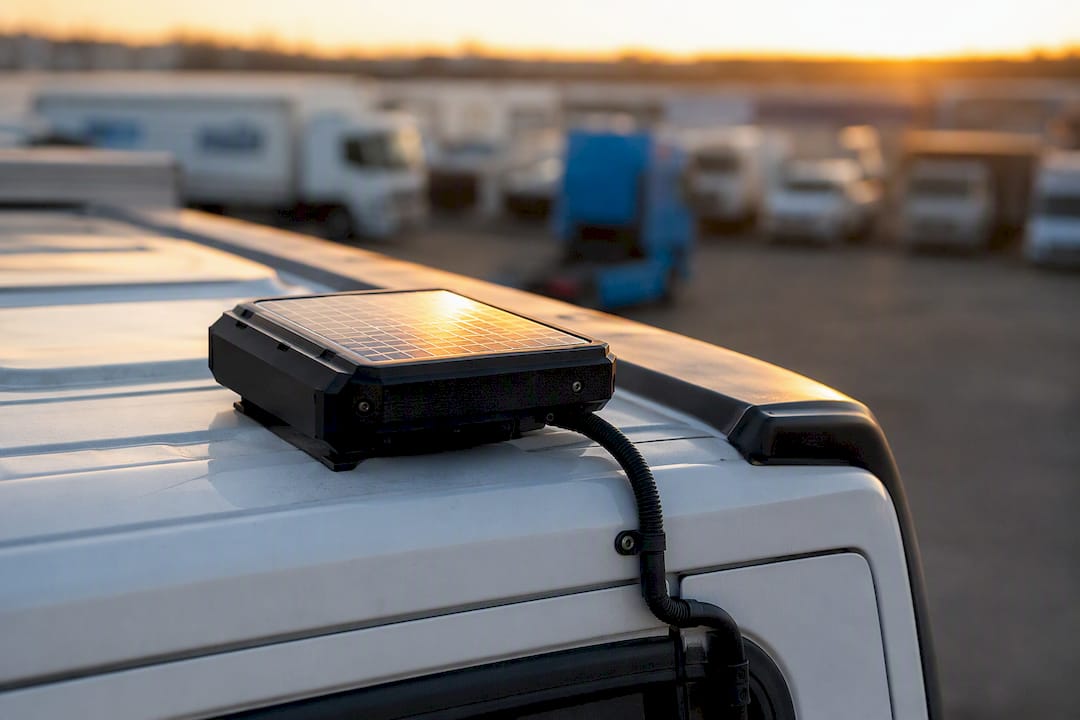
Solar-assisted units make sense where an asset sits outdoors with unobstructed sky view, extending service intervals further still. Hybrid devices with satellite backup earn their premium on remote or cross-border routes where cellular coverage can’t be guaranteed.
Before you commit, work through a short checklist:
- Model battery life against your actual reporting frequency, not the vendor’s best-case figure.
- Confirm the IP rating suits outdoor exposure, wash-downs and vibration.
- Check which sensors are included: tamper, impact, light, temperature.
- Match the mounting method to the asset’s chassis or frame.
Pro Tip: Ask any vendor for battery-life figures at your intended reporting frequency, not theirs. A device rated for five years at one check-in per day might last under a year if you set it to hourly.
Which connectivity works when cellular signal drops out?
LTE-M and NB-IoT dominate this category because they’re built for exactly this job: infrequent, small data packets from devices that need to sleep for weeks at a time. Coverage generally mirrors mainstream 4G networks in populated areas, with NB-IoT often reaching slightly further into low-signal environments such as basements or dense stacking yards.
The gap appears in rural depots, ports and cross-border haulage routes, where cellular coverage thins out or disappears entirely. A trailer parked in a coverage dead zone simply stops reporting until it re-enters range, which is a problem if that trailer has been stolen.
This is where hybrid architecture earns its keep:
- Devices default to LTE-M/NB-IoT for cost-efficient daily reporting.
- A 4G fallback catches areas where LTE-M drops out but standard 4G persists.
- Satellite backup activates automatically when no terrestrial signal is available, a design Myriota’s AssetHawk uses to keep high-value assets visible across borders and remote sites.
Getting mounting and maintenance right
Poor mounting undoes good hardware. Position trackers where they get a clear view of sky for GNSS accuracy, ideally on the trailer roof, chassis rail or equipment housing, away from metal shielding that blocks signal.
Protect against tampering by choosing recessed or bolted mounts rather than adhesive pads that a thief can simply peel off, and confirm the enclosure’s IP rating matches the exposure the asset actually faces, not just a spec sheet minimum.
- Check battery voltage reporting monthly through the platform dashboard rather than waiting for a device to go silent.
- Schedule physical replacement ahead of the manufacturer’s stated end-of-life, not after.
- Push firmware updates over-the-air where supported, avoiding a fleet-wide truck roll.
- Record installation date, mounting position and asset ID together, so a support call doesn’t start with a search for basic metadata.
Where non-powered tracking changes daily operations
The clearest wins show up in three recurring scenarios. Trailer utilisation improves when dwell time at customer sites becomes visible, letting planners reallocate assets sitting idle instead of assuming they’re still in use. Container visibility across ports and yards cuts the manual walk-rounds that used to confirm stock levels. Rental equipment accountability improves because hire periods and movement history are logged automatically, reducing disputes over return dates and usage.
Four KPIs are worth tracking from day one:
- Average dwell time per asset, split by site and customer.
- Utilisation rate, meaning the proportion of time an asset is actively deployed versus idle.
- Recovery time for assets reported missing or stolen.
- Unauthorised movement incidents flagged by geofence breaches outside working hours.
Geofencing changes the daily rhythm most visibly. Instead of a planner ringing round depots to locate a trailer, an alert lands automatically the moment an asset leaves its expected zone, and that shift alone often justifies the investment for logistics fleets running high trailer volumes.
Theft recovery and compliance: what actually helps
Tamper and impact sensors do most of the early warning work, flagging when a device is removed, covered, or subjected to unusual force. Once a movement alert fires outside expected hours, recovery mode typically switches the tracker to high-frequency reporting, sometimes every few minutes, to build a precise movement trail.
Vendor documentation consistently lists tamper alerts, impact detection and recovery mode as standard, non-negotiable features on any tracker built for long-life, non-powered deployment, rather than optional extras.
That trail matters afterwards as much as during the incident:
- Timestamped location history gives insurers a clear record to support a claim.
- Police investigations rely on the same event log to establish a route and recovery point.
- Retain full event history rather than summarising it, since gaps look suspicious even when they’re just signal loss.
Never attempt recovery yourself once a stolen asset is located. Gov sets out how recovery and enforcement action are handled by the relevant authorities, and liaising with local police protects both you and the evidence trail.
Running a pilot before you scale
Start narrow. Pick one asset category, trailers on a specific route or a rental equipment pool, and define what success looks like before a single device ships. A baseline of current search time, utilisation and loss incidents gives you something to measure against.
- Set pilot scope and success metrics against a documented baseline.
- Validate mounting position, reporting frequency and real-world battery drain over at least one full seasonal cycle.
- Total the actual cost components: device hardware, SIM or airtime, platform subscription and expected maintenance.
- Decide integration priorities for scale, including TMS connections and API access, before ordering hardware in volume.
Pro Tip: Run your pilot through a full temperature range if your assets sit outdoors year-round. Cold weather can cut battery performance noticeably compared with the lab conditions vendor specs are tested under.
Strategic Tracking’s guidance on pilot design reinforces this sequencing: a controlled trial that tests mounting, reporting and recovery workflows produces far more reliable ROI signals than buying at scale against paper specifications alone.
Fleetalyse’s view on rolling out non-powered tracking
Mixed fleets rarely fit neatly into one hardware category, and that’s precisely the environment Fleetalyse was built to handle. Trailers, plant and powered vehicles sit on one platform, with plug-and-play trackers designed to go in without a workshop visit.
The real value comes from what happens after installation. A tamper alert or a geofence breach on a non-powered asset doesn’t just sit in isolation. It maps into the same compliance and maintenance workflows Fleetalyse already runs for tachograph downloads and driver behaviour monitoring, so a trailer incident and a vehicle incident surface through one dashboard rather than two separate systems.
If you’re weighing up a pilot, UK-based support means someone who understands DVSA context picks up the phone, not a generic call centre reading from a script.
Fleetalyse perspective: what most guides get wrong about pilots
Most advice on this topic treats the pilot as a formality, a box to tick before the “real” rollout. That’s backwards. The pilot is where you find out whether your reporting frequency assumptions survive contact with a British winter, a steel-clad trailer that blocks GNSS fix, or a depot with patchy 4G coverage. Skipping it, or running it for two weeks instead of a full seasonal cycle, is how fleets end up with a warehouse of trackers that report unreliably and a procurement team that blames the hardware instead of the test design.
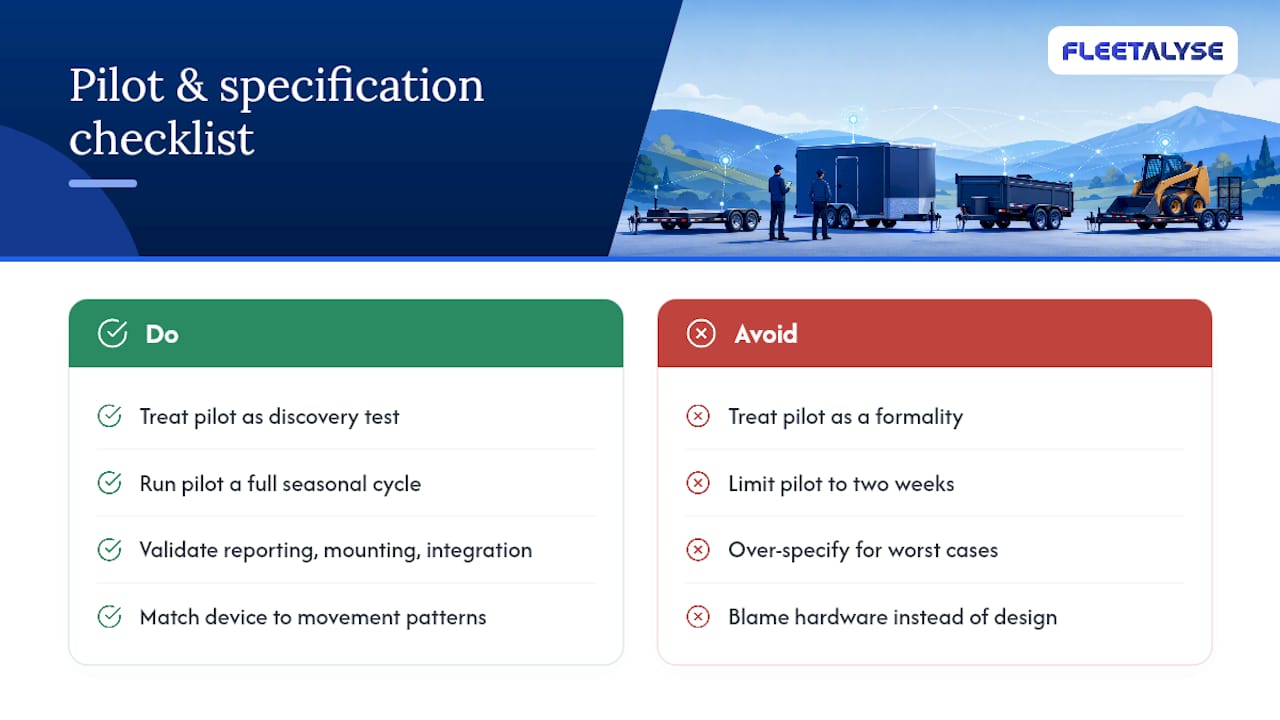
There’s also a tendency to over-specify for worst-case scenarios. Not every trailer needs satellite backup; most yard-bound assets do perfectly well on LTE-M with a solid recovery mode, and paying a premium for global coverage on kit that never leaves a five-mile radius is money better spent on more units. The smarter approach matches device class to actual movement patterns, asset by asset, rather than buying one specification for the whole fleet because it’s simpler to procure.
What genuinely separates a successful deployment from a frustrating one isn’t the tracker brand. It’s whether the reporting profile, the mounting, and the integration into existing workflows were tested properly before the invoice for two hundred units landed on someone’s desk.
— Vytautas
Start tracking trailers and equipment with Fleetalyse
Fleetalyse gives mixed fleets one platform for powered vehicles and non-powered assets, so trailer visibility doesn’t mean bolting on a separate system or juggling two logins. Where a spreadsheet and a phone call used to answer “where’s that trailer”, a geofence alert now does it automatically, and that shift is the entire point of running a pilot in the first place.
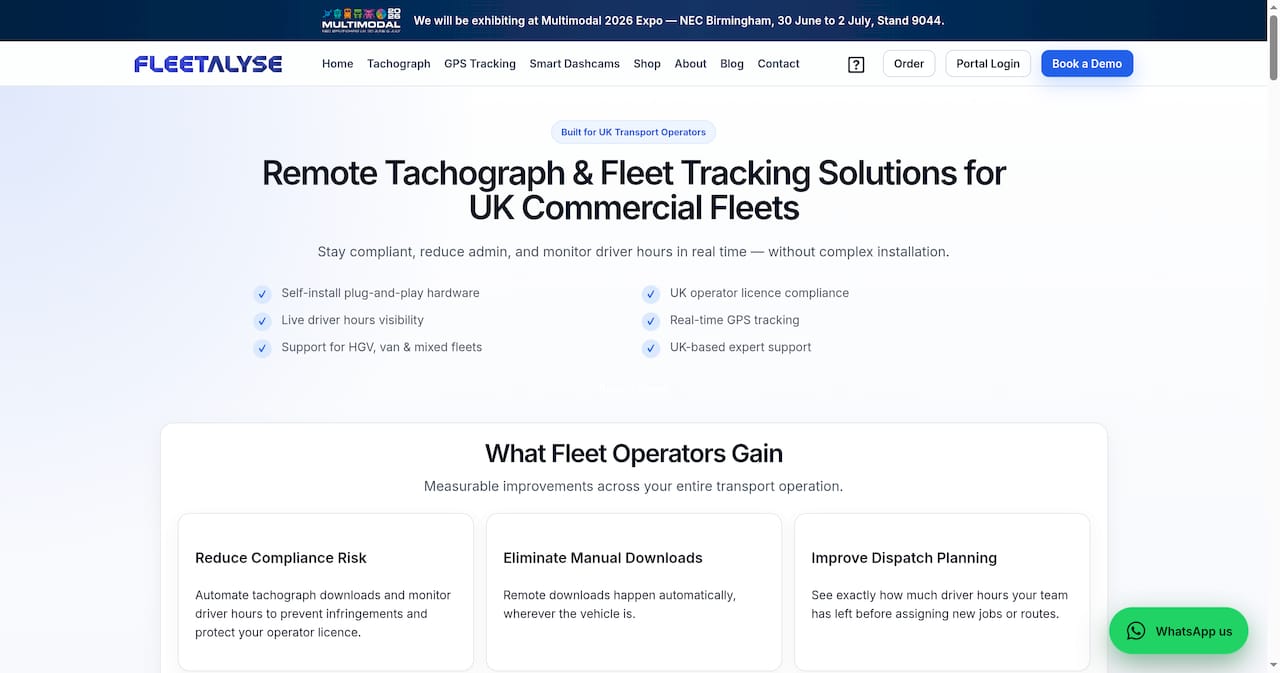
Ready hardware makes the difference between a pilot that starts this month and one that stalls in procurement. Fleetalyse’s shop for unlocked GPS trackers stocks Teltonika devices without SIM lock-in, so you can test reporting profiles and battery performance on your own terms before committing to volume. A typical pilot package covers a small batch of trackers, platform access and UK-based onboarding support, usually running for a full season to capture realistic battery drain. Get in touch to scope a pilot against your own trailer or equipment fleet, or browse the trackers shop directly to see current hardware and pricing.
Sources
- An affordable, rugged, satellite asset tracker - AssetHawk | Myriota
- GPT12-X Ultra LTE-M/NB-IoT Asset Tracker | EELINK
- Non-Powered Asset Tracking Solutions | Strategic Tracking
- Gov