

DVSA Earned Recognition scheme: a practical guide for UK fleet operators

The DVSA Earned Recognition (ER) scheme is a voluntary, government-backed programme for HGV and PSV operators in Great Britain. Operators share performance data through DVSA-validated IT systems, and in return, DVSA targets its enforcement resources at higher-risk traffic rather than routinely stopping compliant fleets. The single most important operational benefit is straightforward: fewer routine roadside inspections and fewer scheduled site visits, which frees your drivers and compliance team to focus on running the operation.
Three things to know before reading further:
- Eligibility headline: you need an operator licence held for at least two years, with no adverse regulatory action from the Traffic Commissioner in that period.
- Core data requirement: your fleet management systems must be validated by DVSA to export KPIs automatically; manual reporting does not qualify.
- Where to start: the DVSA Earned Recognition guidance collection on GOV.UK holds every form, standard, and process document you need.
Key takeaways
The DVSA Earned Recognition scheme rewards continuous, verified compliance with fewer routine inspections and official government recognition, making it one of the most practical compliance investments available to UK HGV and PSV operators.
| Point | Details |
|---|---|
| Eligibility baseline | Operator licence held for at least two years, with no adverse Traffic Commissioner action in that period. |
| Validated IT system is non-negotiable | Your fleet management platform must hold DVSA validation and export KPIs automatically every four weeks. |
| No application fee | Joining the scheme costs nothing in DVSA fees; budget for the independent audit and any system upgrades instead. |
| Benefits are operational and commercial | Fewer roadside stops, GOV.UK listing, use of the ER marque, and stronger positioning in procurement and tenders. |
| Fleetalyse covers core ER KPI areas | Remote tachograph downloads, automated driver hours monitoring, MOT tracking, and audit-ready evidence exports in one platform. |
Table of Contents
- What is the DVSA Earned Recognition scheme and how does it work?
- Who can join and what are the eligibility criteria?
- How to apply for DVSA Earned Recognition
- What does a validated IT system actually need to do?
- What do auditors check and what evidence do you need?
- What are the practical benefits of Earned Recognition for your fleet?
- How do you keep your Earned Recognition status?
- How telematics and remote tachograph systems map to Earned Recognition requirements
- Why a compliance-first telematics strategy pays off
- Fleetalyse supports your Earned Recognition data and reporting needs
- Authoritative GOV.UK resources for your application
- Sources
What is the DVSA Earned Recognition scheme and how does it work?
The scheme launched in April 2018, following a pilot that began in 2017. DVSA’s stated intent from the outset was to redirect enforcement resources toward genuinely high-risk traffic, rather than spending officer time on operators already demonstrating consistent compliance. Pilot members were significantly less likely to be stopped by DVSA, which gave the programme its commercial credibility before the wider rollout.
The mechanics rest on four performance metrics DVSA monitors continuously:
- MOT initial pass rate: the proportion of vehicles passing their first MOT attempt without a failure or refusal.
- Drivers’ hours breaches: infringements detected through tachograph data, measured against legal limits.
- Maintenance KPIs: scheduled preventive maintenance completion rates and defect rectification times.
- Vehicle checks: driver walkaround check completion and recorded outcomes.
Data flows in one direction: from your fleet management systems, through a DVSA-validated IT supplier, to DVSA as an automated KPI report every four weeks. DVSA does not have direct access to your systems. The validated supplier acts as a secure intermediary, extracting the agreed KPIs and transmitting them in a standardised format. That distinction matters for operators concerned about data security: your operational data stays within your own environment.
Earned Recognition shifts DVSA from reactive, roadside enforcement to continuous, data-driven risk assessment. Operators who maintain strong KPIs effectively self-certify their compliance in near-real time, and DVSA can allocate its officers to the traffic that genuinely needs attention.
This is why the scheme is described as relationship-based rather than inspection-based. Compliance is demonstrated continuously, not proved at the roadside.
Who can join and what are the eligibility criteria?
The headline eligibility rules are deliberately broad. To apply, your operator licence must have been held for at least two years, and you must not have faced regulatory action from the Traffic Commissioner (beyond a formal warning) during that same period. Beyond those two conditions, the scheme is open to operators of all sizes, from single-vehicle owner-operators to large fleet groups. Multiple entities under common ownership can apply together as a group.
The vehicle operator standards document on GOV.UK sets out the full standards and the evidence auditors will assess. Reading it before you commission an audit saves time and avoids surprises.
A common misconception worth addressing directly: small fleets often assume ER is only for large hauliers with dedicated compliance departments. That is not the case. The validated IT system requirement is the practical barrier, not fleet size. If you operate a compliant, automated fleet management tool that holds DVSA validation, a two-vehicle operation is as eligible as a 200-vehicle one. The scheme’s design actively accommodates smaller operators who adopt the right technology.
One condition that catches operators out: DVSA will still stop any vehicle in an obviously dangerous condition, regardless of ER status. Accreditation reduces routine stops; it does not create immunity from enforcement where a vehicle presents a visible safety risk.
How to apply for DVSA Earned Recognition
The application process has a clear sequence. Working through it in order avoids the most common delays.
- Confirm eligibility. Check your operator licence history and Traffic Commissioner record against the two-year criteria before spending money on audits or system upgrades.
- Select a DVSA-validated IT supplier. The GOV.UK guidance pages carry a list of validated suppliers. Confirm your chosen supplier’s validation status directly with DVSA before signing a contract.
- Commission an authorised audit provider. DVSA maintains a list of approved auditors. The audit assesses your management systems against the operator standards and confirms your validated IT supplier’s outputs are accurate.
- Assemble your evidence. Prepare 12–24 months of maintenance records, MOT history, tachograph summaries, driver training records, and management review minutes. Auditors expect to see a coherent, documented management system, not just raw data exports.
- Complete and submit the DVSA application form. Application forms are available on GOV.UK for both single-entity and group applications. There is no application fee.
- Apply for optional extra modules if relevant. The scheme allows additional modules covering specific operational areas. Apply for these only if your systems can sustain the associated KPI obligations on an ongoing basis; adding a module you cannot maintain creates a compliance risk rather than a benefit.
Forms are submitted by email to DVSA. The GOV.UK collection page holds the current versions of all forms and explains the process for adding modules after initial accreditation.
Pro Tip: Prepare your evidence folder before the audit is booked, not after. Auditors work to a fixed scope; arriving with 12 months of well-organised records in a single location shortens the audit day and reduces the risk of a conditional pass.
What does a validated IT system actually need to do?
The validated IT system requirement is where many applications stall. Understanding what validation tests for helps you assess suppliers before you commit.
DVSA validation checks that a system can:
- Export the agreed KPIs automatically, without manual intervention.
- Transmit data securely to DVSA on the required four-weekly cycle.
- Accurately calculate MOT initial pass rates, drivers’ hours infringements, maintenance completion rates, and vehicle check outcomes.
- Maintain an audit trail that links raw data to the KPI outputs, so discrepancies can be investigated.
The DVSA guide to the scheme covers the full technical and process requirements for validated suppliers, including how suppliers apply for validation themselves.
When assessing suppliers, ask these questions before signing anything:
- Is your system currently on the DVSA validated supplier list, and can you provide written confirmation?
- How frequently does the system export KPI data, and what happens if a transmission fails?
- How does the system flag a KPI miss, and what notification does the operator receive?
- What audit trail does the system maintain, and in what format can it be exported for an auditor?
- What support do you provide if DVSA queries a KPI figure?
Different system types cover different parts of the ER requirement. Remote tachograph download platforms address drivers’ hours and card data. Telematics and vehicle tracking systems contribute to vehicle check records and location data. Maintenance scheduling systems cover preventive maintenance completion and defect management. Most operators need more than one system type, or a platform that integrates several functions, to cover all four KPI areas.
For a broader view of how to align your IT infrastructure with DVSA requirements, the DVSA transport compliance guide for UK operators covers the technical and process requirements in detail.
What do auditors check and what evidence do you need?
The independent audit is a one-time assessment that confirms your management systems meet the operator standards and that your validated IT supplier’s outputs accurately reflect your operational data. Auditors are not looking for perfection; they are looking for a functioning, documented management system with evidence of continuous monitoring.
Typical evidence auditors expect to review:
- Maintenance records: scheduled service sheets, defect reports, and rectification records for the full evidence period.
- MOT pass data: certificates and failure records, cross-referenced against your validated system’s reported pass rate.
- Tachograph summaries: downloaded card and vehicle unit data, infringement reports, and driver debriefs.
- Driver training records: CPC completion records, licence checks, and any remedial training following infringement analysis.
- Management review minutes: documented evidence that senior management reviews KPI performance regularly and acts on misses.
The audit workflow runs in two stages. First, the auditor reviews your management systems and documentation against the vehicle operator standards. Second, they confirm that the KPI outputs from your validated IT supplier match the underlying documentary evidence. A discrepancy between what the system reports and what the paperwork shows is the most common reason for a conditional audit outcome.
Pro Tip: Build a single shared folder or secure portal that links each system export directly to the corresponding documentary evidence. When an auditor asks to see the maintenance record behind a specific defect flagged in your system, being able to produce it in under a minute signals the kind of management discipline ER is designed to reward.
What are the practical benefits of Earned Recognition for your fleet?
The primary benefit is operational. Accredited operators are less likely to be stopped for routine roadside inspections, and DVSA reduces scheduled site visits for compliant fleets. For a fleet running tight delivery schedules, a roadside stop costs time, driver stress, and occasionally a missed collection window. Fewer routine stops translate directly into more predictable operations.
Beyond the roadside, ER delivers several secondary advantages:
- GOV.UK listing: accredited operators appear on the published list of ER operators, which is publicly visible.
- Use of the ER marque: operators can use the Earned Recognition logo in certain publicity materials, signalling compliance to customers and partners.
- Procurement and tendering: many freight and logistics contracts now ask about compliance credentials. ER accreditation provides a documented, government-backed answer.
- Insurance and risk positioning: demonstrating continuous, verified compliance can support conversations with insurers and transport risk partners about risk profile.
- Internal time savings: compliance teams spend less time preparing for unannounced visits and more time on proactive management.
To put the time saving in concrete terms: a single unannounced DVSA site visit typically requires a compliance manager to pull together records, brief drivers, and manage the visit itself. Reducing the frequency of those visits by even two or three per year represents a meaningful reduction in reactive compliance work.
One important caveat: ER does not replace the need for a well-run compliance operation. DVSA will still stop vehicles presenting obvious safety risks, and KPI misses trigger engagement regardless of accreditation status. The scheme rewards operators who are already running well; it does not paper over systemic compliance gaps.
How do you keep your Earned Recognition status?
Maintaining accreditation requires ongoing discipline across three areas.
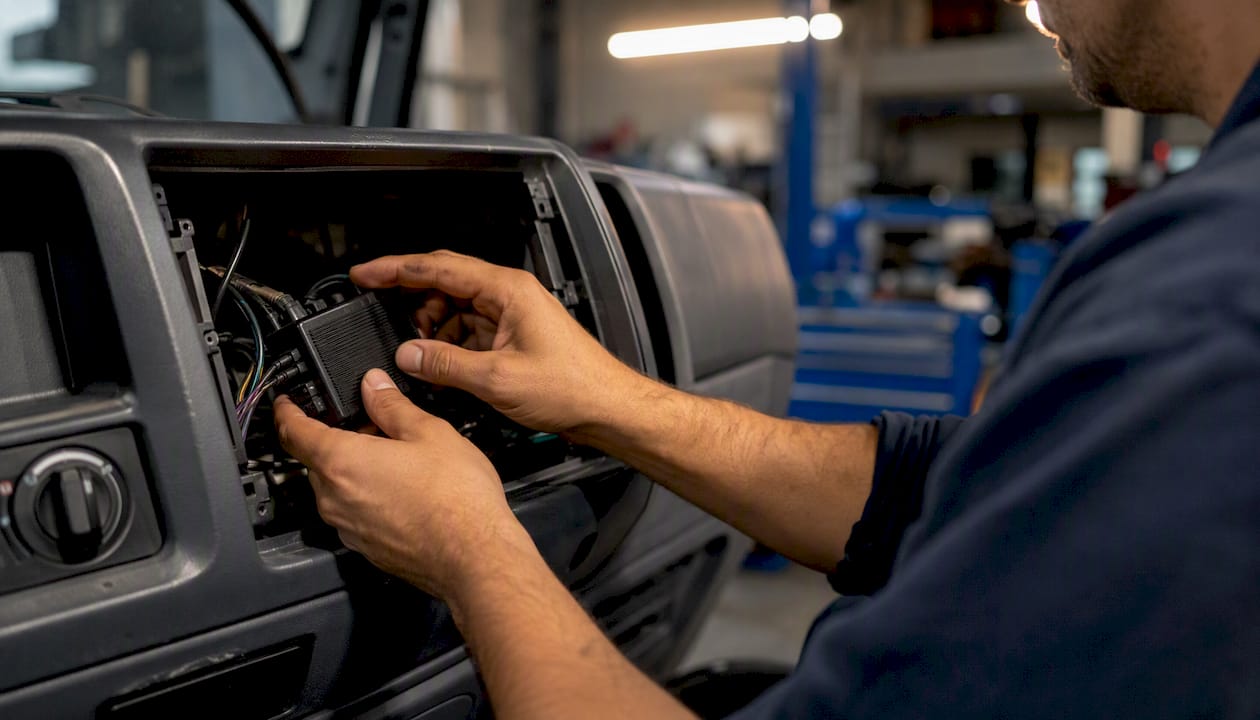
Automated KPI reporting must continue every four weeks without interruption. If your validated IT system fails to transmit, or if a KPI drops below the required threshold, DVSA will engage with you to understand the cause. A single miss with a clear explanation and remediation plan rarely results in suspension. Persistent misses without credible remediation do.
System maintenance is an ongoing obligation. If you change your fleet management platform or tachograph supplier, you must confirm the replacement system holds DVSA validation before switching. Running an unvalidated system, even temporarily, breaks the data chain and puts your accreditation at risk.
Adding optional modules follows the same application process as the initial accreditation. The GOV.UK application forms cover module additions, and the same principle applies: only add a module if your systems and management processes can sustain the associated KPIs continuously. Each module brings its own ongoing reporting obligation.
If DVSA identifies a persistent performance problem, the process moves through engagement and remediation before reaching suspension or removal. Operators who engage promptly and demonstrate a credible improvement plan typically resolve issues without losing accreditation. The DVSA Earned Recognition team is the point of contact for all ongoing scheme queries, and contact details are published on the GOV.UK guidance pages.
For a broader view of operator licence compliance and how ER fits within your wider regulatory obligations, the Fleetalyse compliance guide covers the full picture.
How telematics and remote tachograph systems map to Earned Recognition requirements
Understanding which system features cover which ER KPIs helps you assess your current technology stack and identify gaps before the audit.
| ER metric | System feature required | Typical system type |
|---|---|---|
| MOT initial pass rate | MOT date tracking, failure recording, pass/fail reporting | Maintenance scheduling / fleet management platform |
| Drivers’ hours compliance | Remote tachograph download, automated infringement detection, driver debrief records | Remote tacho download platform / telematics |
| Maintenance completion rate | Scheduled service tracking, defect recording, rectification sign-off | Maintenance scheduling system |
| Vehicle check completion | Digital walkaround check records, defect escalation workflow | Telematics / driver app |
A realistic data flow for the drivers’ hours KPI looks like this: a driver inserts their tachograph card at the end of a shift; the vehicle unit and card data are downloaded remotely overnight by your tachograph platform; the platform’s analysis engine identifies any infringements against EU/AETR rules; the validated export module packages the infringement count and compliance rate into the agreed KPI format; and the system transmits that report to DVSA on the four-weekly cycle. No manual intervention, no spreadsheet, no risk of transcription error.
For the MOT pass rate KPI, the system needs to record each MOT outcome against the vehicle, calculate the initial pass rate across your fleet for the reporting period, and include that figure in the validated export. A maintenance scheduling system that tracks MOT dates but does not record pass/fail outcomes cannot generate this KPI automatically.
Technical capabilities to verify with any prospective supplier:
- Data export format: confirm it matches the DVSA-specified schema for validated suppliers.
- Transmission frequency: four-weekly minimum, with automated retry on failure.
- Security: encrypted transmission, access controls, and an immutable audit log.
- Infringement detection: automated flagging against current legal thresholds, not manual review.
- Evidence export: the ability to produce a human-readable report linking KPI figures to underlying records, formatted for auditor review.
Fleetalyse’s remote tachograph download and driver behaviour monitoring capabilities are designed around exactly these requirements, covering drivers’ hours compliance and vehicle check data within a single platform. For a detailed breakdown of how remote tachograph download works in practice, the DVSA tachograph compliance guide covers the technical process end to end.
Why a compliance-first telematics strategy pays off
Most operators approach telematics as an operational tool first and a compliance tool second. That ordering is understandable, but it tends to create problems when a scheme like Earned Recognition arrives and the existing systems cannot generate the required KPI exports without significant reconfiguration.
The operators who find ER straightforward to join are almost always the ones who chose their telematics and tachograph platforms with compliance reporting in mind from the start. Their systems already produce structured, auditable data. The ER application becomes a process of confirming validation and assembling evidence, rather than a technology project.
Three practical do/don’t points for a compliance-first telematics strategy:
- Do confirm DVSA validation status before signing any fleet management or tachograph supplier contract, not after.
- Do treat automated KPI reporting as a minimum requirement, not a premium feature. If a system cannot export structured data without manual intervention, it will not meet ER standards.
- Don’t add ER modules for operational areas where your systems cannot sustain continuous, automated reporting. A module you cannot maintain creates a compliance liability.
ER is not a one-off certification. It is continuous, verified monitoring. The operators who treat it that way, building their technology stack around automated, auditable data flows, find that the scheme reinforces good compliance habits rather than creating additional administrative burden.
Fleetalyse supports your Earned Recognition data and reporting needs
Operators who are serious about Earned Recognition need technology that generates clean, auditable KPI data without adding manual work to an already stretched compliance team. Fleetalyse is built around exactly that requirement.
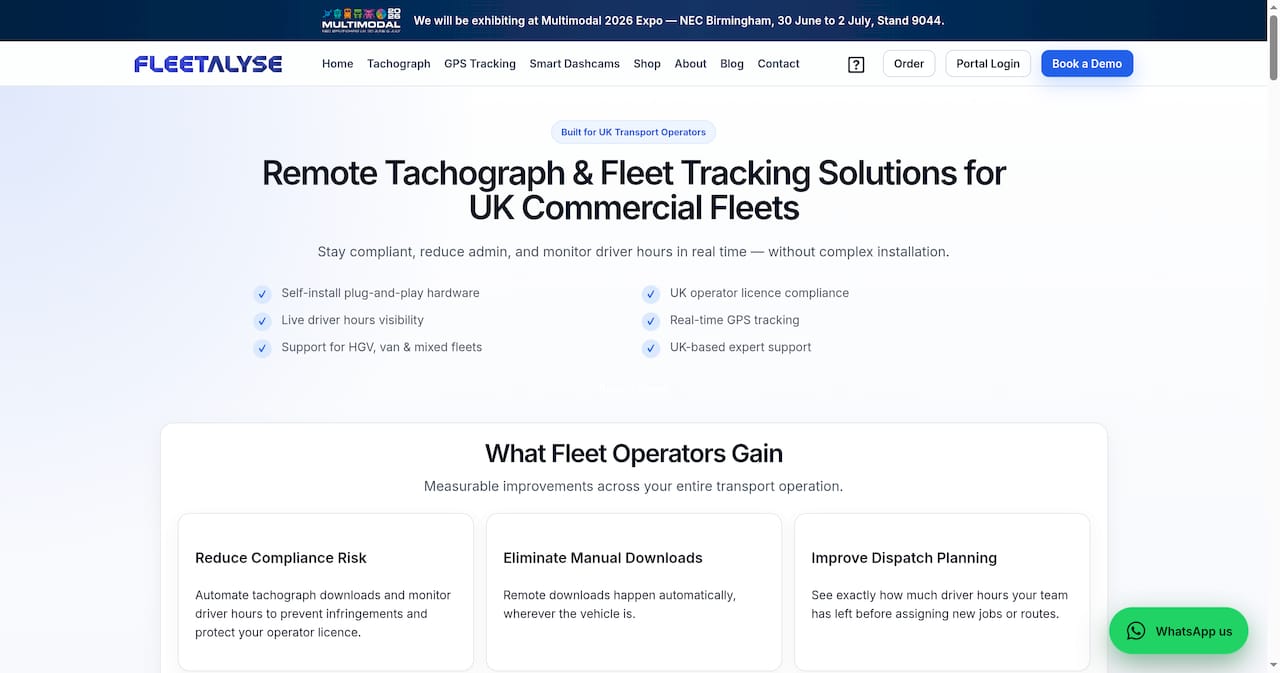
The platform covers the core ER data areas: remote tachograph downloads with automated infringement detection for drivers’ hours KPIs, fleet analysis and compliance reporting for MOT pass rates and maintenance KPIs, and structured evidence exports formatted for auditor review. Everything runs automatically on the four-weekly reporting cycle ER requires.
If you are assessing whether your current systems can meet the validated IT supplier standard, or if you are starting from scratch and need a platform that covers multiple ER KPI areas in one place, contact Fleetalyse for a demonstration. Confirm DVSA validation requirements directly with DVSA and your chosen supplier before finalising any application, as validation status should always be verified at the point of application.
Authoritative GOV.UK resources for your application
Every document you need to apply is published on GOV.UK. The links below are listed in the order most operators will use them.
- DVSA Earned Recognition: join the scheme — start here. Covers eligibility, how the scheme works, and what validated IT systems must do. The clearest single-page summary of the scheme’s requirements.
- DVSA Earned Recognition guidance collection — the master index of all guidance documents, application forms, and standards for operators, IT suppliers, and audit providers.
- Apply to join DVSA Earned Recognition or add extra modules — the application forms for single-entity and group applications, plus the process for adding optional modules after accreditation.
- DVSA Earned Recognition: guide to the scheme — the primary reference for audit standards, validated supplier requirements, and the accreditation process for all three scheme roles (operator, auditor, IT supplier).
- DVSA Earned Recognition: vehicle operator standards — the detailed standards document auditors use to assess your management systems. Read this before commissioning your audit.