
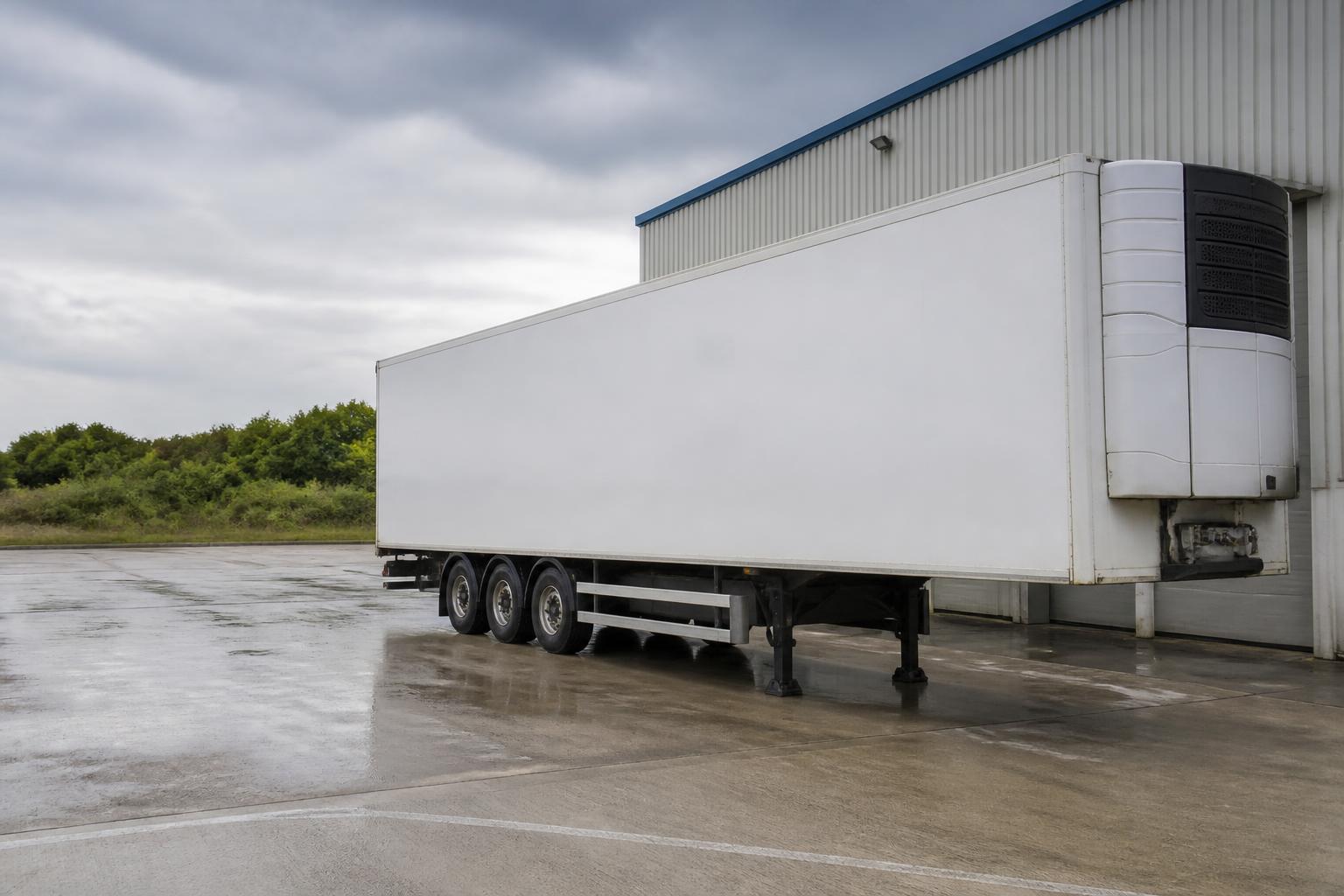
A trailer can be the least visible part of a commercial fleet, even though it carries the load, sits in customer yards, moves between depots, and often spends long periods uncoupled from the unit. Choosing the right tracker for trailer operations is really about closing that gap. You need to know where each trailer is, whether it is moving, when it arrived, how long it has been idle, and which assets are actually earning their keep.
For UK operators, trailer tracking is most useful when it fits normal transport work rather than becoming another system to check. We see the best results when trailer data sits alongside vehicle GPS, Tachograph activity, Smart dashcams and reporting in one place, so planners, transport managers and compliance teams can work from the same view.
What a trailer tracker actually does
At its core, a trailer tracker reports location and movement for an unpowered asset. That sounds simple, but it solves a very specific operational problem. A rigid, van or tractor unit usually already has a live GPS device fitted. A trailer does not. Once it is uncoupled, parked at a customer site, left in a yard, or swapped between units, visibility often stops unless someone rings the driver, checks a whiteboard, or walks the yard.
A trailer tracker gives that trailer its own identity on the system. Instead of only knowing where the towing vehicle was, we can see where the trailer itself is, where it last moved, when it arrived, and whether it has remained at the same location longer than expected.
The exact data available depends on the hardware and installation, but in day to day fleet use, the main functions are usually:
- live or scheduled location updates
- movement alerts
- geofence entry and exit events
- journey history
- stop duration
- battery and device health status
- utilisation reporting, such as how often a trailer moves over a set period
Some trailer setups can also support additional sensor inputs, for example door status or temperature through separate telematics arrangements, though that depends on the trailer type and the wider specification.
The key point is that trailer visibility is different from vehicle visibility. A tractor unit may complete three trailer swaps in a shift. If we only track the unit, we know where the driver went, but not necessarily which trailer was left at which site, which one is still waiting to be loaded, or which one has been standing unused for weeks.
That separate visibility matters even more in mixed operations. Many fleets run a combination of HGV units, vans, trailers and other assets. If only the powered vehicles are visible, the picture is incomplete. The transport team still ends up relying on phone calls and manual checks to answer basic questions about trailer location and availability.
If you want a broader view of how tracking reduces those unknowns across daily transport work, our guide on how a fleet tracker cuts blind spots in daily operations covers the same issue from the wider fleet side.
When UK fleets usually need trailer tracking
Most UK fleets do not decide to track trailers because of a single dramatic event. They do it because everyday operations keep exposing the same blind spots.
One common trigger is trailer pooling across multiple units. In a busy haulage operation, trailers are loaded, dropped, collected and exchanged throughout the week. Without trailer tracking, dispatch may know the plan but not the live position of each trailer once the day changes. A planner trying to cover a late collection can lose time simply working out which trailer is nearest, which one is empty, and which one is still at a customer site.
Another common case is customer yard dwell time. Trailers are often left on site for loading or unloading, especially in general haulage, pallet work, retail distribution and construction supply. If a trailer remains at a delivery point for too long, that affects utilisation and can create knock on issues for the next booking. A tracker helps us identify where trailers are being held and for how long, so the issue can be managed with evidence rather than assumptions.
Trailer tracking is also valuable where fleets use drop and swap patterns. If a unit drops one trailer and picks up another, the tractor's GPS trail only tells part of the story. The operation needs to know which trailer was dropped, where it is now, and whether it has since moved.
Mixed fleets often benefit as well. A business may operate HGV trailers, drawbar combinations, plant trailers, welfare units or other towable assets. Those assets may not move every day, but they still need to be found quickly when booked out. In practice, it is often the less frequently used trailers that create the most admin because no one is fully sure where they were last left.
Security is another reason, but it is rarely the only one. A trailer left in a remote yard, roadside location or customer premises is more exposed than a powered vehicle that returns to base. Location history, movement alerts and geofences can all support faster response if a trailer moves unexpectedly. In the UK, that matters operationally and commercially, especially where the trailer itself is specialised or where the load is high value.
We also see strong demand from operators trying to tighten yard control. A transport office may have dozens or hundreds of trailers on one site, plus units arriving from subcontractors and customers. Yard checks done manually take time and are often out of date as soon as they are completed. Trailer tracking will not replace every physical check, but it does make it far easier to confirm whether a trailer is on site, how long it has been there, and whether it has left the expected area.
For fleets with a mix of trailers and non powered equipment, our article on tracking trailers and plant without extra admin looks at how to keep that practical rather than building another layer of spreadsheet work.
What to look for before you choose hardware
The right trailer tracker starts with the trailer type and how it is used. Not every trailer has the same power options, movement pattern or reporting requirement, so hardware choice should be driven by operation first.
Power is usually the first question. Some trailer tracking devices are self powered with an internal battery. Others are wired into a suitable power source on the trailer. A battery powered unit can be a good fit where wiring is impractical or where the trailer moves intermittently. A wired setup may suit assets with a reliable power arrangement and more frequent reporting needs.
Battery life should be looked at in real operating terms, not just brochure terms. Ask how often the device reports, what happens when the trailer is stationary for long periods, how movement affects power consumption, and what maintenance routine will be needed. A long stated battery life is only useful if it matches the actual reporting profile you need.
Installation matters as well. On trailers, the fitter needs to consider mounting position, protection from damage, signal performance, and ease of future maintenance. A device hidden too deeply within the body may reduce signal reliability. A device mounted in an exposed position may be easier to damage during loading, washdowns or routine yard work.
Durability is not optional. Trailer hardware needs to cope with weather, vibration, dirt and long periods outdoors. For UK operations, that means paying attention to ingress protection, casing strength and the practical realities of winter conditions, pressure washing and impact risk. If the trailer crosses into Europe, the hardware requirement itself does not suddenly change, but your reporting and roaming arrangements need to be suitable for cross border operation. Since the UK is no longer in the EU, operators should check network coverage and commercial terms specifically for UK and EU use rather than assuming one standard arrangement.
Reporting flexibility is another major factor. Some operators want frequent live updates. Others mainly need proof of location at intervals, movement alerts and geofence events. More reporting is not always better if it shortens battery life or creates noise rather than useful exceptions.
You should also check whether the hardware is locked into one provider or whether you can choose a more flexible route. We support Fleetalyse-ready trackers for straightforward rollout, and we also work with unlocked Teltonika devices where customers want more control over specification and deployment. If you are comparing those options, our guide on choosing Teltonika trackers for clearer fleet visibility explains the practical differences.
A few practical buying points are worth checking before you commit:
- whether the tracker suits curtainsiders, box trailers, skeletal trailers, plant trailers or specialist equipment
- how often location updates are sent when moving and when stationary
- whether the device supports geofences and movement alerts
- how battery status is reported
- whether installation can be done at your site or during trailer maintenance
- what ongoing SIM arrangement is used, including IoT SIMs where appropriate
- how the data appears in the platform and reports
- whether the system can scale if you later add units, vans or other assets
For some powered vehicles, buyers also ask about CAN data, but on trailer tracking that is usually not the central issue because the trailer itself does not provide the same vehicle data set as a truck or van. The more relevant question is whether the trailer tracker gives dependable location and event data without creating extra maintenance work.
How trailer tracking fits into fleet workflows
Trailer tracking is most useful when it supports decisions people already have to make. The value is not just in seeing dots on a map. It is in reducing the time spent chasing updates and checking where assets are.
In dispatch, trailer location helps planners match the right trailer to the next job. If a loaded trailer is already near the collection or delivery area, we can allocate more efficiently. If an empty trailer is still sitting at a customer site, we can recover it before it becomes a capacity issue.
For yard checks, trailer tracking gives a faster starting point. Staff can confirm which trailers are on site before walking the yard, and exceptions stand out more clearly. Instead of checking every bay manually, the team can focus on trailers that are missing, unexpectedly moved, or still on site beyond plan.
Utilisation reviews are another strong use case. Over a month or quarter, it becomes much easier to see which trailers are moving regularly and which are underused. That can feed decisions on fleet size, replacement timing and whether hired assets are still justified. Many operators are surprised by how much capital is tied up in trailers that spend too much time standing still.
Exception handling is where tracking often pays back fastest. A trailer leaves a geofenced customer site out of hours. A trailer expected at depot does not arrive. A trailer has been idle for too long. A trailer appears at the wrong location. Those are practical events that need action, and a good system should make them visible without someone constantly watching the screen.
This also supports customer service. When a customer asks whether their trailer has arrived, whether it is still on site, or when it left, the transport office can answer from system records rather than relying on memory or driver call backs.
Within Fleetalyse, trailer data can sit alongside the rest of the fleet picture. That means transport teams can review asset positions with OpenStreetMap based mapping, compare trailer movement against vehicle activity, and use Fleet insight to spot patterns that are not obvious from individual jobs. If the same customer site repeatedly holds trailers longer than agreed, or if particular trailers show lower than expected utilisation, the evidence is there to act on.
Where the operation also manages driver compliance, remote Tachograph downloads and driver hours records remain separate legal and operational functions, but they are far more useful when viewed in context with actual fleet movement. A planner can see not just where the unit is, but also whether the trailer needed for the next leg is where it should be.
Why one platform matters for mixed fleets
The biggest mistake many fleets make is treating trailer tracking as a standalone purchase. A separate app for trailers can solve one problem, but it often creates another. The transport office ends up switching between systems for units, trailers, cameras, compliance and reports, then reconciling the gaps manually.
For mixed fleets, one platform matters because the operation itself is joined up. The planner allocating work, the person checking driver hours, the fleet manager reviewing incidents, and the team handling customer queries all need related information. If trailer tracking sits in one place, GPS in another, Tachograph downloads somewhere else, and Smart dashcams in a fourth system, the admin burden grows quickly.
We built Fleetalyse around that operational reality. A fleet may start with simple tracking, then add trailers, dashcams, Tachograph services or wider reporting as needs change. The point is not to force every fleet into the same setup. It is to make sure the information can be viewed together when that is what daily management requires.
That is especially useful for operators running HGV units, vans, trailers and other assets in parallel. One platform can support common mapping, common reporting logic, shared user access and clearer exception handling. It also reduces the risk that a trailer issue gets missed because nobody checked the separate system that day.
There are practical commercial benefits too. Procurement, rollout and user management are simpler when fewer systems are involved. Customers using Fleetalyse can review devices and services through one Customer Portal, manage access more cleanly through Tracker login controls, and handle account processes in a more straightforward way. Where online payments are relevant, Stripe may form part of that process. As with any UK business purchase, buyers should also consider VAT treatment on hardware and service invoices in line with their own accounting arrangements.
For fleets that want flexibility on hardware, unlocked devices can make long term planning easier. That is one reason we support both Fleetalyse-ready trackers and selected Teltonika options. Some operators want a standard package they can deploy quickly. Others want a customised commercial rollout that fits an existing engineering or telematics policy.
The right choice depends on how your trailers are used, how often they move, what level of reporting you need, and how you want that data to feed the rest of the fleet operation. What matters most is not simply fitting a tracker for trailer visibility, but making sure that visibility is usable by the people running transport every day.
If you want trailer tracking to reduce blind spots rather than add another login and another report to chase, the system should fit the way your fleet already works. That is the standard we work to at Fleetalyse, Fleeta Limited T/A Fleetalyse, whether you are tracking a small trailer pool or rolling out visibility across a mixed commercial fleet.
What is the difference between a trailer tracker and a vehicle tracker?
A trailer tracker is designed for unpowered assets that may be dropped, parked or swapped between units. It focuses on location, movement and asset visibility rather than driver-linked vehicle data.
Do all trailer trackers need a permanent power supply?
No. Some use internal batteries, while others can be wired depending on the trailer and use case. The right choice depends on trailer type, movement frequency and how often you need updates.
Can trailer tracking help with trailer utilisation?
Yes. It can show which trailers are moving regularly, which are standing idle and where assets spend time. That helps operators review usage and make better allocation decisions.
Is trailer tracking useful for small fleets?
Yes, if trailers are regularly left on customer sites, shared across jobs or hard to locate quickly. Even a small fleet can save time by reducing manual checks and unnecessary calls.
Should trailer tracking sit in a separate system?
Many operators prefer it in the same platform as vehicle GPS and other fleet tools. That gives one view of assets and avoids switching between systems to understand what is happening.