
Did you know that 91% of fleet managers have used video footage to exonerate their drivers from false accident claims? You already know that operating HGVs on UK roads is a high-stakes environment where a single incident can spiral into soaring insurance premiums or a threat to your UK Operator Licence. It's a constant challenge when fragmented data between your cameras and tracking systems leaves you struggling to prove driver innocence during a DVSA roadside check.
Integrating fleet dashcams with live tracking changes the equation by turning passive recording into an active shield for your reputation. This guide explains how real-time visibility protects your assets whilst ensuring you remain compliant with ICO data protection requirements. You'll discover how to merge video evidence with GPS fleet tracking to reduce insurance claims, improve driver behaviour, and maintain a seamless view of your entire operation across the UK road network.
Key Takeaways
- Identify the critical differences between passive "record-only" cameras and fleet dashcams with live tracking that provide instant LTE connectivity.
- Learn how to synchronise GPS data with video footage to create a comprehensive digital map for immediate incident retrieval.
- Protect your UK Operator Licence by using real-time monitoring to prove your business is taking all reasonable steps to ensure road safety.
- Discover the benefits of integrating video evidence with tachograph data to verify driver identity and hours on a single platform.
- Evaluate hardware durability and software usability to ensure your dispatch desk can manage fleet activity efficiently whilst under pressure.
What are Fleet Dashcams with Live Tracking?
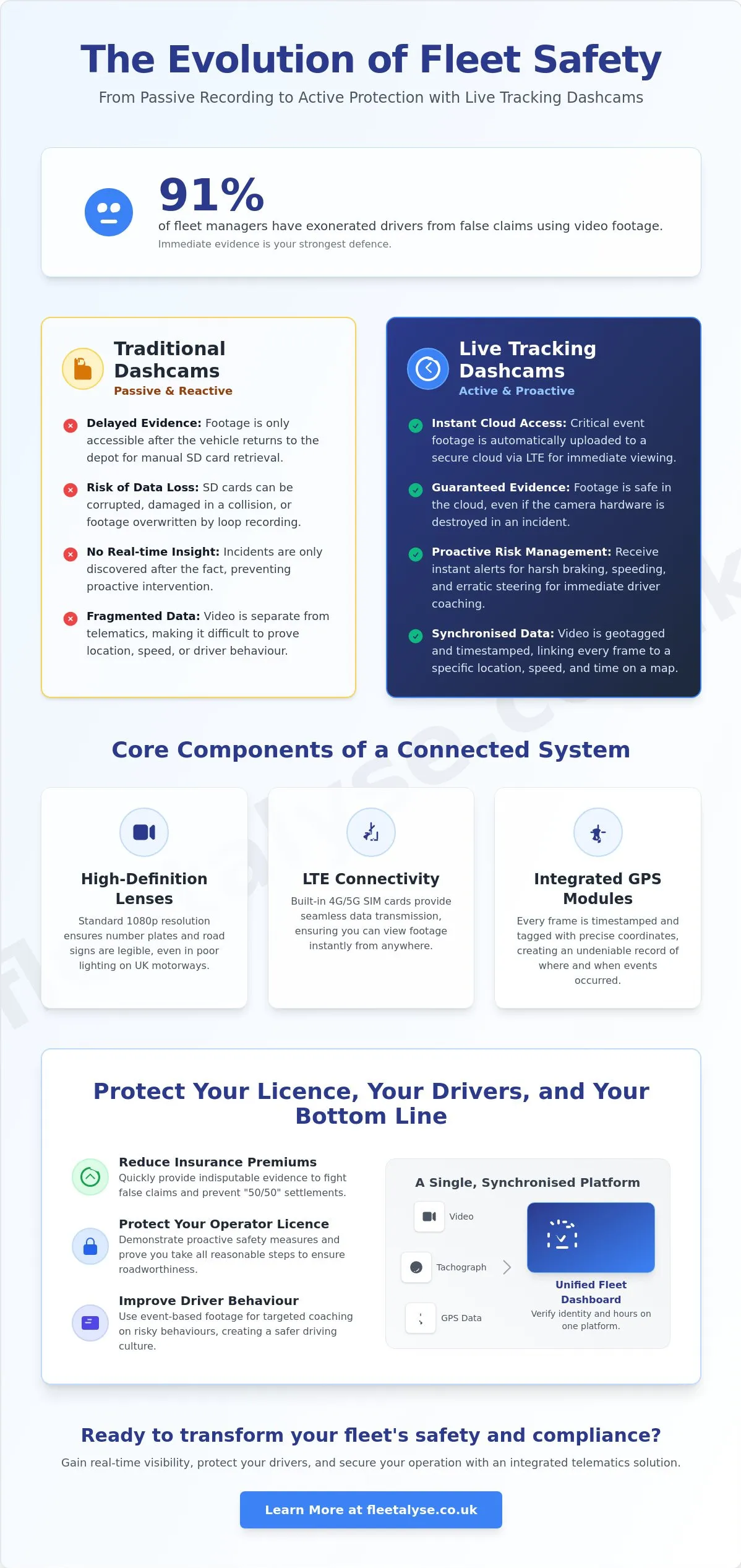
A standard dashcam records video to a local storage card. It's a passive observer. In contrast, fleet dashcams with live tracking function as active telematics hubs. These devices combine high-definition video capture with constant LTE connectivity and GPS positioning. They don't just record; they transmit. This shift from manual SD card retrieval to instant cloud access is the single biggest advancement in Dashcam technology in commercial fleets. It removes the delay between an incident happening on the road and a fleet manager seeing the evidence.
Traditional systems required you to wait for the vehicle to return to the depot. You'd then physically remove the card, find a card reader, and search through hours of footage. If the card was corrupted or the loop-recording had overwritten the incident, the evidence was gone. Connected systems solve this by uploading "events" immediately. When a sensor detects a collision or harsh manoeuvre, the clip is pushed to the cloud automatically. You see what happened whilst the driver is still at the scene.
The Core Components of a Connected System
- High-definition lenses: Standard 1080p resolution ensures that number plates and road signs are legible in all weather conditions, even on poorly lit UK motorways.
- LTE connectivity: Built-in 4G or 5G SIM cards allow for seamless data transmission across the country. You aren't reliant on the vehicle returning to a Wi-Fi hotspot at the centre to view footage.
- Integrated GPS modules: Every frame of video is timestamped and tagged with precise coordinates. This creates a definitive record of exactly where and when an event occurred.
Why "Live" Matters in Modern Fleet Management
Speed is the most valuable asset in claims management. 91% of fleet managers report using footage for driver exoneration, but this is only effective if the evidence is available immediately. Real-time visibility allows you to exonerate a driver within minutes of an incident. This prevents the "evidence gap" that often leads insurers to settle claims where your driver wasn't at fault.
Beyond insurance, "live" data enables proactive management. You receive instant alerts for risky behaviours like erratic steering or speeding. This doesn't just help with compliance; it allows for immediate intervention. You can address safety issues as they happen rather than reviewing a report at the end of the week. Fleet dashcams with live tracking ensure you're acting on facts, not assumptions, providing a clear advantage for any regional operator.
The Power of Live GPS and Instant Video Retrieval
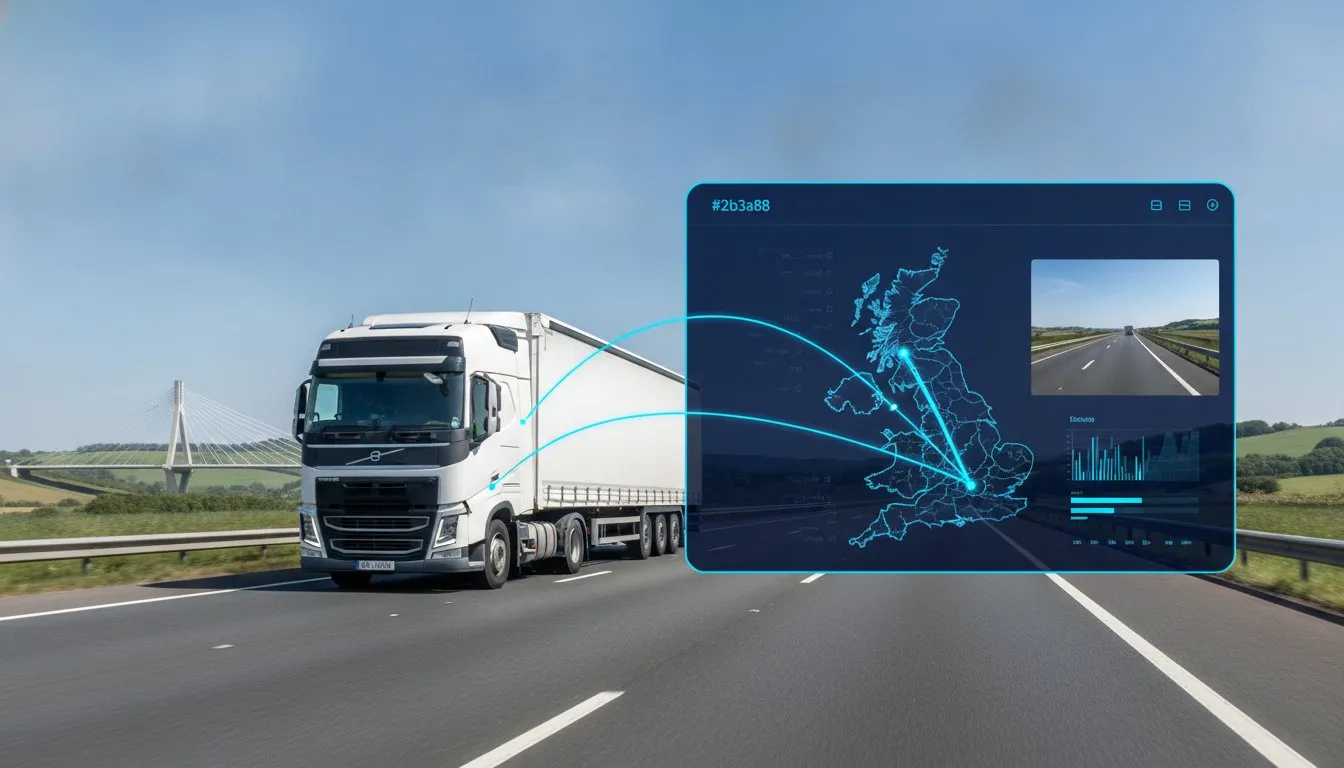
Modern fleet management relies on the seamless marriage of location data and visual evidence. When you use fleet dashcams with live tracking, you aren't just looking at a video file; you're viewing a synchronised digital map of the entire journey. Every second of footage is pinned to a specific GPS coordinate. This creates an undeniable audit trail. If a driver is accused of an incident at a specific junction, you don't need to guess which clip to download. You simply click the location on the map and the corresponding video appears instantly.
This level of integration is powered by event-based triggering. Built-in G-sensors detect sudden changes in movement, such as harsh braking or erratic steering behaviour. These triggers automatically flag the footage and upload it to the cloud. This ensures that even if the hardware is destroyed in a severe accident, the evidence remains safe and accessible. Police accept dashcam footage in 85% of cases when it's timestamped and clearly shows the incident. Organising this data is efficient because the software categorises incidents by severity. You focus on the high-risk events first, rather than being overwhelmed by hours of routine driving footage.
Synchronised Telematics: Mapping the Video
Breadcrumb tracking allows managers to follow a vehicle's exact path on a live map. By clicking any "breadcrumb," you can pull a short clip from that specific moment. This is vital when choosing the right live tracking dashcam for your operation. Speed data overlays are equally critical. They provide a hard-coded record of the vehicle's speed at the time of an incident, which is indispensable when disputing unfair speeding fines or Notices of Intended Prosecution (NIPs). GPS-sync provides definitive location proof that eliminates "he-said-she-said" disputes with third parties or the public.
LTE Connectivity and Data Efficiency
Managing data costs is a priority for any regional operator. Leading systems use a "Low-Res Preview" model. You view a small, data-efficient thumbnail or low-quality stream to confirm an event. You only perform a "High-Res Download" when full HD evidence is required for an insurance claim or disciplinary matter. Choosing high-quality fleet dashcams with live tracking ensures your data is accessible even when the vehicle is hundreds of miles from base. These systems use encrypted security protocols to ensure that sensitive driver data and video streams remain protected whilst in transit. If you are ready to upgrade your fleet's visibility, you can explore our integrated tracking and camera solutions to get started.
Protecting Your Operator Licence with Video Evidence
For any UK road transport operator, the Operator Licence is the lifeblood of the business. Maintaining "Good Repute" is not a one-time achievement; it's a continuous obligation. The DVSA expects you to demonstrate that you are taking all reasonable steps to ensure road safety and regulatory compliance. fleet dashcams with live tracking serve as your most reliable witness during a compliance audit or a Public Inquiry. They provide the objective data needed to prove that your management systems are robust and proactive.
When an incident occurs, your DVSA operator score is at stake. A clean score is essential for avoiding targeted roadside stops and maintaining a healthy business reputation. By using real-time video, you can exonerate drivers immediately. This ensures that non-fault accidents don't unfairly tarnish your record. This evidence proves to the authorities that your drivers are following safe systems of work, even when third parties attempt to shift the blame.
Meeting DVSA Standards and Safety Audits
Live alerts for harsh manoeuvres allow transport managers to intervene the moment a risk is identified. You don't have to wait for a weekly report to discover a driver is speeding or tailgating. This immediate oversight is a critical component of modern safety policies. During a maintenance or traffic audit, having a searchable log of video evidence demonstrates a high level of professional competence. For fleets pursuing "Earned Recognition" status, integrated video systems provide the transparency the DVSA values. It shows you have nothing to hide and everything to protect.
Insurance, Liability, and the Bottom Line
- Lower Premiums: Many insurers offer reduced rates for fleets that provide direct access to safety data and video evidence. It reduces their risk and yours.
- Combatting Scams: HGVs are frequent targets for "crash for cash" scams. Indisputable front and side-facing footage ends these fraudulent claims before they reach court.
- Cash Flow: Traditional claims can take months or years to settle. Instant video retrieval from fleet dashcams with live tracking can resolve a claim in days. This keeps your capital inside the business rather than tied up in legal disputes.
Using video as a formal part of driver coaching further strengthens your compliance position. It allows you to move away from generic safety talks and focus on specific, documented steering or braking behaviours. This targeted approach is exactly what regulators look for when assessing whether a company is truly committed to road safety. It turns a simple camera into a vital asset for long-term operational security.
Choosing the Right Live Tracking Dashcam for Your Fleet
Selecting hardware for a commercial fleet is different from buying a consumer device. Your vehicles face constant vibration, extreme temperature shifts, and high-mileage wear. You need a tool built for the rigours of the UK haulage industry, not the high street. When evaluating fleet dashcams with live tracking, focus on durability and the synergy between the camera and the software interface. A camera is only as useful as the platform that manages the data.
Tamper-proof designs are non-negotiable for professional operators. If a driver can easily unplug the power cable or remove the storage media, your compliance trail is broken. Insist on hardwired installations with locking covers that prevent unauthorised interference. This ensures the system remains operational 100% of the time, protecting both the driver and the company's "Good Repute."
Key Technical Specifications to Demand
Wide-angle lenses with a field of view of at least 140° are essential. This allows you to capture the full road context, including vulnerable road users in cycle lanes and at junctions. For HGVs, a single front-facing lens is rarely sufficient. Demand multi-channel support so you can add side and rear cameras for total 360° visibility. High-definition 1080p resolution is the minimum standard required to ensure UK number plates are legible at a distance in court-admissible evidence.
Software Integration and Ease of Use
Managing a busy dispatch desk requires efficiency. Using a single-login portal that combines your GPS tracking, driver hours, and video footage is far more effective than toggling between fragmented apps. This unified view allows you to see exactly where a vehicle is and what the driver sees on one screen. It simplifies the workflow for transport managers who are already under pressure to meet tight deadlines.
Alert customisation is another critical feature. You need to avoid "notification fatigue" by filtering out minor events and only receiving alerts for high-risk triggers. Mobile app functionality is also vital for managers who need to oversee operations whilst out in the yard or away from their desks. Finally, look at the Total Cost of Ownership (TCO). This includes the initial hardware, professional installation, and the ongoing LTE data costs. A reliable system provides better value than a cheaper alternative that suffers from frequent connectivity drops.
If you are ready to upgrade your vehicles with hardware built for the long haul, you can secure your fleet with professional live tracking dashcams today.
Integrating Video with Live Driver Hours and Tachograph Compliance
Integrating fleet dashcams with live tracking into your compliance workflow is about more than just road safety; it's about absolute data integrity. Most operators manage their video and tachograph data in separate silos. This creates unnecessary blind spots. At Fleetalyse, we act as the specialist bridging this gap. We ensure your visual evidence and your compliance data live in the same environment. Seeing "who" is behind the wheel is just as critical as knowing "how long" they've been driving. Video provides the identity and context that a tachograph card alone simply cannot verify.
This combined approach allows for a level of oversight that wasn't possible with older, disconnected systems. You no longer have to cross-reference timestamps from two different platforms to understand an incident. The evidence is unified. This saves time during investigations and provides a much stronger defence if your business is ever called to explain a driver's actions to the authorities.
The Ultimate Compliance Synergy
Linking remote tachograph download with real-time video events creates a complete picture of every journey. If a harsh braking event occurs, you don't just see the road; you see the driver's tacho status at that exact second. This is vital for determining if fatigue played a role. Monitoring live driver hours alongside video allows transport managers to intervene before a violation occurs. It provides a single source of truth for weekly debriefs. You aren't guessing based on two different reports. You're looking at one unified dashboard that shows the reality of your fleet's performance.
Why Fleetalyse is the Pragmatic Choice for UK Fleets
We don't believe in flashy, unnecessary features that add cost without providing value. Our focus is on functional utility and operational clarity. We provide transparent pricing with no hidden data overage shocks. You'll know exactly what your financial commitment is from the start. As a UK-based partner, we understand the specific rigours of national haulage and the constant pressure of DVSA standards. You get direct support from specialists who know your industry, not a distant software provider. We value your resources and prioritise the tools that actually keep your trucks moving and your licence safe.
Getting started with a professional fleet tracking partner shouldn't be complicated. We move quickly from identifying your specific operational pains to offering a detailed, transparent solution. Our goal is to make your transition to integrated monitoring as frictionless as possible. If you're ready to move beyond fragmented data and protect your reputation with objective evidence, we're here to help. Reach out to our team to discuss how we can streamline your compliance and safety monitoring across the entire UK road network with fleet dashcams with live tracking.
Secure Your Fleet’s Future with Integrated Vision
Investing in fleet dashcams with live tracking is a strategic move toward total operational transparency. You've seen how bridging the gap between video evidence and tachograph data protects your drivers and secures your UK Operator Licence. By moving away from fragmented systems, you gain a unified view of your fleet that simplifies compliance and drastically reduces insurance risks. This integration ensures that every incident has the context needed to prove innocence and maintain your good repute during DVSA checks.
We are specialists in UK transport compliance, offering seamless tachograph and GPS integration for HGV and van operators. Our team provides expert national support to ensure your technology works for your specific business needs without unnecessary complexity or hidden fees. It's time to replace guesswork with objective, real-time facts that keep your business moving safely across the UK road network. We prioritise functional utility to help you manage your assets more effectively every day.
See our published pricing for your fleet tracking and dashcam needs to see the difference a pragmatic partner makes. Protect your reputation and your bottom line with a system built for the rigours of the road. We look forward to helping you strengthen your fleet's safety and compliance standards.
Frequently Asked Questions
Are dashcams with live tracking legal for UK business fleets?
Yes, using fleet dashcams with live tracking is entirely legal provided you comply with GDPR and ICO regulations. You must register as a data controller and pay the annual data protection fee, which is £52 for most small businesses. It is a legal requirement to inform drivers and passengers that they are being recorded, typically through clear signage inside the vehicle cabin.
How much data does a live-tracking fleet dashcam use per month?
Data usage varies based on your operational habits and how often you stream live video. Most commercial vehicles consume between 500MB and 2GB of data per month. You can manage these costs effectively by using low-resolution previews for routine checks and only downloading high-definition clips when you need evidence for an insurance claim or a disciplinary matter.
Can I see my drivers in real-time with an in-cab camera?
You can view live footage for safety and coaching purposes, but you must respect employee privacy rights. Employers should have a written policy explaining when and why live-streaming is used. It's standard practice to allow drivers to disable tracking during authorised personal use of the vehicle to stay compliant with privacy laws.
Do dashcams help reduce fleet insurance premiums in the UK?
Most UK insurers offer lower premiums or reduced excesses for fleets that provide indisputable video evidence. Dashcams help combat "crash for cash" scams and speed up the claims process significantly. Since 91% of fleet managers have used footage for driver exoneration, insurers view these systems as a major risk-reduction tool that justifies lower rates.
What happens to the video if the vehicle is in an area with poor LTE signal?
The camera continues to record all footage directly to its internal, tamper-proof storage card regardless of signal strength. Once the vehicle re-enters a 4G or 5G coverage area, the system automatically resumes its connection. Any "event" clips triggered by the G-sensor during the signal blackout will then be pushed to the cloud immediately.
How long is dashcam footage typically stored in the cloud?
Standard cloud retention periods usually range from 30 to 90 days depending on your service agreement. You can manually lock and save specific clips permanently if they are needed for ongoing legal or insurance cases. Your business must have a clear data retention policy to ensure you don't store personal data longer than is necessary.
Can dashcams be integrated with my existing tachograph analysis software?
Specialist providers like Fleetalyse design systems that bridge the gap between video and tachograph data. Integrating fleet dashcams with live tracking with your analysis tools provides a unified compliance dashboard. This allows you to verify driver identity and hours alongside visual evidence, creating a "single source of truth" for your transport manager.
Is it difficult to install live-tracking dashcams in older HGVs?
Modern live-tracking systems are designed for universal fitment across all vehicle ages and types. Professional installers hardwire the units into the vehicle’s power supply, ensuring a clean setup that doesn't interfere with older analogue or digital electronics. Tamper-proof housings are used to protect the cables and storage media from unauthorised access in any cab environment.
Frequently asked questions
The Core Components of a Connected System
High-definition lenses: Standard 1080p resolution ensures that number plates and road signs are legible in all weather conditions, even on poorly lit UK motorways.
LTE connectivity: Built-in 4G or 5G SIM cards allow for seamless data transmission across the country. You aren't reliant on the vehicle returning to a Wi-Fi hotspot at the centre to view footage.
Integrated GPS modules: Every frame of video is timestamped and tagged with precise coordinates. This creates a definitive record of exactly where and when an event occurred.
Why "Live" Matters in Modern Fleet Management
Speed is the most valuable asset in claims management. 91% of fleet managers report using footage for driver exoneration, but this is only effective if the evidence is available immediately. Real-time visibility allows you to exonerate a driver within minutes of an incident. This prevents the "evidence gap" that often leads insurers to settle claims where your driver wasn't at fault. Beyond insurance, "live" data enables proactive management. You receive instant alerts for risky behaviours like erratic steering or speeding. This doesn't just help with compliance; it allows for immediate intervention. You can address safety issues as they happen rather than reviewing a report at the end of the week. Fleet dashcams with live tracking ensure you're acting on facts, not assumptions, providing a clear advantage for any regional operator. Modern fleet management relies on the seamless marriage of location data and visual evidence. When you use fleet dashcams with live tracking, you aren't just looking at a video file; you're viewing a synchronised digital map of the entire journey. Every second of footage is pinned to a specific GPS coordinate. This creates an undeniable audit trail. If a driver is accused of an incident at a specific junction, you don't need to guess which clip to download. You simply click the location on the map and the corresponding video appears instantly. This level of integration is powered by event-based triggering. Built-in G-sensors detect sudden changes in movement, such as harsh braking or erratic steering behaviour. These triggers automatically flag the footage and upload it to the cloud. This ensures that even if the hardware is destroyed in a severe accident, the evidence remains safe and accessible. Police accept dashcam footage in 85% of cases when it's timestamped and clearly shows the incident. Organising this data is efficient because the software categorises incidents by severity. You focus on the high-risk events first, rather than being overwhelmed by hours of routine driving footage.
Synchronised Telematics: Mapping the Video
Breadcrumb tracking allows managers to follow a vehicle's exact path on a live map. By clicking any "breadcrumb," you can pull a short clip from that specific moment. This is vital when choosing the right live tracking dashcam for your operation. Speed data overlays are equally critical. They provide a hard-coded record of the vehicle's speed at the time of an incident, which is indispensable when disputing unfair speeding fines or Notices of Intended Prosecution (NIPs). GPS-sync provides definitive location proof that eliminates "he-said-she-said" disputes with third parties or the public.
LTE Connectivity and Data Efficiency
Managing data costs is a priority for any regional operator. Leading systems use a "Low-Res Preview" model. You view a small, data-efficient thumbnail or low-quality stream to confirm an event. You only perform a "High-Res Download" when full HD evidence is required for an insurance claim or disciplinary matter. Choosing high-quality fleet dashcams with live tracking ensures your data is accessible even when the vehicle is hundreds of miles from base. These systems use encrypted security protocols to ensure that sensitive driver data and video streams remain protected whilst in transit. If you are ready to upgrade your fleet's visibility, you can explore our integrated tracking and camera solutions to get started. For any UK road transport operator, the Operator Licence is the lifeblood of the business. Maintaining "Good Repute" is not a one-time achievement; it's a continuous obligation. The DVSA expects you to demonstrate that you are taking all reasonable steps to ensure road safety and regulatory compliance. fleet dashcams with live tracking serve as your most reliable witness during a compliance audit or a Public Inquiry. They provide the objective data needed to prove that your management systems are robust and proactive. When an incident occurs, your DVSA operator score is at stake. A clean score is essential for avoiding targeted roadside stops and maintaining a healthy business reputation. By using real-time video, you can exonerate drivers immediately. This ensures that non-fault accidents don't unfairly tarnish your record. This evidence proves to the authorities that your drivers are following safe systems of work, even when third parties attempt to shift the blame.
Meeting DVSA Standards and Safety Audits
Live alerts for harsh manoeuvres allow transport managers to intervene the moment a risk is identified. You don't have to wait for a weekly report to discover a driver is speeding or tailgating. This immediate oversight is a critical component of modern safety policies. During a maintenance or traffic audit, having a searchable log of video evidence demonstrates a high level of professional competence. For fleets pursuing "Earned Recognition" status, integrated video systems provide the transparency the DVSA values. It shows you have nothing to hide and everything to protect.
Insurance, Liability, and the Bottom Line
Using video as a formal part of driver coaching further strengthens your compliance position. It allows you to move away from generic safety talks and focus on specific, documented steering or braking behaviours. This targeted approach is exactly what regulators look for when assessing whether a company is truly committed to road safety. It turns a simple camera into a vital asset for long-term operational security. Selecting hardware for a commercial fleet is different from buying a consumer device. Your vehicles face constant vibration, extreme temperature shifts, and high-mileage wear. You need a tool built for the rigours of the UK haulage industry, not the high street. When evaluating fleet dashcams with live tracking, focus on durability and the synergy between the camera and the software interface. A camera is only as useful as the platform that manages the data. Tamper-proof designs are non-negotiable for professional operators. If a driver can easily unplug the power cable or remove the storage media, your compliance trail is broken. Insist on hardwired installations with locking covers that prevent unauthorised interference. This ensures the system remains operational 100% of the time, protecting both the driver and the company's "Good Repute."
Key Technical Specifications to Demand
Wide-angle lenses with a field of view of at least 140° are essential. This allows you to capture the full road context, including vulnerable road users in cycle lanes and at junctions. For HGVs, a single front-facing lens is rarely sufficient. Demand multi-channel support so you can add side and rear cameras for total 360° visibility. High-definition 1080p resolution is the minimum standard required to ensure UK number plates are legible at a distance in court-admissible evidence.
Software Integration and Ease of Use
Managing a busy dispatch desk requires efficiency. Using a single-login portal that combines your GPS tracking, driver hours, and video footage is far more effective than toggling between fragmented apps. This unified view allows you to see exactly where a vehicle is and what the driver sees on one screen. It simplifies the workflow for transport managers who are already under pressure to meet tight deadlines. Alert customisation is another critical feature. You need to avoid "notification fatigue" by filtering out minor events and only receiving alerts for high-risk triggers. Mobile app functionality is also vital for managers who need to oversee operations whilst out in the yard or away from their desks. Finally, look at the Total Cost of Ownership (TCO). This includes the initial hardware, professional installation, and the ongoing LTE data costs. A reliable system provides better value than a cheaper alternative that suffers from frequent connectivity drops. If you are ready to upgrade your vehicles with hardware built for the long haul, you can secure your fleet with professional live tracking dashcams today. Integrating fleet dashcams with live tracking into your compliance workflow is about more than just road safety; it's about absolute data integrity. Most operators manage their video and tachograph data in separate silos. This creates unnecessary blind spots. At Fleetalyse, we act as the specialist bridging this gap. We ensure your visual evidence and your compliance data live in the same environment. Seeing "who" is behind the wheel is just as critical as knowing "how long" they've been driving. Video provides the identity and context that a tachograph card alone simply cannot verify. This combined approach allows for a level of oversight that wasn't possible with older, disconnected systems. You no longer have to cross-reference timestamps from two different platforms to understand an incident. The evidence is unified. This saves time during investigations and provides a much stronger defence if your business is ever called to explain a driver's actions to the authorities.
The Ultimate Compliance Synergy
Linking remote tachograph download with real-time video events creates a complete picture of every journey. If a harsh braking event occurs, you don't just see the road; you see the driver's tacho status at that exact second. This is vital for determining if fatigue played a role. Monitoring live driver hours alongside video allows transport managers to intervene before a violation occurs. It provides a single source of truth for weekly debriefs. You aren't guessing based on two different reports. You're looking at one unified dashboard that shows the reality of your fleet's performance.
Why Fleetalyse is the Pragmatic Choice for UK Fleets
We don't believe in flashy, unnecessary features that add cost without providing value. Our focus is on functional utility and operational clarity. We provide transparent pricing with no hidden data overage shocks. You'll know exactly what your financial commitment is from the start. As a UK-based partner, we understand the specific rigours of national haulage and the constant pressure of DVSA standards. You get direct support from specialists who know your industry, not a distant software provider. We value your resources and prioritise the tools that actually keep your trucks moving and your licence safe. Getting started with a professional fleet tracking partner shouldn't be complicated. We move quickly from identifying your specific operational pains to offering a detailed, transparent solution. Our goal is to make your transition to integrated monitoring as frictionless as possible. If you're ready to move beyond fragmented data and protect your reputation with objective evidence, we're here to help. Reach out to our team to discuss how we can streamline your compliance and safety monitoring across the entire UK road network with fleet dashcams with live tracking. Investing in fleet dashcams with live tracking is a strategic move toward total operational transparency. You've seen how bridging the gap between video evidence and tachograph data protects your drivers and secures your UK Operator Licence. By moving away from fragmented systems, you gain a unified view of your fleet that simplifies compliance and drastically reduces insurance risks. This integration ensures that every incident has the context needed to prove innocence and maintain your good repute during DVSA checks. We are specialists in UK transport compliance, offering seamless tachograph and GPS integration for HGV and van operators. Our team provides expert national support to ensure your technology works for your specific business needs without unnecessary complexity or hidden fees. It's time to replace guesswork with objective, real-time facts that keep your business moving safely across the UK road network. We prioritise functional utility to help you manage your assets more effectively every day. See our published pricing for your fleet tracking and dashcam needs to see the difference a pragmatic partner makes. Protect your reputation and your bottom line with a system built for the rigours of the road. We look forward to helping you strengthen your fleet's safety and compliance standards.
Are dashcams with live tracking legal for UK business fleets?
Yes, using fleet dashcams with live tracking is entirely legal provided you comply with GDPR and ICO regulations. You must register as a data controller and pay the annual data protection fee, which is £52 for most small businesses. It is a legal requirement to inform drivers and passengers that they are being recorded, typically through clear signage inside the vehicle cabin.
How much data does a live-tracking fleet dashcam use per month?
Data usage varies based on your operational habits and how often you stream live video. Most commercial vehicles consume between 500MB and 2GB of data per month. You can manage these costs effectively by using low-resolution previews for routine checks and only downloading high-definition clips when you need evidence for an insurance claim or a disciplinary matter.
Can I see my drivers in real-time with an in-cab camera?
You can view live footage for safety and coaching purposes, but you must respect employee privacy rights. Employers should have a written policy explaining when and why live-streaming is used. It's standard practice to allow drivers to disable tracking during authorised personal use of the vehicle to stay compliant with privacy laws.
Do dashcams help reduce fleet insurance premiums in the UK?
Most UK insurers offer lower premiums or reduced excesses for fleets that provide indisputable video evidence. Dashcams help combat "crash for cash" scams and speed up the claims process significantly. Since 91% of fleet managers have used footage for driver exoneration, insurers view these systems as a major risk-reduction tool that justifies lower rates.
What happens to the video if the vehicle is in an area with poor LTE signal?
The camera continues to record all footage directly to its internal, tamper-proof storage card regardless of signal strength. Once the vehicle re-enters a 4G or 5G coverage area, the system automatically resumes its connection. Any "event" clips triggered by the G-sensor during the signal blackout will then be pushed to the cloud immediately.
How long is dashcam footage typically stored in the cloud?
Standard cloud retention periods usually range from 30 to 90 days depending on your service agreement. You can manually lock and save specific clips permanently if they are needed for ongoing legal or insurance cases. Your business must have a clear data retention policy to ensure you don't store personal data longer than is necessary.
Can dashcams be integrated with my existing tachograph analysis software?
Specialist providers like Fleetalyse design systems that bridge the gap between video and tachograph data. Integrating fleet dashcams with live tracking with your analysis tools provides a unified compliance dashboard. This allows you to verify driver identity and hours alongside visual evidence, creating a "single source of truth" for your transport manager.
Is it difficult to install live-tracking dashcams in older HGVs?
Modern live-tracking systems are designed for universal fitment across all vehicle ages and types. Professional installers hardwire the units into the vehicle’s power supply, ensuring a clean setup that doesn't interfere with older analogue or digital electronics. Tamper-proof housings are used to protect the cables and storage media from unauthorised access in any cab environment.