
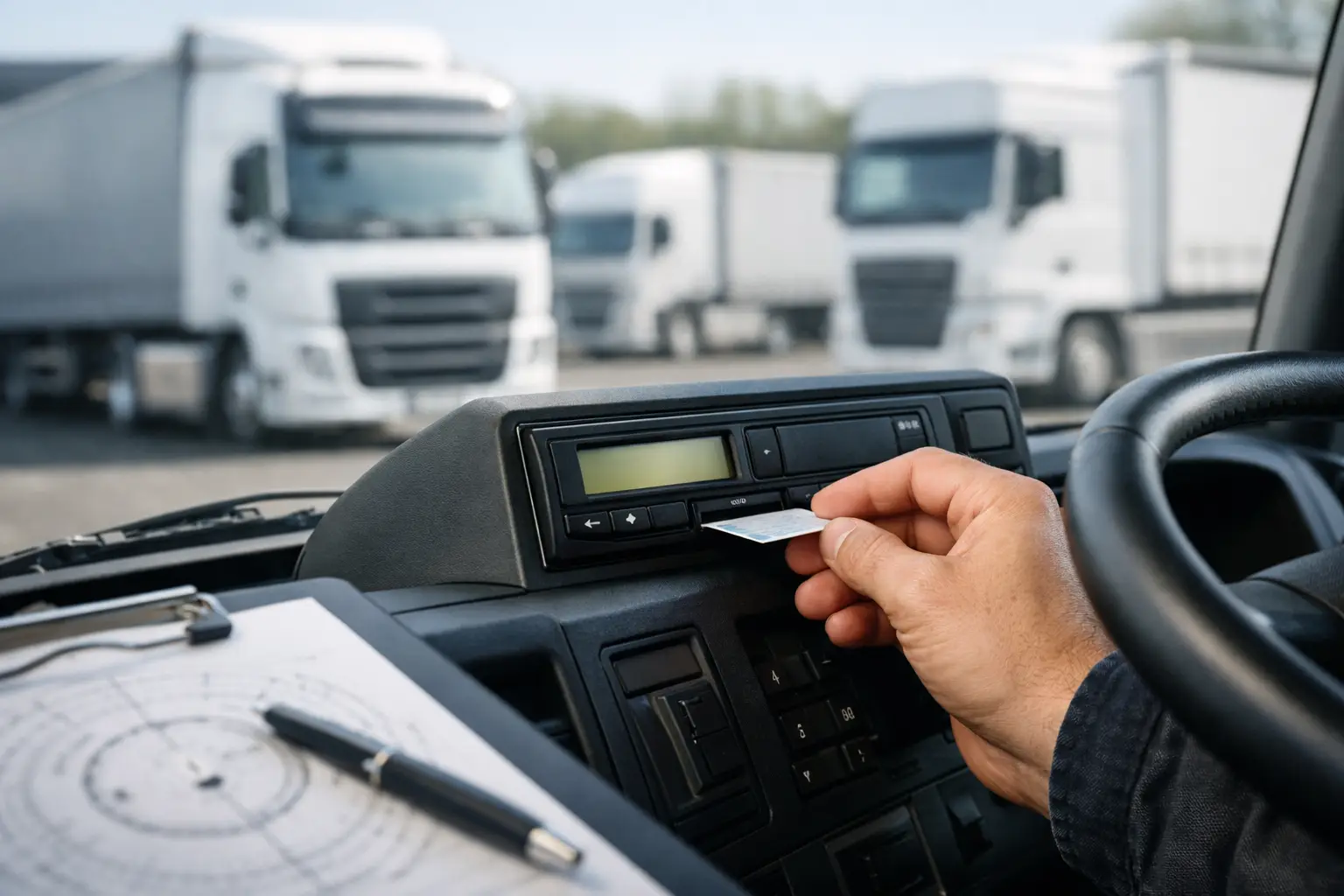
A missed driver card download or an infringement report reviewed too late can create far more than admin hassle. It can expose gaps in your transport operation that affect licence risk, driver scheduling and day-to-day planning. That is why a solid tachograph reporting guide matters - not as paperwork for its own sake, but as a working process that helps UK fleet operators stay compliant and in control.
For most transport teams, the issue is not whether tachograph data exists. The issue is whether the right people can see the right reports at the right time, and act on them before a small problem becomes a DVSA conversation. Good reporting turns raw data into decisions. Poor reporting leaves you with files downloaded on time but no real visibility.
What a tachograph reporting guide should actually help you do
A useful reporting process should answer practical questions quickly. Which drivers are close to an hours breach? Where are repeat infringements coming from? Are vehicle unit and driver card downloads up to date? Which depots need attention first? If your reports do not help your team answer those questions, they are not doing enough.
This is where many operators get stuck. They may be collecting card and vehicle data correctly, but still relying on spreadsheets, manual checks and separate systems to review it. That creates delay. By the time someone has pulled the report, cleaned the data and circulated it, the window to prevent an issue may have passed.
A stronger approach is to treat tachograph reporting as part of daily fleet control. It should sit alongside vehicle tracking, driver management and maintenance planning, because these areas affect each other. A driver hours issue is rarely just a compliance issue. It can also affect route planning, allocation and customer service.
The core reports every operator should review
Any tachograph reporting guide for a UK fleet should start with a small set of reports that support regular action, not just record keeping. Infringement reporting is the obvious one. You need a clear view of drivers, infringement types, severity and repeat patterns so that follow-up is targeted and timely.
Download compliance reporting is just as important. If driver cards or vehicle units are not downloaded within the required timeframe, your risk starts before anyone even reviews the activity data. A report that flags overdue downloads by driver, vehicle or depot gives your team a direct task list instead of a vague problem.
Driver hours and working time reports also need regular attention. These are valuable not only for legal compliance but for planning. If a driver is nearing limits, dispatch should know early enough to make sensible changes. Waiting until the shift is already under pressure is how avoidable mistakes happen.
Then there is the management view. Senior transport staff often need a report that rolls up the position across the whole fleet. That means not just a stack of individual infringements, but a clearer picture of trends, repeat offenders, depot performance and exposure areas. A useful management report should help prioritise action, not bury it.
Why manual reporting breaks down
Manual reporting usually works for a while, especially in smaller operations. One person knows the process, downloads are done locally, and issues are picked up by experience. But as the fleet grows, the weak points become obvious.
Data sits in too many places. Reports depend on one administrator or transport manager being available. Information is reviewed after the event rather than during the working week. If a driver changes vehicle, works across depots or returns after leave, the process becomes even harder to manage consistently.
There is also the problem of fragmented visibility. A tachograph report on one system and vehicle location on another may seem manageable, but in practice it slows decision-making. If a driver is close to limits, planners need to know where that vehicle is, what job is assigned, and what alternative resource is available. Separate systems make simple decisions slower.
Manual methods can still play a part in exception handling, but they are a poor foundation for ongoing control. The trade-off is straightforward. You may save money in the short term by sticking with spreadsheets and local downloads, but you pay for it in admin time, slower reaction and a higher chance of missing something important.
How to build a practical tachograph reporting process
The best process is the one your team will actually use under pressure. That means keeping it simple, assigning ownership and setting review points that fit the pace of your operation.
Start with download discipline. If downloads are not happening reliably, every report downstream becomes less useful. Remote downloads make a major difference here because they remove dependence on vehicles returning to base or cards being presented in person at the right moment. For operators with mobile fleets or multiple depots, that is often the difference between a stable process and a recurring backlog.
Next, define who reviews what and when. Infringement alerts may need daily attention. Download compliance might be reviewed several times a week. Management trend reporting might sit weekly or monthly depending on fleet size and operating model. What matters is consistency. A report nobody owns is just data storage.
You also need a follow-up process. If a report flags an issue, what happens next? That could mean a driver debrief, additional training, a planner intervention or a depot-level review. Reports should trigger actions with clear responsibility. Otherwise, the same names keep appearing and the report becomes background noise.
It is also worth separating urgent reporting from analytical reporting. Urgent reporting helps you stop problems before they escalate. Analytical reporting helps you understand why they keep happening. Both matter, but they serve different purposes and should not be muddled together.
What good tachograph reporting looks like in practice
In a well-run operation, tachograph reports do not feel like a monthly compliance event. They support the working day. A transport manager can see overdue downloads without chasing multiple depots. A planner can check available hours before assigning a late job. A compliance manager can identify repeated rest or break infringements and address them before they become habitual.
That visibility becomes more valuable in mixed fleets and multi-site operations. If you are running HGVs, vans and trailers across more than one location, disconnected processes create blind spots quickly. A single reporting view cuts through that by showing driver, vehicle and compliance data together.
This is where integrated platforms tend to outperform standalone tachograph tools. The benefit is not just automation. It is context. When tachograph data sits alongside GPS tracking, vehicle usage and driver activity, transport teams can make faster and more accurate decisions. Fleetalyse is built around that kind of joined-up control, which is why operators use it to reduce manual admin as much as to strengthen compliance.
Common mistakes that weaken reporting
One common mistake is focusing only on serious infringements. Major issues need attention, but repeated low-level problems often point to training gaps, poor route planning or weak depot processes. Looking only at the biggest incidents can hide the pattern underneath.
Another is reviewing reports too late. A clean monthly pack may look tidy, but it is less useful if the operational chance to fix the issue has gone. The right timing depends on your fleet, but in most cases more frequent, lighter-touch review is more effective than a heavy monthly trawl.
There is also a tendency to treat compliance reporting as separate from commercial performance. In reality, the two are linked. Poor driver hours visibility can lead to missed jobs, inefficient vehicle allocation and unnecessary overtime. Better reporting does not just protect the operator licence. It supports smoother planning and better use of available resource.
Finally, many businesses collect too many reports and act on too few. More data is not always better. The most useful reporting set is one that your team can review quickly and turn into action without friction.
Choosing the right reporting setup for your fleet
There is no single model that fits every operator. A smaller fleet with stable routes may need a simpler review structure than a large, multi-depot haulage business. The important point is to match the reporting process to how your operation actually runs.
If vehicles are rarely at base, remote download capability becomes highly valuable. If planners need live visibility of remaining driver hours, static reports alone will not be enough. If your team is already stretched, a system that reduces manual extraction and spreadsheet work will usually deliver more value than one with endless report options but more admin attached.
When assessing your setup, ask a practical question: does this reporting method help the team prevent problems, or only explain them afterwards? Prevention is where the real operational gain sits.
A good tachograph reporting guide is not about generating more documents. It is about giving transport teams timely, reliable information they can use to protect compliance, support planning and reduce unnecessary admin. When reporting is built into everyday fleet control, it stops being a burden and starts doing the job it should have been doing all along.