
Tightening incident handling usually has less to do with adding forms and more to do with removing delays. For most operators, the real problem is not that an incident was never reported. It is that the first report was incomplete, the key evidence sat in different systems, and someone in the office had to spend the next day chasing times, locations, images and driver notes before they could decide what actually happened.
A workable approach to fleet incident management gives operations staff the essentials quickly, keeps the evidence in one place, and creates a repeatable process that drivers can follow under pressure. When GPS, Smart dashcams, Tachograph records and reporting are connected, we can review events faster, protect the business better, and cut down the manual admin that usually builds up after every bump, allegation or roadside issue.
What fleet incident management means in day-to-day operations
In day-to-day transport operations, incident handling is much broader than logging a collision for insurers. It covers any event that needs a documented response, evidence review, internal follow-up or audit trail. That can include a road traffic collision, damage found during a walkaround check, a theft, a load shift, a harsh braking event, an allegation from a third party, a near miss, or a complaint about driving standards.
Good fleet incident management is therefore an operational control process. It helps us answer basic questions quickly. Which vehicle was involved. Who was driving. Where exactly did it happen. What time did it start. What was the route and speed profile around the event. Is there camera footage. Are there Tachograph records that support the timeline. Has the driver reported it properly. Do we need to escalate to insurers, customers, the police, or a compliance manager.
That matters well beyond insurance claims. Poor incident handling creates wasted workshop time, avoidable customer disputes, weak defence against false allegations, and extra pressure on transport office staff. It can also affect compliance work. If an event leads to questions about driver behaviour, route planning, vehicle use or driver hours, we need records that line up. In the UK, operators also have to think about retention, auditability and whether records can be produced quickly if a customer, insurer or enforcement body asks for them.
For mixed fleets, the challenge is usually consistency. An HGV operation may already have stronger reporting discipline because of Tachograph and compliance processes, while van fleets often rely on phone calls, messages and paper notes. The result is uneven visibility. A joined-up incident process brings both sides closer to the same standard without forcing more administration onto every driver.
Where incident handling usually breaks down
Most incident workflows do not fail at the serious end. They fail in the first hour.
The first weak point is delayed reporting. A driver may tell the traffic office after finishing a delivery, or mention the issue in passing at the end of the shift. By then, memories are less reliable, third-party details may be missing, and any urgent evidence capture has already been delayed. If the incident is minor, it is even more likely to be underreported because the driver assumes it is not worth the paperwork.
The second weak point is fragmented evidence. One person checks GPS. Another asks for camera footage. Someone else pulls Tachograph data. The vehicle details sit in one spreadsheet, the driver statement in an email chain, and the claim reference in a different folder. That fragmentation is what creates extra admin. It is not the incident itself, but the repeated handoffs between systems.
A third problem is poor first capture. Operators often receive a report with only part of what they need. “Minor bump in yard” is not enough to review. We need a time window, exact location, vehicle registration, trailer if relevant, driver name, a short description of what happened, and whether there were witnesses, third parties or damage photos. If those basics are not collected straight away, the office ends up doing detective work.
Footage retrieval is another common bottleneck. If cameras are not connected, someone may have to wait for the vehicle to return, remove storage, or manually request files. By that point, the urgency has gone and the queue of unresolved incidents grows. This is one reason many operators now look closely at vehicle cameras that give fleets clearer incident evidence.
There is also often no clear ownership inside the business. The transport manager assumes the fleet manager is handling it. The fleet manager assumes claims or compliance will pick it up. Without a defined workflow, incidents sit in limbo, especially where the event does not immediately trigger an insurance claim.
Finally, many operators keep too much of the process off-system. Notes are taken by phone, then retyped into a spreadsheet, then copied into a claim form, then attached to an email. Every manual step adds time and increases the chance of mismatch. If the vehicle location says 14:06, the driver note says 14:20, and the footage is labelled differently again, review becomes slower than it needs to be.
What information operators need straight away
The first hours matter most because this is when facts are still fresh and evidence is easiest to secure. In practice, we want a standard incident record with enough detail to decide the next action without having to start from scratch.
Start with the vehicle and driver basics. We need the registration, vehicle type, driver name, and if applicable the trailer number or asset ID. For agency or relief drivers, record that clearly as well. It sounds obvious, but mixed fleets often have similar vehicles on similar routes, so assumptions create errors.
Next comes timing. Record when the incident happened, or the best known time window if the exact minute is not yet confirmed. This is where GPS and Tachograph records become useful together. GPS can show vehicle movement and stopping points. Tachograph activity can help verify who was driving and what the duty timeline looked like in an HGV operation. For van fleets without a Tachograph requirement, the GPS timeline becomes even more important.
Location should be precise, not general. “Near Birmingham” is not useful. We need a site name, road reference, customer yard, depot area, or map point. If the event occurred on the public highway, the nearest junction, direction of travel and lane position can all help later. Mapping based on OpenStreetMap can make this easier to review visually, especially when office staff need to understand a route without calling the driver back.
Then record the incident type and a short factual description. Keep it objective. What happened, what was hit, what damage is visible, whether anyone was injured, whether emergency services attended, and whether a third party was involved. If there are third-party details, capture names, vehicle registrations, insurer details if exchanged, and witness information.
Supporting evidence should be identified immediately. That includes photos from the driver, camera footage, and any relevant telematics context such as speed, route trace, braking or ignition status. If the fleet uses Smart dashcams, note whether the event was triggered automatically or whether footage needs to be pulled for a specific time window. If the vehicle uses connected hardware, we can often secure evidence while the vehicle is still on the road rather than waiting for it to return.
For some operators, vehicle health data is relevant too. CAN data can help provide context around harsh events, ignition cycles or certain vehicle signals, depending on the installation and the vehicle. It is not a replacement for proper review, but it can support the timeline.
The key point is that the first report should be complete enough to let the office decide one of three things. Close it as minor with records kept. Escalate it for internal investigation. Or pass it into a formal claims or legal route. If we do not capture the basics up front, every incident becomes a chase.
How connected systems improve incident workflows
The biggest gain from connected tools is not just visibility, it is speed of decision-making. When location, footage, vehicle history and driver records are separated, every incident becomes a manual assembly job. When they sit in one platform, the workflow is shorter and more consistent.
With live GPS tracking, we can confirm where the vehicle was and reconstruct the route around the reported time. That immediately helps with common disputes such as whether the vehicle was even at the alleged location, whether it had already left site, or whether the route description given by the driver matches the movement history.
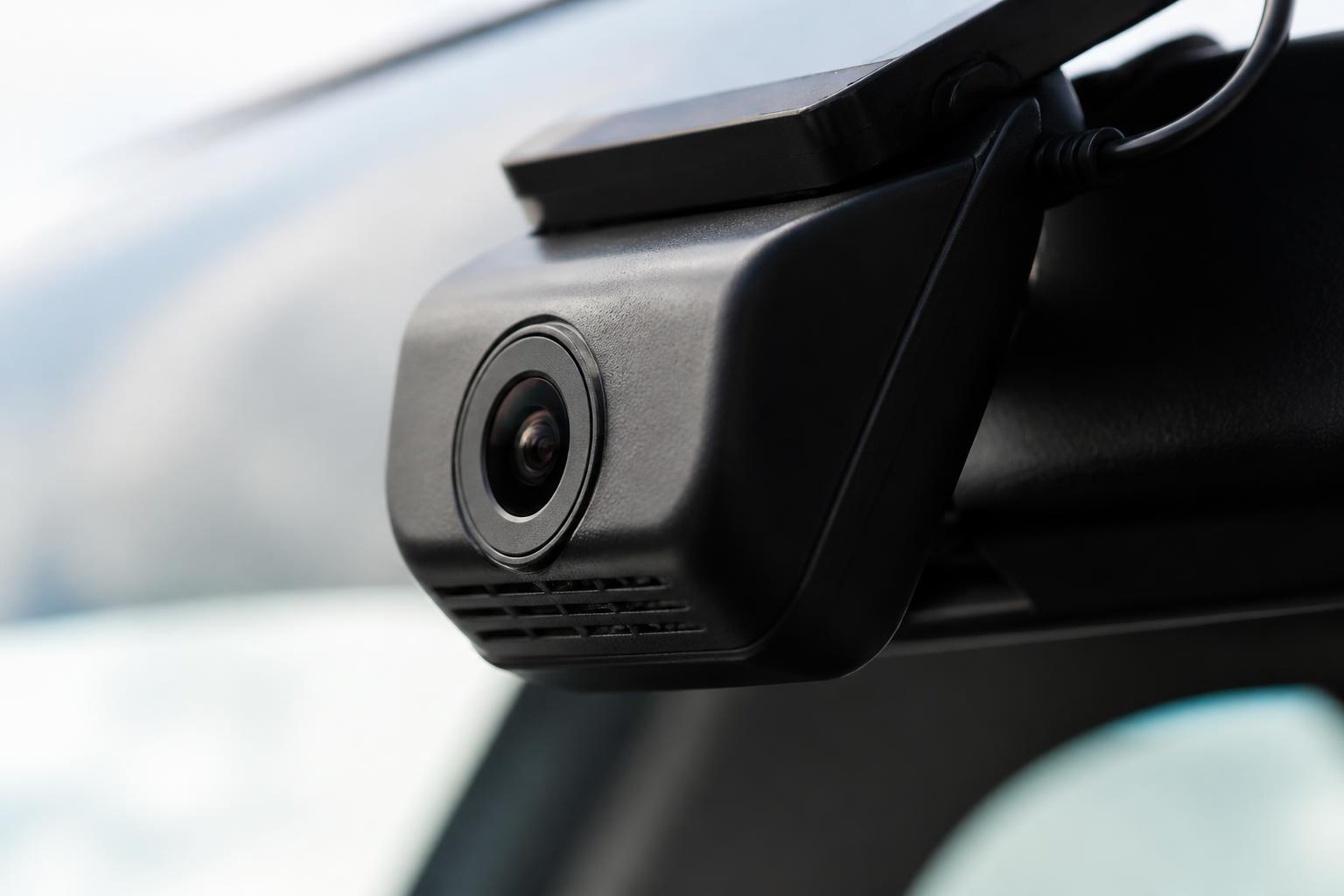
Smart dashcams add the evidence that operators usually need next. A route trace may show that a vehicle stopped sharply, but footage shows why. It can confirm lane position, traffic conditions, reversing context, road users nearby and whether an allegation is supported by the actual event. For fleets that want a practical setup rather than another standalone system, our connected 4G camera options for faster incident review are designed around operational retrieval, not just recording.
Tachograph records matter because they anchor the driver timeline. In HGV fleets, they help verify activity, identify who was driving if there is a vehicle share, and support internal review where working time or duty patterns may be relevant. In the UK, Tachograph obligations remain a specific compliance area with domestic enforcement expectations, even where wider EU rules may be familiar to operators running internationally. If a fleet crosses borders, we still need to manage the UK operating reality first.
Bringing this into one reporting environment reduces duplication. Instead of switching between a tracking portal, a camera portal, a Tachograph download tool and a spreadsheet, we can review the incident in context. That is the operational case for using one system for several fleet functions. It is not about having more data for the sake of it. It is about reducing the time between report and action.
This is also where standardised hardware choices help. Some operators start with Fleetalyse-ready trackers for a straightforward rollout. Others prefer unlocked Teltonika devices or a more customised installation using IoT SIMs across mixed vehicle types. The right setup depends on the fleet, but the principle is the same. If the devices and the software are planned together, evidence gathering becomes part of the normal workflow rather than a separate project every time something goes wrong.
For operators looking at broader consolidation, our fleet software for tracking, compliance and camera visibility in one place is built around the day-to-day needs of commercial fleets rather than isolated data feeds.
How to build a workable process for HGV and van fleets
A workable process does not need to be complicated. It needs to be clear, repeatable and realistic for drivers and office staff.
First, define what counts as an incident. Put that in writing for drivers, planners and transport office staff. Include collisions, third-party allegations, damage found on return, theft, vandalism, load security issues, roadside prohibitions, and serious near misses. If people do not know what must be reported, they will make their own judgement and reporting will be inconsistent.
Second, set a first-report rule. For most fleets, the expectation should be immediate reporting once the driver is safe and legally able to make contact. That means a phone call to the traffic office or nominated contact, followed by a standard digital or written report. The phone call is for speed. The structured report is for the record. Drivers should know exactly what details they must provide, including location, time, damage, third parties and whether police or emergency services were involved.
Third, assign internal ownership. One person or role should triage every incident on the day it is reported. In some businesses that is the transport manager. In others it is fleet, compliance or a dedicated claims contact. What matters is that the case has an owner from the start. That owner checks the first report, secures footage, confirms GPS history, pulls any relevant Tachograph records, and decides whether the matter is operational, disciplinary, insurance-related or compliance-related.
Fourth, set review windows. Not every incident needs a same-day full investigation, but every incident should be acknowledged and categorised quickly. A practical approach is to separate them into immediate review, next working day review, and record only. Serious collisions, injury events, police involvement, vulnerable road user incidents and major third-party allegations should go straight into immediate review. Minor yard damage with no dispute may only need next working day review and a maintenance follow-up.
Fifth, standardise the evidence pack. For each incident, keep the same core file structure or record layout. Initial driver report, vehicle and driver details, route history, footage links or exports, Tachograph information where relevant, photos, third-party details, internal notes, outcome and follow-up actions. This is where digital reporting is far better than scattered email chains.
Sixth, link the process to maintenance and compliance actions. If an incident reveals vehicle damage, there should be a clear handoff to workshop control. If it raises concerns about conduct, training or driver hours, there should be a clear handoff into the appropriate review process. Incident handling should not stop once the insurer has been notified or once the damage has been photographed.
Seventh, keep records in a way that can be retrieved later. In the UK, operators need to think practically about audit trails, insurer requests, customer disputes and internal trend review. Retention periods may differ depending on the type of record and the purpose for holding it, so the process should align with the fleet’s own legal, insurance and data handling policies.
Finally, make the process easy enough to be used every time. If drivers need three apps, two passwords and a long form before they can report a wing mirror strike, reporting quality will drop. The same applies in the office. If managers have to jump between systems, open spreadsheets and request files manually, the admin load rises with every event.
At Fleetalyse, we see the strongest results where operators keep the workflow simple and the evidence connected. GPS, Smart dashcams, Tachograph records and reporting do not remove the need for judgement, but they do remove a lot of the chasing. That is how we tighten fleet incident management without adding extra admin, by giving the transport office the information it needs early, in one place, and in a format that supports real decisions.
For fleets ordering hardware through our Shop, account setup and access are handled through the Customer Portal, with payment processing via Stripe where relevant. Depending on the rollout, operators may use a Tracker login for day-to-day visibility, choose Fleet insight reporting, and standardise devices across HGV, van and asset fleets using Fleetalyse-ready trackers or unlocked Teltonika hardware. Where projects need a formal supplier name for purchasing or accounts, that is Fleeta Limited T/A Fleetalyse. VAT treatment, installation scope and device choice should be planned at the start so the incident workflow works properly from day one.
What counts as a fleet incident?
It can include collisions, near misses, vehicle damage, theft, disputed events, roadside issues and complaints linked to a vehicle or driver. The key point is that the operator needs a clear record and a defined response.
Why is speed important after an incident?
Early reporting helps preserve facts, footage and driver accounts while they are still fresh. It also reduces delays in internal review, customer communication, insurer contact and any follow-up action.
How do Smart dashcams help with incident management?
Smart dashcams can provide visual context around an event, helping operators check what happened, compare accounts and decide what action is needed without relying only on phone calls or handwritten notes.
Can GPS data help with disputed incidents?
Yes. GPS records can help confirm route, location, timing, stops and vehicle movement. That gives operators a stronger starting point when checking a complaint or reviewing a disputed event.
Is incident management only about accidents?
No. A useful process also covers lower-level damage, risky driving reports, customer complaints, theft-related events and patterns that may point to training or operational issues.