
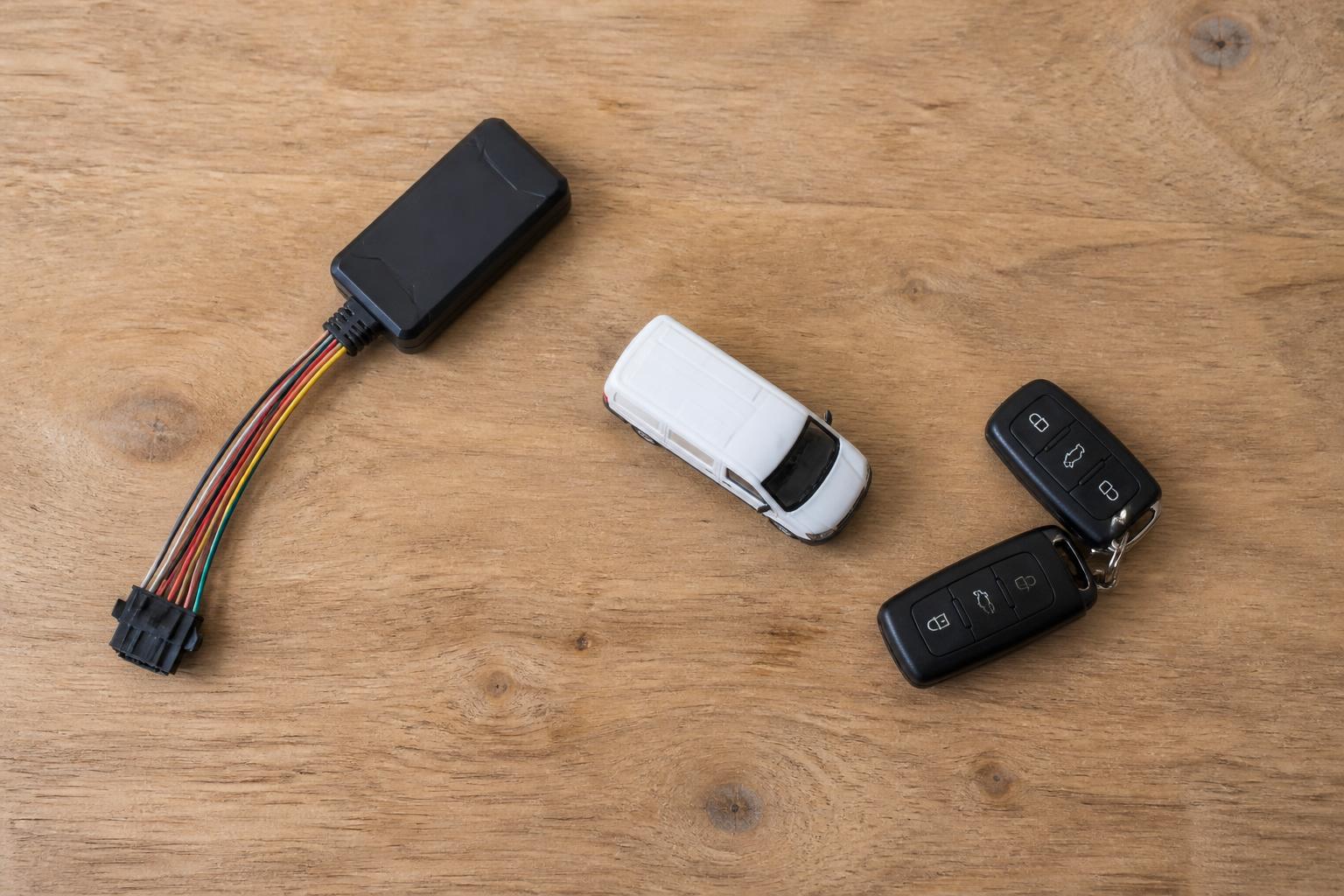
When a vehicle, trailer or item of plant goes missing, recovery usually depends on two things, speed and usable information. Stolen vehicle tracking helps fleets act in the first minutes, not hours later when someone has had time to ring round depots, check with the driver and work out whether an asset is genuinely missing or simply in the wrong place. In practical terms, it gives us a live starting point for recovery, a recent movement trail, and enough operational detail to support a police report with something more useful than “it was here yesterday”.
For UK fleet operators, that matters because theft is rarely just the loss of hardware. It disrupts deliveries, driver schedules, customer commitments, insurance processes and compliance records. A proper theft response needs more than a dot on a map. It needs clear alerts, access for the right people, and tracking data that can be shared quickly and understood easily.
What stolen vehicle tracking means in day-to-day fleet use
In day-to-day fleet operations, stolen vehicle tracking means using a connected tracking device and software platform to identify quickly when a vehicle or asset has been taken, and then follow its location and movement to support recovery. That sounds simple, but it is different from basic GPS visibility.
Basic GPS tracking tells us where a vehicle is. Theft-focused tracking is about what happens when that vehicle should not be moving, is outside its normal area, has lost contact unexpectedly, or has been separated from the unit that normally tows it. For a van fleet, that may mean an out-of-hours movement alert from a depot geofence. For an HGV operator, it may mean seeing a tractor unit leave an approved parking location at 02:15 with ignition activity when no job is scheduled. For trailers and plant, it may mean movement from a yard where the asset should be stationary for days.
Commercial operators use this type of tracking across more than powered vehicles. Vans and HGV units are obvious candidates, but trailers, generators, welfare units, compressors and other non-powered assets are often more exposed because they can be moved without a driver login or ignition event. A tracker with its own power source, suitable reporting intervals and reliable connectivity can make the difference between discovering a theft at the next stock check and spotting it while recovery is still realistic.
This is also why hardware choice matters. A visible wired tracker in a daily-use vehicle serves one purpose. A covert battery-powered unit on a trailer serves another. Some fleets want Fleetalyse-ready trackers that can be deployed quickly in a standard rollout. Others want unlocked Teltonika hardware because they already have preferred installers, specific I/O requirements, or mixed fleet standards across HGV, vans and specialist assets.
The key point is that stolen vehicle tracking is not a standalone idea separate from normal operations. It works best when it is part of how we already monitor fleet activity, exceptions and asset status. If the platform is only opened after a theft, the response is slower. If the fleet team already uses it for daily visibility, the unusual movement stands out immediately. For more on the wider day-to-day role of location visibility, see our guide to GPS vehicle tracking that cuts fleet blind spots.
How a theft response works when a vehicle goes missing
A workable theft response starts with confirming that the vehicle or asset is genuinely unauthorised, not simply delayed, moved by another driver, or parked somewhere unexpected. That sounds obvious, but in practice the first few minutes are often lost to uncertainty. A clear process reduces that delay.
The first trigger is usually one of three things. An alert arrives from the tracking platform. A driver or depot notices a vehicle missing. Or a customer calls asking why a load has not arrived. At that point, the transport office or fleet manager needs immediate access to the last known location, latest movement time, route history and current status of the asset.
A practical response usually looks like this:
- Check the live map and last communication time.
- Confirm whether the asset is moving, stationary, or offline.
- Review recent journey history and geofence events.
- Check whether there was authorised use, such as a booked movement, workshop collection, subcontracted transfer or driver change.
- Contact the driver, depot, site contact or on-call manager as relevant.
- If theft is suspected, record the key details and report it to the police.
- Share live or recent location information with the police and internal decision-makers.
- Continue monitoring for movement, stops, trailer detachment or signal loss.
Who needs access matters almost as much as the tracker itself. In many fleets, the transport manager, fleet manager, traffic office and out-of-hours duty contact all need the ability to view the same information. If only one person has the Tracker login and they are unavailable, the response slows down immediately. A Customer Portal with role-based access is useful here because it lets us decide who can see what without passing credentials around informally.
The information that matters most in the first report is specific. Registration, fleet number, trailer number if relevant, tracker identifier, last known location, timestamp, direction of travel, and any sign of unauthorised ignition or movement. If the vehicle was carrying a load, the operator also needs to know what was on board, whether there are customer security implications, and whether any regulated goods or site access equipment were involved.
For police reporting in the UK, the tracking data supports the theft report but does not replace it. We still need to report the theft through the normal police route and provide the crime reference once issued. If the vehicle is under finance or subject to insurer requirements, internal reporting should also include the finance company or insurer contact process. Recovery often depends on keeping all of that moving in parallel, not waiting for one step to finish before starting the next.
For fleets that operate across Great Britain and into the EU, there is also a practical difference in response conditions. The police process, insurer reporting expectations and data sharing routes can differ once a vehicle crosses borders. In the UK, operators are dealing with domestic police forces and UK insurance procedures. Once a theft involves cross-border movement in the EU, coordination can become more complex and slower, so early, accurate location history is even more important.
What data actually helps with recovery
Not all tracking data is equally useful during a theft incident. The most valuable information is the data that helps someone act now.
Live position is the obvious starting point. If the tracker is still reporting, a current map location gives the recovery effort direction straight away. But live position on its own is not enough. We also need the last few points before any stop, the route taken, and the timing of movement. A vehicle that is stationary behind industrial units after leaving a motorway services area tells a different story from one that is still moving on A roads away from its normal operating region.
Movement history is often what turns a vague suspicion into a clear incident timeline. We can see when the asset began moving, where it was before that, whether it paused at likely transfer points, and whether a trailer was taken directly from a yard or moved after a legitimate delivery. For police and insurers, that timeline is often more useful than a single screenshot.
Geofences are particularly effective for depots, customer yards, driver home parking locations and high-risk storage areas. If a vehicle exits a geofenced site outside operating hours, or an asset enters an area where it should not be, the alert can shorten the response window significantly. The same applies to trailer drop locations. A detached trailer that leaves a defined area without a planned collection should trigger attention quickly.
Ignition status helps, but with some limits. In a powered vehicle, ignition on and off events can show whether the vehicle has been started and when. In trailers and plant, there may be no ignition feed, so movement-based alerts become more important. Depending on the hardware installed, there may also be additional signals available through CAN data, although not every theft response depends on this level of detail. For some fleets, CAN data can support context such as vehicle activity state, but location and movement remain the essentials.
Asset location context is often underestimated. Knowing that a trailer is at a set of coordinates is useful. Knowing that those coordinates place it in a known industrial estate, lay-by, port approach road, storage yard or residential street is better. Mapping layers and recognisable place information help operations teams make quicker sense of what they are seeing. Platforms that use OpenStreetMap can make this easier to interpret in practical terms, especially when the operator is trying to brief someone by phone.
Signal health also matters. If a tracker has stopped reporting, the last contact time, battery condition for self-powered devices, and network behaviour can indicate whether the unit has gone out of coverage, lost power, or been interfered with. Good connectivity is part of theft readiness, which is why the SIM arrangement matters more than many buyers expect. We cover that in more detail in our article on how IoT SIMs keep fleet tracking working on the road.
Where stolen vehicle tracking fits into a wider fleet system
Theft visibility works best when it sits inside a wider operational platform, not as a separate map that only one person remembers to check. In practice, the same fleet team dealing with theft risk is also managing utilisation, route visibility, driver behaviour, maintenance planning, compliance deadlines and customer service updates.
That is why we see stolen vehicle tracking as one part of broader Fleet insight. If a transport office is already using live GPS data to monitor jobs and exceptions, unusual movement is easier to spot. If the team can also view connected camera events, they may have supporting evidence about who was in the vehicle, what happened before a theft, or whether the unit was moved after an impact or unauthorised entry. Our article on vehicle cameras that give fleets clearer incident evidence covers where Smart dashcams fit into that picture.
For HGV operators, theft response also has to sit alongside compliance workflows. If a unit disappears, there may be knock-on effects for Tachograph records, remote downloads and driver hours oversight. A stolen vehicle is first and foremost a recovery issue, but transport teams still need to know what has happened to planned driver activity, whether a card was in use, and how to document the interruption properly. In the UK, those compliance implications sit within domestic enforcement and operator licence expectations. If the vehicle is working internationally, there may also be EU-facing records to reconcile depending on the operation.
Mixed fleets make this even more important. Many operators are not tracking one fleet type. They are overseeing vans, HGV units, trailers and equipment in one business, often across more than one depot. Theft risk and recovery needs are different across those asset classes, but the operational benefit comes from seeing them in one place. That is one reason many customers want a single platform view rather than separate systems for vehicles, trailers, cameras and reporting. We look at that wider operational case in how mixed fleets get one view of vehicles and compliance.
This does not mean every fleet needs every function from day one. Some start with standard vehicle tracking, then add trailer units, Smart dashcams or reporting as requirements become clearer. Others come to us because they want a more joined-up rollout from the start. Either way, theft visibility is stronger when it is part of normal fleet control, not a bolt-on process nobody uses until something has already gone wrong.
How to choose a setup that works for HGV, vans and trailers
The right setup depends on what is being tracked, how it is used, where it is parked, and who needs access when something goes wrong.
For vans, a hard-wired unit is often the practical choice because the vehicle is used daily, has a stable power source and usually benefits from standard live tracking as well as theft alerts. Installation position matters. The device should be secure, professionally fitted and not left in an obvious location that makes tampering easy. If the fleet also wants driver behaviour or input-based alerts, the hardware specification needs to match that use.
For HGV units, the same principle applies, but there may be more demand for integration with other operational data. Some operators want standard location visibility only. Others want a setup that can sit alongside Tachograph processes, camera systems and broader reporting. In those fleets, hardware and platform choice should be made with the whole workflow in mind, not just the theft scenario.
Trailers are different. They are often parked unaccompanied, moved without ignition, and exposed to theft in yards, customer sites and roadside locations. That usually points to a self-powered trailer tracker with long battery life, movement detection and robust reporting logic. The key questions are how often it reports, how quickly it wakes on movement, how it behaves after periods of inactivity, and whether the battery replacement plan is realistic for the fleet’s operating pattern.
Coverage and connectivity are essential across all three. A tracker is only as useful as its ability to report when needed. That is where network resilience, roaming behaviour and SIM setup become operational concerns, not technical footnotes. IoT SIMs are often the right fit for commercial fleets because they are designed for connected devices rather than consumer handset use.
Access control is another buying point that should be decided early. Who will receive alerts, who can acknowledge them, who can see live locations, and who can share the data externally if a theft occurs? For some fleets, that means a transport office team during the day and an on-call manager overnight. For others, it includes depot managers, workshop staff or security contractors. The system needs to support that reality cleanly.
It is also worth checking how the rollout will be managed. Some fleets want off-the-shelf deployment with Fleetalyse-ready trackers. Others prefer unlocked Teltonika devices because they need a tailored install standard or mixed estate flexibility. A customised commercial rollout may be the right answer where there are multiple asset types, existing hardware estates or special reporting needs.
Finally, choose a setup that matches the fleet you actually run, not the one described in a generic brochure. An owner-driver with one unit and one trailer needs simplicity and reliable alerts. A multi-site logistics fleet needs permissions, reporting and mixed asset oversight. A plant-heavy operation needs battery-powered asset tracking that can cope with long idle periods. The best stolen vehicle tracking setup is the one that fits those day-to-day conditions and gives the team clear, usable information the moment something is wrong.
At Fleetalyse, that is how we approach it. We focus on practical visibility for UK commercial fleets, with hardware and software that can support vans, HGV, trailers, assets and mixed operations in one platform. Whether the starting point is standard GPS, Fleetalyse-ready trackers, unlocked Teltonika hardware or a wider connected rollout, the aim is the same, faster awareness, faster decisions and a better chance of recovery when a vehicle goes missing.
Fleeta Limited T/A Fleetalyse is a UK business, and where payments are taken through our site they may be processed via Stripe. Any applicable VAT treatment depends on the purchase and customer status.
Is stolen vehicle tracking the same as standard GPS tracking?
No. Standard GPS tracking shows where vehicles are for routine operations. Stolen vehicle tracking focuses on fast access to reliable location data and a clear response when a vehicle or asset is taken.
Can stolen vehicle tracking be used on trailers as well as powered vehicles?
Yes. Many operators track trailers and other assets as well as HGV and vans, especially where uncoupled equipment can be moved without immediate notice.
What should a fleet manager do first if a vehicle is stolen?
Confirm the vehicle is genuinely missing, check the latest tracking data, follow the company theft process and pass accurate location details to the relevant authorities without delay.
Does tracking data help after recovery as well as during the theft?
Yes. Movement history, stop points and timing can help with internal review, insurance discussions and improving site security or fleet processes after the incident.
Do small fleets need stolen vehicle tracking?
Often yes. A single stolen van, trailer or unit can disrupt deliveries, driver schedules and customer commitments, so the operational impact is not limited to large fleets.