
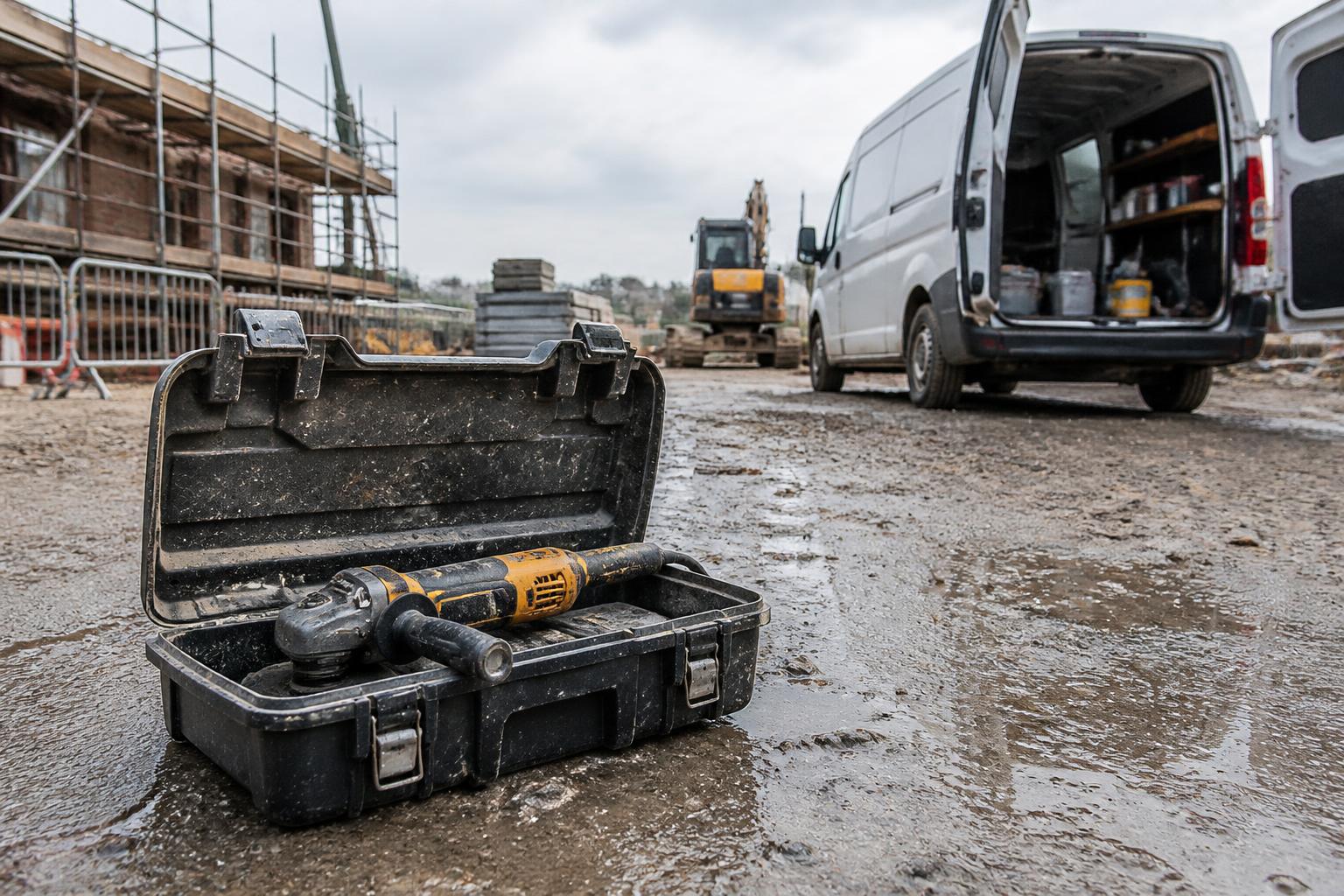
Tool tracking cuts loss and wasted site time by answering a simple operational question quickly, where is the item now, where was it last, and who had it. For UK operators, that matters less in theory than in the first half hour of a shift, when a driver is waiting for a breaker, a gang is standing around because the plate compactor is on the wrong van, or a supervisor is trying to work out whether a missing laser level has been left on site or stolen overnight.
Used properly, GPS trackers for tools give us more than a theft recovery measure. They help us reduce avoidable hires, stop duplicate purchases, tighten van stock control, and make planning more reliable. When tool location sits alongside vehicle tracking, asset tracking and wider Fleet insight, we can see not just that a tool exists on the books, but whether it is where the job needs it to be.
What GPS tool tracking is actually for
Most fleets do not lose money on tools only when a theft is reported to the police. The bigger cost often shows up earlier, in wasted labour, delayed jobs and poor handover between depot, van and site.
In day-to-day operations, tools go missing in four main ways.
First, there is straightforward theft. That can be a van break-in, a site container forced overnight, or opportunistic removal from a shared compound. In the UK, recovery chances improve when we can provide a last known location, movement history and time of movement quickly. That gives us something more useful than a stock list and a rough guess.
Second, there is misplacement. A tool is left at a customer site, moved into another team’s van, put in a stores area without being booked back in, or loaded onto a trailer that goes elsewhere the next morning. Nobody has stolen it, but the result is the same if the next crew cannot find it.
Third, there is poor visibility across mobile operations. On paper, we may own enough equipment. In practice, one depot hires in because it cannot see what another depot already has available. That is a control problem, not a purchasing problem.
Fourth, there is wasted search time. This is the part many operators underestimate. Ten or fifteen minutes spent ringing around to locate a generator, cable drum, survey kit or hydraulic pack quickly becomes an hour across several people. On a live site, that can hold up a vehicle, a crew, or a booked delivery slot.
That is what tracking is actually for. It gives us a usable location record for tools and small mobile assets that move outside fixed premises. It also creates accountability. If a tracked item was on Van A at 18:20, then moved from a yard at 06:10, we have a much stronger starting point for investigation than a manual sign-out sheet filled in three days late.
For UK operators, it is also worth being realistic about the environment. We are often dealing with mixed coverage conditions, urban canyons, underground storage, metal containers, remote compounds and tools that are not powered all the time. A tool tracking setup has to work around those conditions rather than assume perfect signal and permanent charging.
Which tools and assets are worth tracking
Not every screwdriver needs a tracker. The best results come from tracking the tools and assets that are expensive enough, mobile enough, or operationally important enough to justify it.
A practical way to decide is to look at three tests.
The first is replacement cost. If the item is painful to replace, difficult to source quickly, or typically held in low numbers, it is a candidate. That includes breakers, compactors, generators, cable avoidance tools, survey equipment, welding sets, pressure washers, battery charging stations, specialist diagnostic equipment and high value power tools.
The second is movement frequency. Items that regularly move between depots, vans, subcontractors and customer sites benefit most from tracking. A static bench saw that never leaves one workshop may not need it. A pump, tower light, compressor or test kit that changes hands every few days probably does.
The third is operational impact. Some assets are not the most expensive, but a missing unit stops work. That can include lifting accessories, traffic management equipment, calibrated testing devices, or a specific battery system needed to run several other tools. If one missing item can delay a crew or trigger an unplanned hire, it is worth considering.
In transport and mixed fleet operations, we also see good results from tracking mobile assets that sit between tool and plant categories. Examples include:
- Tool chests and secure boxes
- Welfare units
- Small trailers
- Fuel bowsers
- Portable compressors
- Site lighting towers
- Refrigeration service equipment
- Spill response kits
- Temporary traffic control assets
The right threshold will vary by operation. Some businesses start with the top tier only, high value or high disruption items, then widen the rollout once the workflow is proven. That is usually more effective than trying to tag everything at once.
It also helps to think in groups rather than single items. If a van carries a set of specialist gear that must travel together, it can make more sense to track the kit box or chest than each individual component. Equally, if a team books out a complete survey package, tracking the case may be enough to confirm location and movement between jobs.
Where fleets already run connected vehicle tracking, the next sensible step is often to align tool tracking with the vehicles that carry those assets. That gives us context. A missing item is easier to investigate when we can compare its movement with the van or HGV it should have been travelling with.
How trackers for tools work in day-to-day operations
In day-to-day use, tool trackers do not need much driver interaction. That is one reason they work. Once fitted and assigned, the main value comes from automatic updates, map visibility and exception alerts.
Most battery-powered units wake and report based on movement, time interval, or both. If a tracked tool is stationary in storage, it may check in less frequently to preserve battery life. If it starts moving, reporting can increase so we can see a useful trail. For tools and small assets, battery devices are usually the practical option because there is no permanent vehicle power supply.
On the map, we can see the latest known position of the asset and, depending on the setup, movement history over a selected period. In operational terms, that helps answer common questions quickly:
- Is the item still on site?
- Did it return to depot?
- Which van was it near last?
- Did it move overnight?
- Has it gone outside the expected area?
Movement alerts are especially useful for out-of-hours protection. If a generator or tool chest should be stationary in a locked compound from Friday evening to Monday morning, an alert on unexpected movement gives us a chance to act before anyone notices the loss manually on Monday.
Geofences also have a practical role. We can set a yard, depot, customer site or regional boundary and receive notice when an asset enters or leaves. That is useful not only for suspected theft, but also for confirming returns, checking whether hired-in equipment has been off-hired physically, or proving that a site delivery actually arrived.
In normal workflows, this information tends to sit with transport, workshop or operations staff rather than with every driver. Access control matters. A depot supervisor may need to see local assets only. A group fleet manager may need visibility across all depots. A subcontractor may need restricted access to a specific asset list. A proper Customer Portal and clear Tracker login structure make that manageable without sharing one generic account around the business.
Signal conditions matter too. GPS location is strongest outdoors with clear sky view. In covered yards, steel containers or underground areas, a tracker may rely on its last good fix and then update again once movement brings it back into better conditions. That is normal and should be planned for. It is one reason setup and reporting logic matter more than headline claims.
For operators already using connected fleet systems, tool tracking becomes more useful when it sits alongside vehicle tracking rather than in a separate app nobody checks. We see the best adoption when asset maps, alerts and reports are part of the same operational routine used for vans, trailers and HGV movements. If you are reviewing hardware options, our guide to choosing the right tracker setup for clearer fleet visibility is a useful starting point.
What to check before choosing a tracking setup
Before choosing a setup, it is worth checking the basics properly. Most disappointments in tool tracking come from buying the wrong device for the environment, then expecting software to fix the mismatch.
Battery life comes first. For a frequently moved asset, shorter reporting intervals may be worth the trade-off. For a rarely moved item stored remotely, long standby life matters more. Ask how often the device reports in normal use, what wakes it, and what battery replacement or recharge routine will be needed. A tracker that is perfect on a daily-use compressor may be wrong for a standby pump visited once a month.
Signal conditions are next. A tracker hidden inside thick metal housing may not perform the same way as one fixed externally in a protected position. The fixing point matters. So does whether the item spends time inside containers, under cover or in remote areas with weaker network service. In the UK, that practical site reality matters more than generic coverage claims.
Fixing method should be considered early. Some assets suit a concealed install. Others need a robust external mount that allows better signal while resisting tamper and weather. The right answer depends on the tool, who uses it, and whether easy battery access is needed. We normally advise choosing the fixing method around maintenance and signal, not just around concealment.
Reporting needs should also be clear from the start. Some fleets only need a live map and movement alerts. Others need audit trails for internal investigations, utilisation reviews, site attendance checks or customer queries. If reports will be used by operations, finance and management, the platform must make that easy rather than exporting everyone into spreadsheets. Our article on comparing reporting tools without adding admin covers this point in more depth.
User access is another common oversight. Decide who needs to see what. A small owner-driver operation may keep this simple. A larger group with multiple depots, agency staff and subcontractors usually needs role-based access, clean asset naming and a clear process for assigning units when stock moves between regions.
Then there is the wider system question. If tool tracking sits apart from your vehicle platform, your team will end up checking two maps, two alert systems and two reports. That is exactly the fragmentation many operators are trying to get away from. We built Fleetalyse around combining functions in one place, so tracked assets can sit alongside live vehicle location, Tachograph processes, driver hours visibility and Smart dashcams rather than being managed in isolation.
Hardware choice matters here too. Some operators want a ready-to-run option. Others need more control over rollout and device selection. We support both Fleetalyse-ready trackers and unlocked Teltonika hardware, depending on how standard or tailored the requirement is. If you are weighing flexibility, our piece on how unlocked GPS trackers give fleets more control explains the trade-offs.
At implementation stage, also check the operational details people forget to ask:
- How are SIMs managed, and are IoT SIMs included?
- What happens if a device stops reporting?
- How are battery changes recorded?
- Can the asset be grouped by depot, contract or customer?
- Can map layers use OpenStreetMap if preferred?
- Can data sit alongside CAN data from vehicles where needed?
Those details affect adoption far more than a long feature list.
How tool tracking supports fleet control beyond theft recovery
Theft recovery is the obvious use case, but the broader control benefits are often more valuable over time.
The first is allocation. When we can see where key tools and mobile assets actually are, dispatch decisions improve. Instead of sending a van back across the county to collect a missing item, we can often reassign the nearest available unit. That reduces dead mileage and avoids avoidable job slippage.
The second is van stock visibility. Many fleets carry expensive equipment on vans for convenience, then lose track of what is where. With tracked tool boxes, kits or individual high value items, we get a better picture of what each vehicle is carrying and whether the gear is still with the correct crew. That supports pre-job checks and reduces the Monday morning search for equipment that was meant to be on Friday’s return list.
The third is job readiness. A crew can only start on time if the vehicle, driver and equipment are all ready together. Most fleet systems already help with the first two. Tool tracking closes the gap on the third. Before a vehicle leaves, we can confirm that the required asset is on site, in depot, or already with the assigned van. That matters especially where specialist tools are shared across teams.
The fourth is audit trail. If a customer disputes whether equipment attended site, or an internal investigation needs to establish when an item moved, location history helps. It does not replace good process, but it gives us a factual movement record to support it. For regulated or contract-sensitive work, that record can be useful well beyond simple loss prevention.
The fifth is coordination with vehicle tracking. This is where the operational picture becomes stronger. If a tracked tool leaves a depot, we can compare that movement with the vans or trailers present at the time. If a missing asset was last seen near a specific vehicle route, we can investigate faster. If a generator should have gone with a particular HGV to a remote site, we can confirm whether both assets travelled together.
That joined-up visibility is what Fleet insight should look like in practice. Not separate systems for vehicles, assets, compliance and safety, but one operational view that helps the transport office make decisions faster.
For businesses expanding that wider view, Fleetalyse can bring together tracked assets, live vehicle location, Tachograph workflows, driver hours management and Smart dashcams in one platform. We also support tailored hardware choices, including Teltonika devices, depending on the type of asset and the level of rollout control required.
If you are planning a practical rollout, start with the assets that cause the biggest disruption when they go missing. Define who will receive alerts, who will manage battery checks, and how the tool list will be maintained. Then make sure the data lands where your team already works, not in another standalone login that gets ignored after the first week.
That is usually the difference between tracking that looks good in a demo and tracking that genuinely cuts loss and wasted site time.
Fleeta Limited T/A Fleetalyse supports UK operators with connected fleet and asset visibility through Fleetalyse-ready trackers, unlocked Teltonika hardware, integrated reporting and a single Customer Portal. Hardware purchases and subscriptions may also involve standard account and billing processes, including Stripe, VAT and user access through Tracker login, depending on the setup chosen.
Do GPS trackers for tools only help after theft?
No. Theft recovery is only one use. Most day-to-day value comes from finding misplaced equipment quickly, checking which van or site holds it, and reducing delays caused by missing tools.
What kinds of tools are usually tracked?
Usually high-value or operationally critical items such as breakers, generators, compact plant, specialist testing equipment and tool chests that move between vans, depots and jobs.
Are battery-powered trackers suitable for tools?
Often yes, especially for assets without a power source. The main checks are battery life, reporting frequency, mounting position and whether the tool is used indoors, underground or in metal storage.
Can tool tracking be viewed alongside vehicle tracking?
Yes, that is often the most useful setup. Seeing tools and vehicles together helps operators confirm what is on each van, where equipment was last moved and whether a job can start on time.
What is the biggest mistake when buying trackers for tools?
Choosing on unit price alone. A cheap device can be poor value if battery life is short, updates are unreliable or the tracking view does not fit normal operational workflows.