
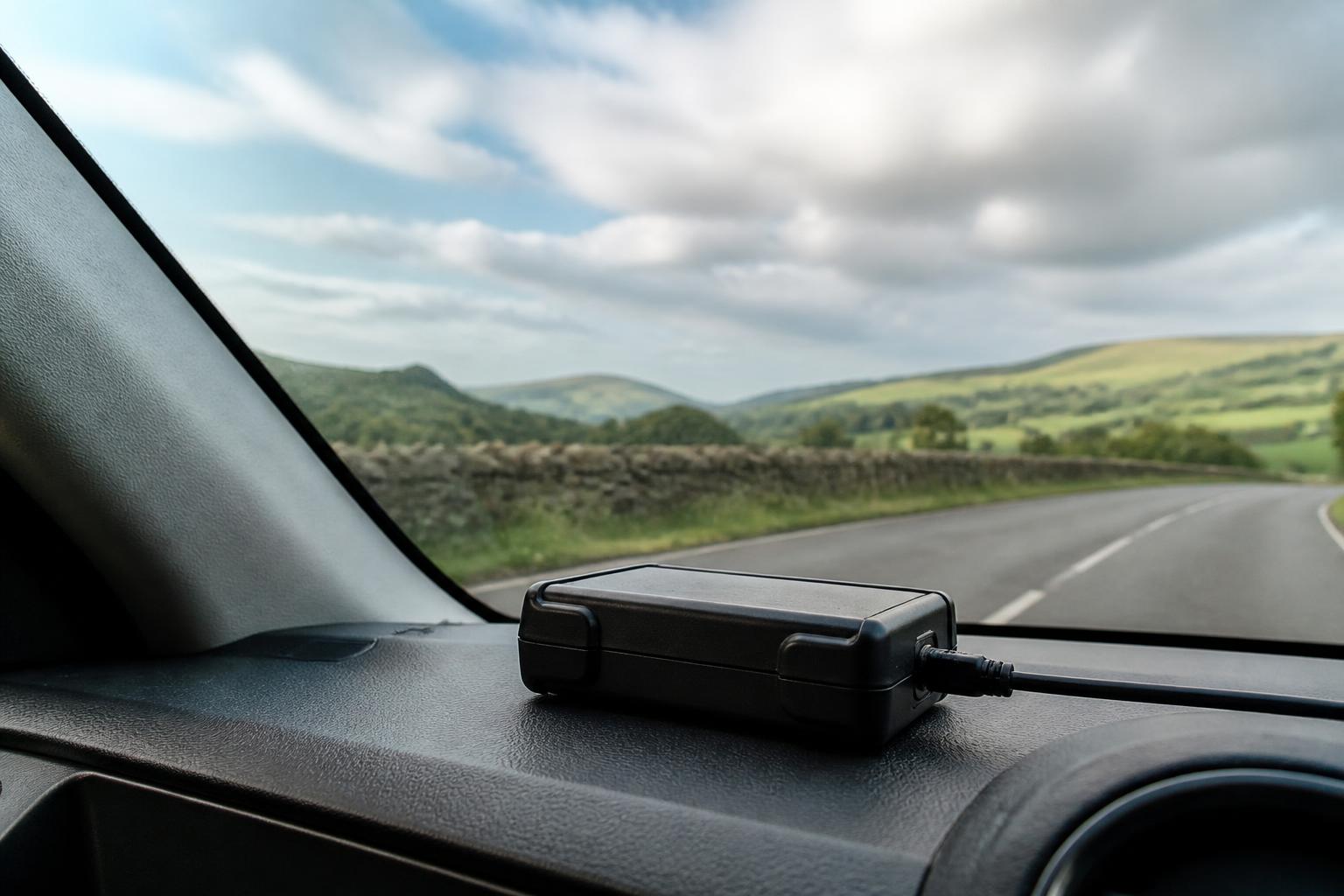
If you run commercial vehicles in the UK, you can track them lawfully at work, but not without rules. The main position is straightforward. Vehicle tracking is usually allowed where it serves a clear business purpose such as dispatch, security, route visibility, driver safety, proof of service, or compliance support. The legal issue is not whether GPS exists in the vehicle. It is whether we use it fairly, transparently, securely and only as far as we genuinely need to.
That means UK fleet operators need to think about more than fitting hardware. We need a lawful basis for processing location data, a clear driver notice, sensible retention periods, controls on who can view journeys, and practical rules for private use and out-of-hours monitoring. In other words, vehicle tracking laws in the UK sit across data protection, privacy and employment practice, not one single fleet-specific Act.
What UK law says about tracking work vehicles
The main legal framework in the UK is the UK GDPR and the Data Protection Act 2018. If a tracking system identifies a driver directly or indirectly, the location data is personal data. In most fleets, that will be the case. A vehicle registration, assigned vehicle, route history, start and finish times, and linked driver records will usually make the person identifiable.
For most commercial fleet tracking, the lawful basis is legitimate interests, sometimes combined with legal obligations where the data supports compliance processes. Legitimate interests can cover things like planning jobs, protecting vehicles, checking arrivals, investigating incidents, improving utilisation, and supporting lone worker or driver safety. But we still have to balance those interests against the driver’s rights and expectations.
Consent is usually not the right basis in employment settings. In practice, consent from employees is rarely considered freely given because of the imbalance in the relationship. So asking drivers to "agree" to tracking does not remove the need to justify it properly.
Human rights and privacy principles also matter. Employees have a right to respect for private life under Article 8 of the European Convention on Human Rights, reflected through UK law. That does not prevent work vehicle tracking, but it does mean monitoring must be proportionate. If a van is used only for business during working hours, the privacy impact is lower than if the same vehicle goes home with the driver and records every evening and weekend movement.
Employment law does not provide a separate fleet tracking code, but it shapes what is fair and reasonable in workplace monitoring. If we use tracking data in disciplinary matters, we need to be consistent, transparent and able to explain what the data shows, what it does not show, and how it has been verified. A GPS breadcrumb alone may not answer every question about a stop, a delay or a route deviation.
The UK position is also worth separating from the wider EU approach. The legal structure is similar because UK GDPR comes from the same original framework, but UK operators should follow UK law and UK Information Commissioner’s Office guidance, not assume that every EU member state rule or works council practice applies here. If we operate cross-border, then local rules in the destination country may add further requirements, especially around employee monitoring.
When vehicle tracking is lawful and when it can go too far
Tracking is generally lawful when there is a real operational reason for it and the monitoring is proportionate. Common lawful reasons include:
- live job and route visibility
- theft prevention and stolen vehicle recovery
- driver welfare and lone worker support
- customer service, including ETA and proof of attendance
- incident investigation
- fuel and utilisation review
- support for compliance workflows, including linking location with Tachograph records and driver hours review
For many fleets, these uses are part of normal transport management. If we are coordinating HGV trunking, multi-drop vans, trailers and plant, live visibility is not excessive by itself. It is often essential to run the day properly. We cover some of the operational side in our guide to GPS vehicle tracking that cuts fleet blind spots.
Where operators get into difficulty is not usually the existence of tracking, but how far they push it. Monitoring can go too far if it is hidden without exceptional justification, if it continues outside work without a good reason, if it captures more data than needed, or if managers use it for constant personal surveillance rather than proper fleet control.
Covert monitoring is the clearest risk area. Secret tracking should be exceptional. In the UK, it is only likely to be justifiable for a specific, time-limited investigation where informing the individual would prejudice the investigation, for example suspected serious theft or fraud. Even then, it should be tightly controlled, documented, and stopped as soon as the purpose is met. Routine hidden monitoring of drivers is very difficult to justify.
Excessive monitoring can also include:
- tracking private mileage when a less intrusive option is available
- retaining full location history indefinitely
- allowing unrestricted office access to journey playback
- using tracking to micromanage trivial matters with no operational need
- combining location data with other data sources in ways staff were not told about
A good test is whether the same objective could be achieved in a less intrusive way. For example, if we only need confirmation that a vehicle attended a customer site, geofence events or job timestamps may be enough. We may not need every second-by-second movement kept forever.
What fleet operators must tell drivers
Drivers should not have to guess what is being tracked. We need to tell them clearly, in writing, what data we collect and how we use it. In practice, that usually sits in a privacy notice and a vehicle tracking or monitoring policy, supported by driver handbook wording and induction.
At a minimum, staff should be told:
- that vehicles are fitted with GPS tracking
- what data is collected, such as live location, route history, speed events, ignition status, and where relevant CAN data
- whether the data is linked to named drivers, vehicle registrations, job records, Tachograph data, or Smart dashcams footage
- why the data is collected
- the lawful basis relied on
- who can access it internally
- whether any third party providers process it
- how long it is kept
- whether vehicles can be used privately and how private journeys are handled
- whether out-of-hours tracking remains active
- how the data may be used in incident review, performance management or disciplinary investigations
- how drivers can raise questions or make a data subject request
This should be specific. "We track vehicles for business purposes" is too vague on its own. A better explanation says that location data is used for dispatch, customer updates, theft response, route review, incident investigation, and compliance reporting, and states the normal retention period.
If the fleet uses several connected systems, explain that too. Where our customers combine live tracking, remote downloads and cameras in one workflow, it helps to spell out which records come from which source. A driver should understand the difference between a location ping, a Tachograph download, and video from Smart dashcams.
It is also sensible to tell drivers what tracking data does not prove by itself. A stop on the map does not always mean an unauthorised break. A route change may reflect traffic, site access instructions or a road closure. Clear wording helps avoid poor assumptions by managers and unnecessary disputes with drivers.
How to build a vehicle tracking policy that works in practice
A workable policy needs to fit the fleet you actually run. A mixed operation with HGV, vans, trailers and shared pool vehicles needs more than a one-line statement about GPS. The policy should reflect dispatch reality, take-home vehicles, agency drivers, weekend parking, and incident handling.
In practice, we recommend covering these points.
First, scope. State which vehicles and assets are tracked. If trailers, plant or non-powered assets are included, say so. If some vehicles use Fleetalyse-ready trackers and others use unlocked Teltonika hardware, that makes no difference to the legal principle, but it does affect how consistently data appears across the fleet and should be reflected in internal process notes.
Second, purpose. List the operational reasons for tracking. Keep them real. Dispatch, route visibility, proof of attendance, theft protection, incident review, utilisation, maintenance planning and compliance support are all common. Avoid vague catch-all wording.
Third, driver assignment. Explain whether vehicles are permanently assigned, pooled, or linked to drivers by shift, job allocation or Tracker login. This matters because personal data rights and incident review become harder if records are not matched accurately.
Fourth, private use. This is where many policies need more thought. If private use is prohibited, say so. If limited private use is allowed, set out how tracking operates. Options include full tracking at all times, privacy mode for authorised private use, or a process for designating out-of-hours periods. Whatever we choose, it must be explained clearly and applied consistently.
Fifth, out-of-hours monitoring. If a vehicle goes home with the driver, say whether live tracking remains visible overnight and why. Theft prevention can justify continued visibility, but we should still consider whether all managers need access to that view, or whether overnight access should be restricted.
Sixth, incident handling. Set out how location data is reviewed after collisions, complaints, missed deliveries, speeding concerns or theft. If camera footage may be checked alongside location records, say that. Our article on vehicle cameras that give fleets clearer incident evidence covers why joined-up evidence matters in practice.
Seventh, misuse and disciplinary use. Explain that tracking data may be used to investigate misconduct or serious policy breaches, but that context will be considered and drivers will have the chance to respond.
Eighth, data quality and challenge. Drivers should know how to query records they believe are wrong. GPS can drift. Vehicle allocation records can be incomplete. A practical policy includes a route for review rather than assuming the system is infallible.
Finally, connect the policy to daily workflows. If the office uses route playback, geofences, job timings, remote downloads and exception reports, define who does what. A policy that sits apart from operations is usually ignored.
How long to keep tracking data and who should see it
UK data protection rules do not give a fixed retention period for vehicle tracking. The rule is that we keep personal data no longer than necessary for the purpose we collected it for. That means retention should be reasoned, documented and different where the purpose differs.
For example, live operational visibility may only need short to medium retention. Incident investigation may justify holding selected records longer. Insurance disputes, civil claims, regulatory enquiries or ongoing disciplinary matters may require relevant extracts to be preserved beyond the normal cycle.
What matters is that we do not keep everything forever just because storage is cheap. Full historical journey data can reveal detailed patterns about a person’s movements. That raises privacy risk and increases the burden if we receive a subject access request.
A sensible approach is to set:
- a standard retention period for routine tracking history
- a separate retention rule for incident-related records
- an exception process for legal hold or active investigations
- periodic review and deletion routines
Access should follow role and need. Not every office user needs full journey playback for every vehicle. Dispatchers may need live map visibility. Fleet managers may need utilisation and route history. HR may only need limited access where a formal issue is being investigated. Workshop staff may not need driver-linked journey detail at all.
Security controls matter here. Use named accounts, strong authentication, audit logs and role-based permissions. If third party suppliers host the platform, make sure contracts cover processing terms, security measures and support for data rights. If footage or tracking exports are shared externally, for example with insurers or solicitors, share only what is relevant.
This is also where system design helps. A platform that combines tracking with fleet reporting can reduce ad hoc exports and spreadsheets, which in turn reduces uncontrolled copies of personal data. If you are reviewing hardware choices, our guide to how to choose a tracker that works for daily fleet control looks at the operational side of getting consistent data into one place.
Where tracking fits with compliance, safety and fleet workflows
Tracking works best when it is treated as part of the operating system of the fleet, not as a standalone surveillance tool. In day-to-day transport, location data is most useful when it sits alongside job status, vehicle status, driver records and compliance tasks.
For HGV operators, one obvious link is Tachograph management. Location visibility can help explain missing movement, route deviations, delays to planned breaks, and timing around loading or unloading. It should not be used as a substitute for proper Tachograph analysis, but it can support investigations and reduce guesswork when reviewing driver hours issues.
The same applies in mixed fleets. Vans may not have the same compliance regime as HGV units, but the management need is similar. We still need one view of where vehicles are, what happened on a route, whether a customer query can be answered quickly, and whether an incident needs location and camera evidence pulled together. That is why many operators move away from separate systems for tracking, camera footage and reporting.
Operationally, the best process is usually simple:
- dispatch and traffic use live visibility for the running day
- compliance teams use linked records where location supports investigations
- managers review exceptions, not every minute of every journey
- incident handlers pull the relevant trip, events and footage together once, then preserve the case file
- access is restricted and auditable
That makes the monitoring more proportionate as well as more useful. We are not watching drivers for the sake of it. We are using data to run transport properly, answer queries faster, and deal with exceptions on evidence.
At Fleetalyse, that joined-up view is the practical point. When live GPS, remote Tachograph downloads, Smart dashcams and reporting sit together, it is easier to control access, explain what data is used for, and avoid the sprawl of screenshots, exports and disconnected systems. For operators managing trailers, vans and HGV units together, the value is often in one workflow rather than more data.
The legal lesson is simple. UK vehicle tracking laws do not stop us using tracking at work. They require us to use it with a clear purpose, proper notice, sensible limits and secure handling. If we get those basics right, tracking supports visibility, safety and compliance without becoming intrusive or difficult to defend.
Is vehicle tracking legal in the UK?
Yes, in most cases. Employers can track work vehicles if they have a lawful reason, tell staff clearly, and use the data in a fair and proportionate way.
Do employers need driver consent for GPS tracking?
Usually not as the main legal basis. In employment, consent can be difficult to rely on. Employers more often rely on legitimate interests or contractual and legal obligations.
Can a company track a vehicle outside working hours?
It can, but only if there is a clear reason and drivers are told. If private use is allowed, operators should consider privacy controls or clear rules for out-of-hours tracking.
Do drivers have the right to know they are being tracked?
Yes. Drivers should be told what is being collected, why, who can access it, how long it is kept and how it may be used in operations or investigations.
Can tracking data be used in a disciplinary process?
Yes, if staff were properly informed and the data is reliable, relevant and used fairly. Tracking should not be the only evidence where context is missing.